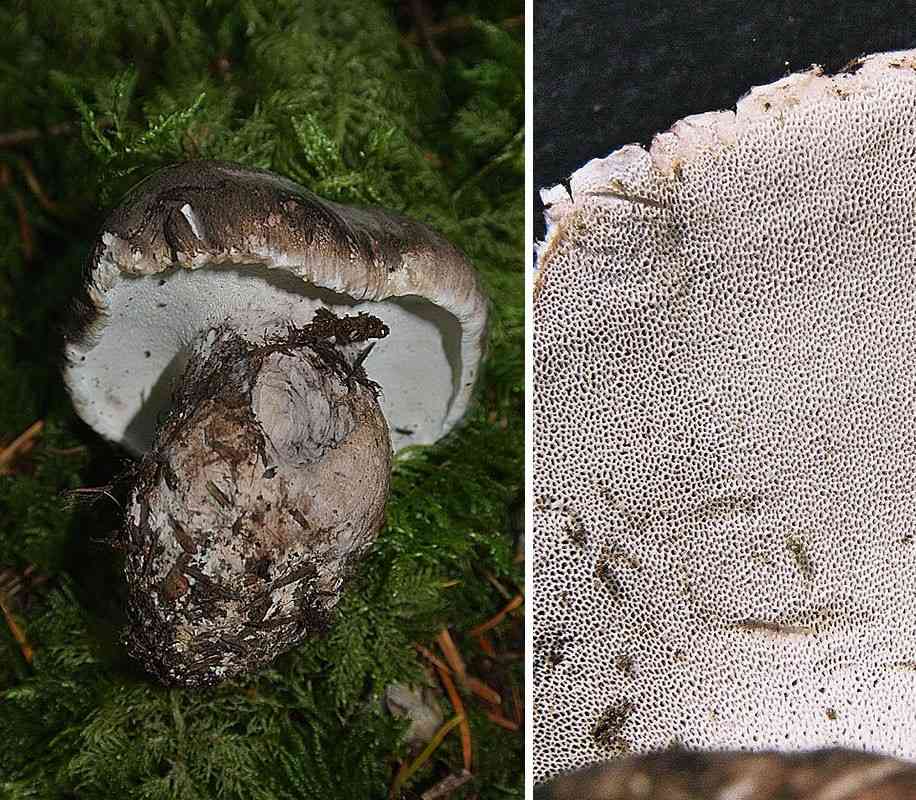
Grey falsebolete
Boletopsis grisea
A species of Boletopsis.
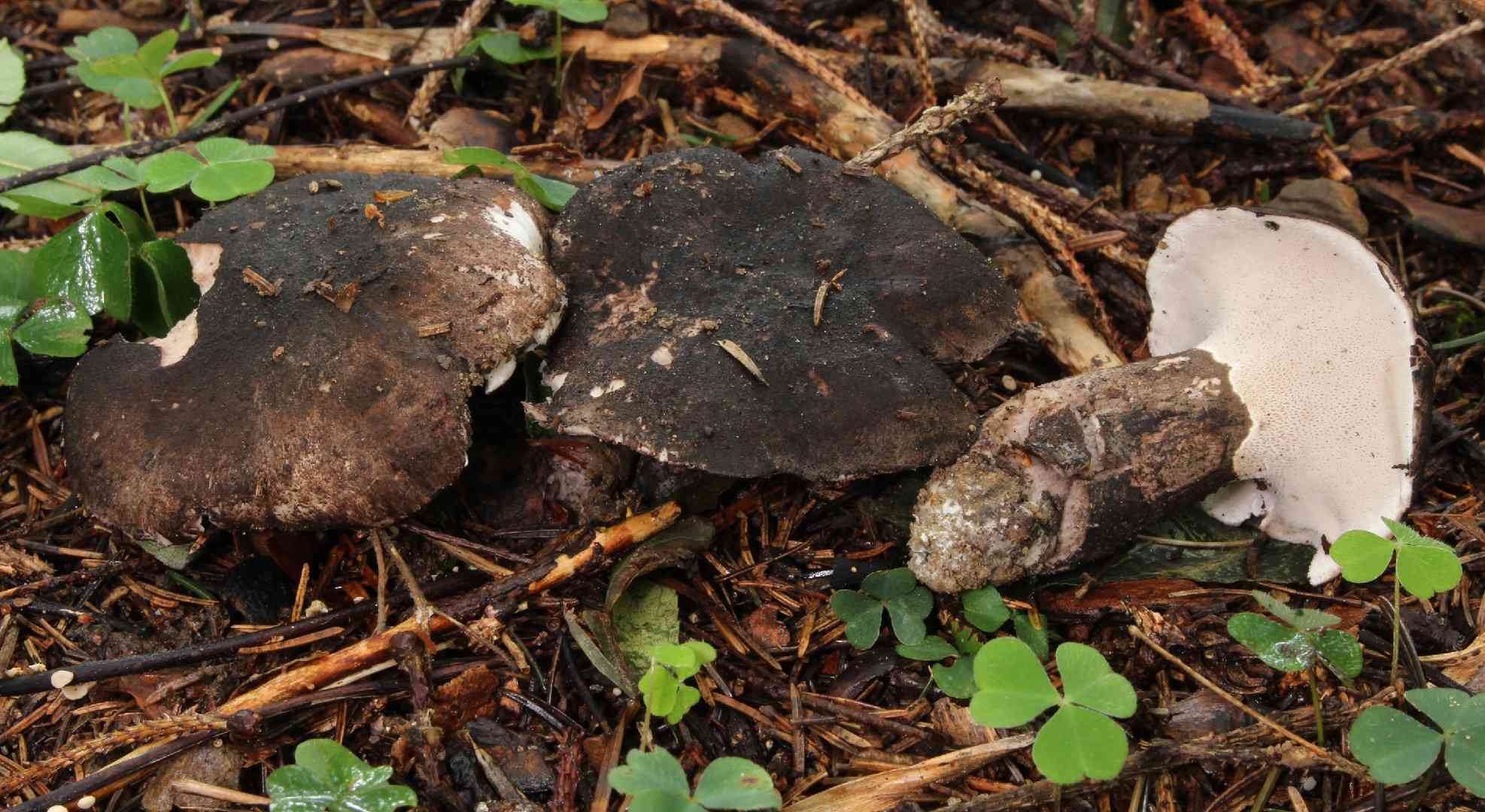
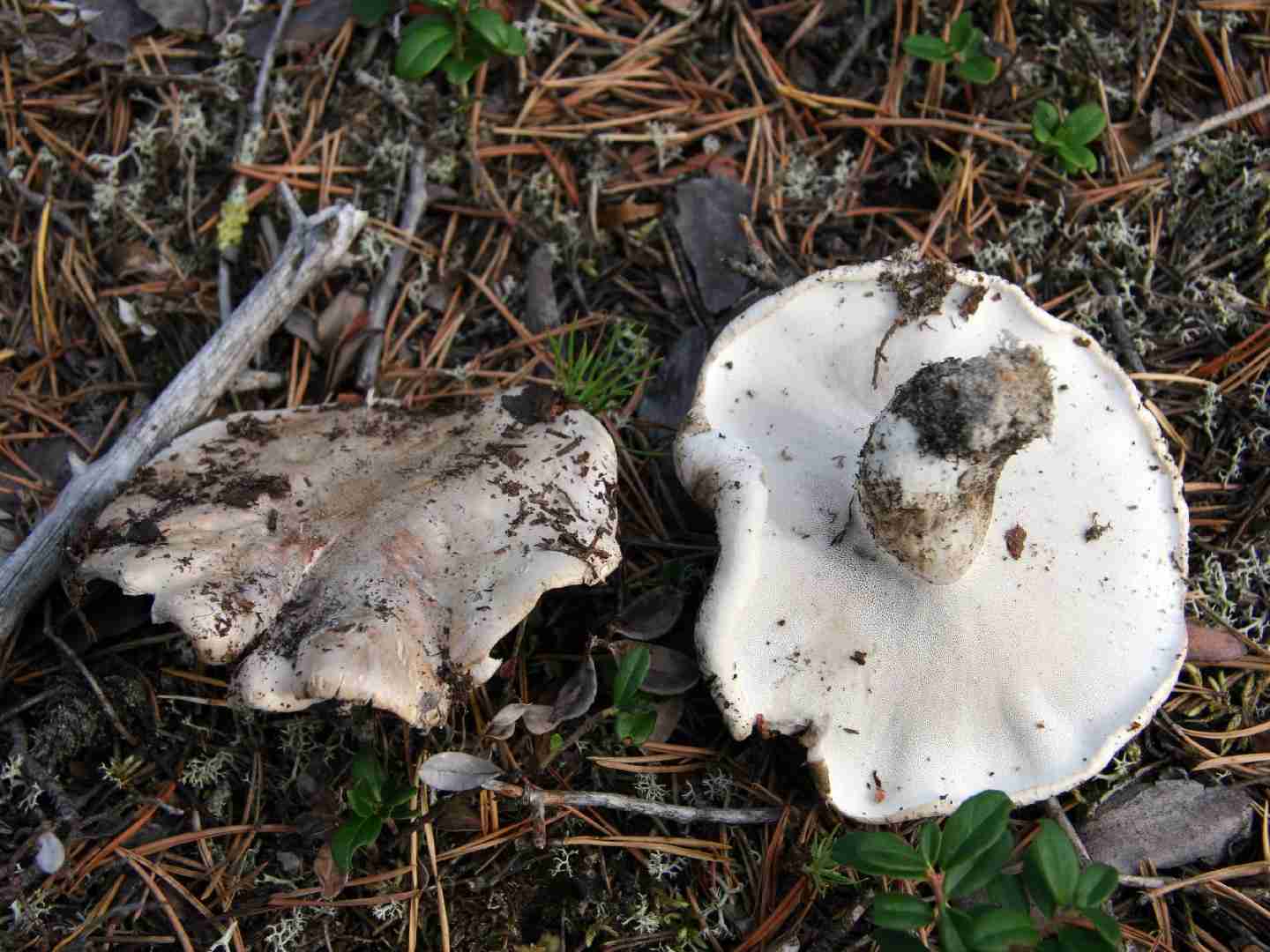
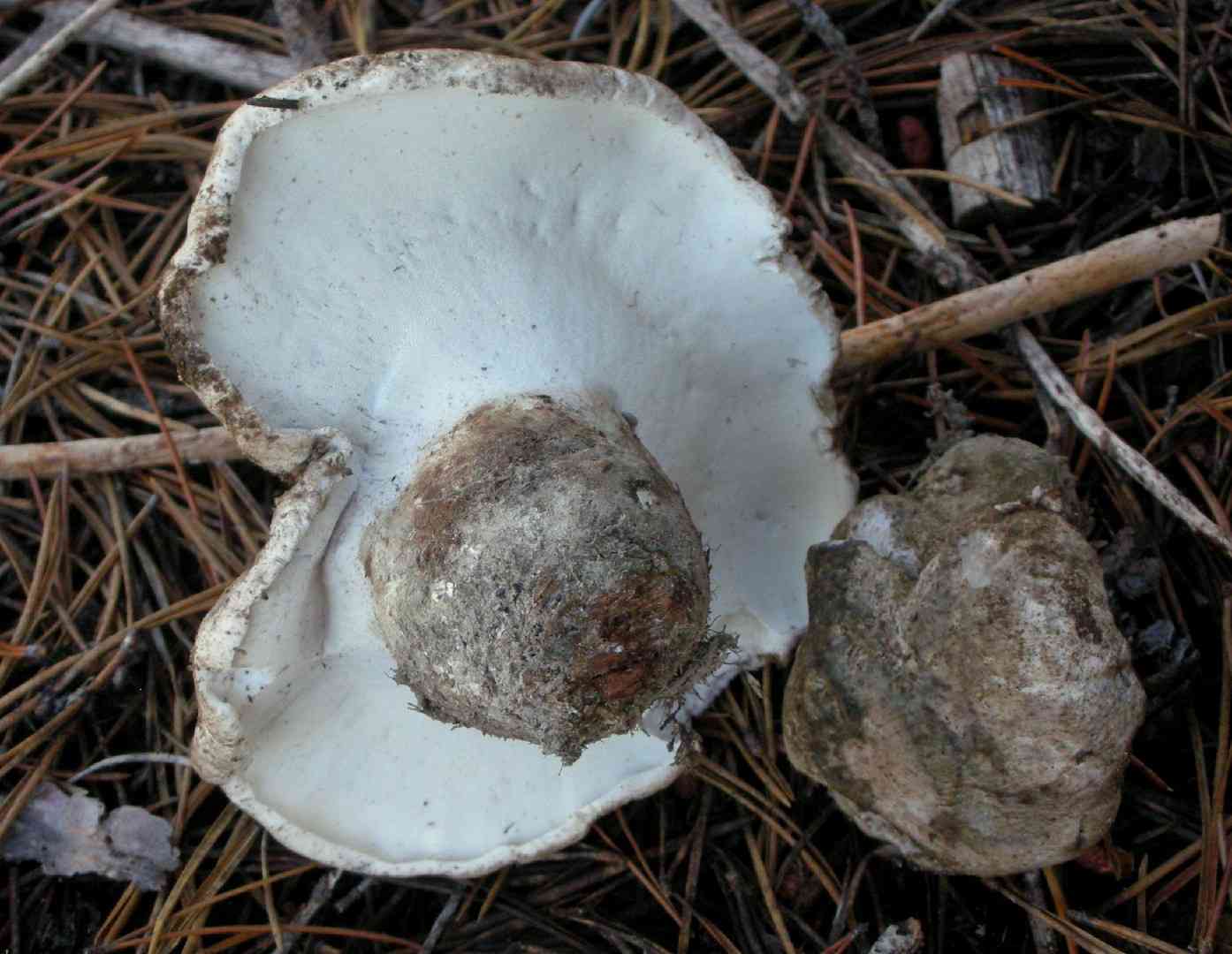
Underneath Scots pine trees, the grey falsebolete flourishes amidst the needles and plant debris. Its distinct large grey cap and white pores facilitate easy identification. This species faces threats across Europe and is currently being considered for protective measures under the Berne Convention, which focuses on the conservation of European wildlife and natural habitats.
In This Article
Attributes of Grey falsebolete
Cap Diameter
5 - 13 cm
Height
3 - 10 cm
Cap
Cap 5 - 13 cm across; convex; pale grayish brown; surface smooth
Cap Shape
Convex, Depressed
Cap Surfaces
Fibrillose-scaly
Stem
Stem 3 - 8 cm long, 2 - 4 cm thick; grayish brown; glabrous to squamulose; display gray-brown when bruised
Stem Shapes
Club Shaped
Stem Surfaces
Smooth
Ring
Ringless
Spore Print Color
Pale brown
Odor
Mildly spicy and fungal.
Body Color
BlackGrayWhitePurple
Flesh Bruises
The flesh or milk does not discolor when bruised or cut.
Growth Form
Solitary, Scattered, Gregarious
Nutrient Gathering
Mycorrhizal
Substrate
On soil
You can find Grey falsebolete by these plants
Spruces, Pines
Occurence Habitats
Mixed Woodland
Species Status
Near Threatened
Endangered Species
No
Scientific Classification of Grey falsebolete
Phylum
Club fungi
Class
Mushroom-forming fungi
Order
Thelephorales
Family
Bankeraceae
Genus
Boletopsis
Toxicity and Edibility of Grey falsebolete
Is Grey falsebolete Toxic?
Toxicity information is not available for this mushroom. Always consult with an expert before consuming any wild mushrooms.