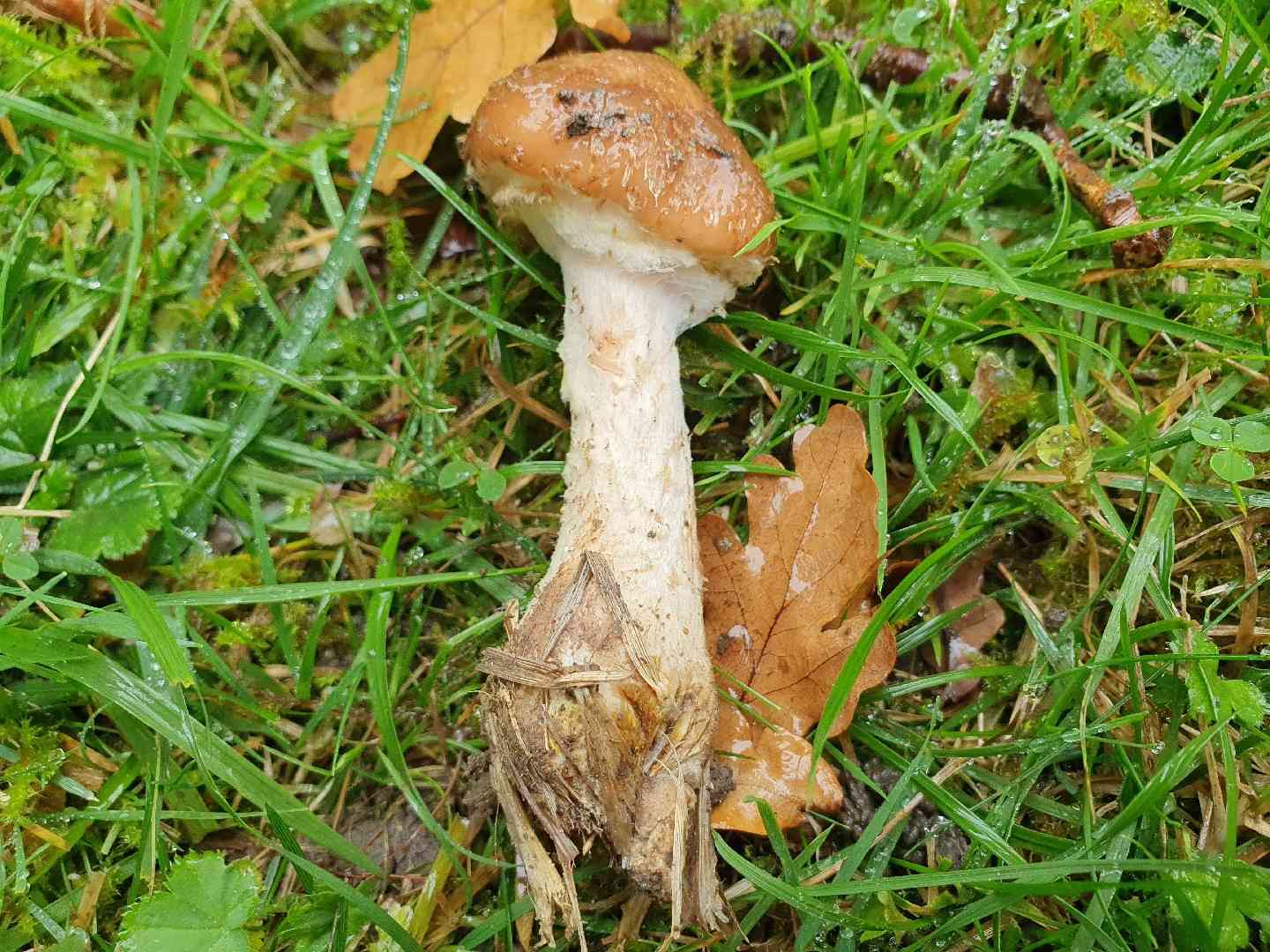
Bulbous honey fungus
Armillaria gallica
A species of Honey fungi.
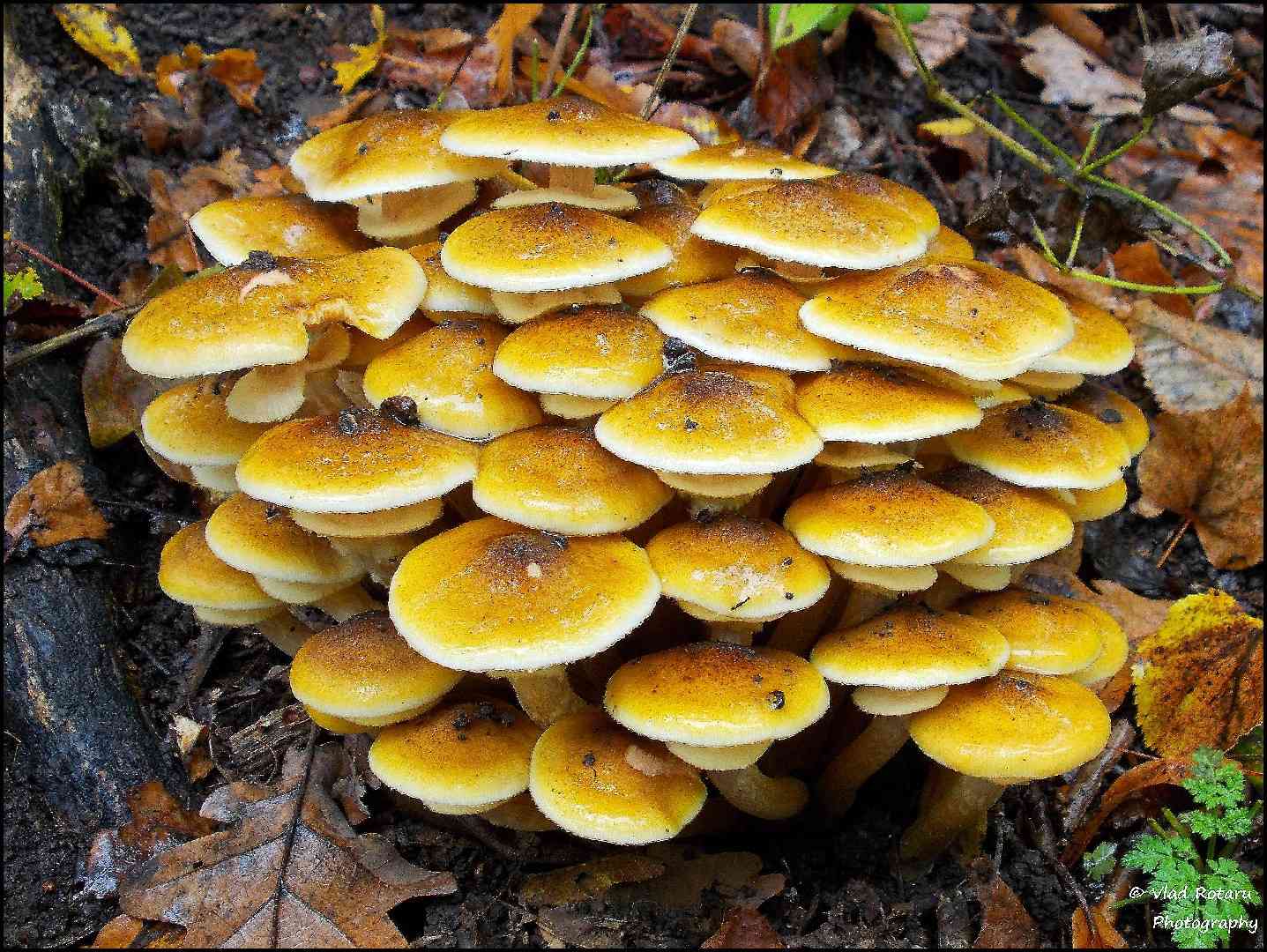
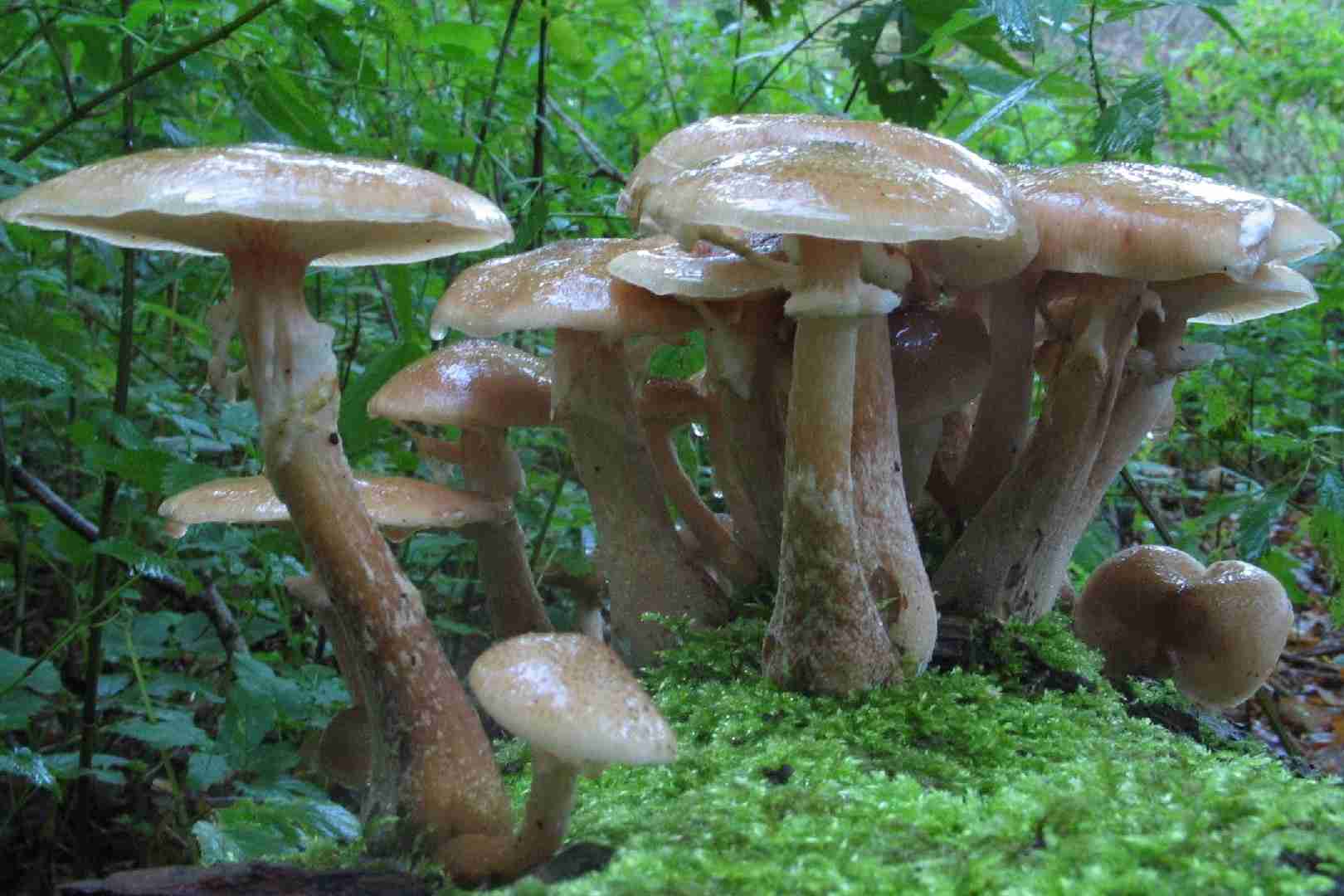
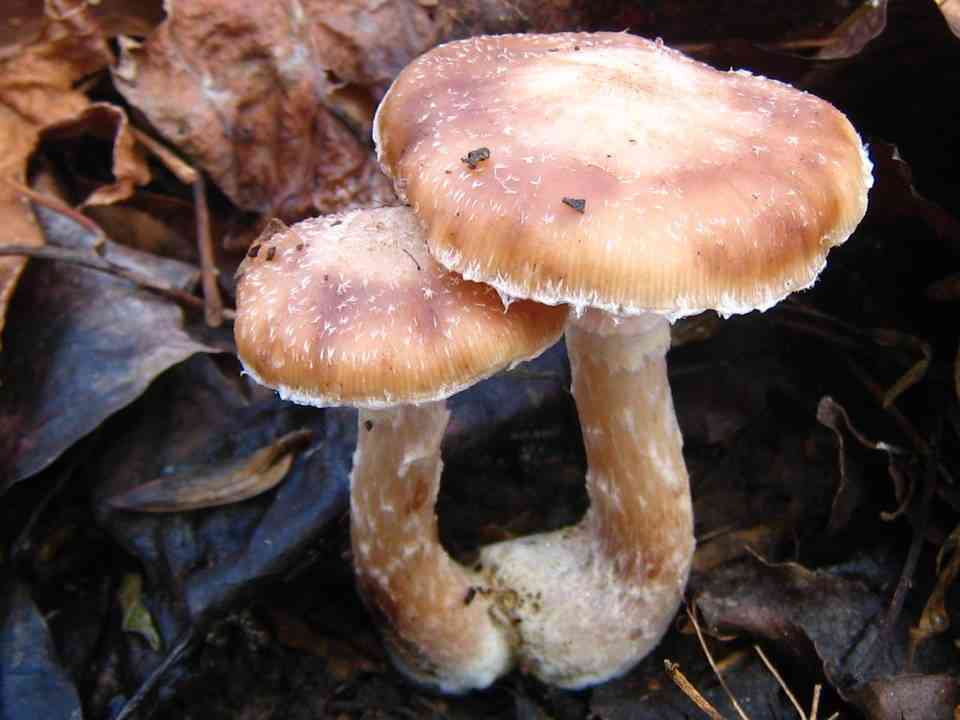
Armillaria gallica, commonly known as the bulbous honey fungus, is distinguished by its enlarged or swollen stem bases on the fruiting bodies. As with all Armillaria species, it forms an extensive underground network of root-like structures called rhizomorphs, which produce visible mushrooms during certain seasons. A single individual of this fungus can attain an age of several millennia and a mass exceeding 1000 kilograms.
In This Article
Attributes of Bulbous honey fungus
Cap Diameter
3 - 10 cm
Height
5 - 12 cm
Cap
3 - 10 cm; convex, flat; tan; dry or sticky
Cap Shape
Convex, Flat, Depressed
Cap Surfaces
Fibrillose-scaly, Slimy or slightly sticky
Gills
close, short-gills frequent; whitish, discoloring pinkish to brownish
Gill Attachment
Decurrent
Stem
4 - 7 cm long, 1 - 3 cm thick; club-shaped, with a swollen base; whitish to brownish when fresh
Stem Shapes
Club Shaped
Stem Surfaces
Smooth to slightly fibrous
Flesh
Whitish; unchanging colors when sliced
Ring
With Ring Zone
Spore Print Color
White
Odor
Mildly mushroomy, subtly sweet, not distinctive.
Body Color
BrownYellowBronzePink
Flesh Bruises
The flesh or milk does not discolor when bruised or cut.
Growth Form
Solitary, Gregarious
Nutrient Gathering
Saprophytic
Substrate
Dead Woods, On soil, Wood of Living Trees
You can find Bulbous honey fungus by these plants
Coast live oak
Occurence Habitats
Deciduous Woodland, Coniferous Woodland
Species Status
Widely distributed east of the Rocky Mountains.
Endangered Species
No
Scientific Classification of Bulbous honey fungus
Phylum
Club fungi
Class
Mushroom-forming fungi
Order
Gilled fungi
Family
Physalacriaceae
Genus
Honey fungi
Toxicity and Edibility of Bulbous honey fungus
Is Bulbous honey fungus Toxic?
Toxicity information is not available for this mushroom. Always consult with an expert before consuming any wild mushrooms.