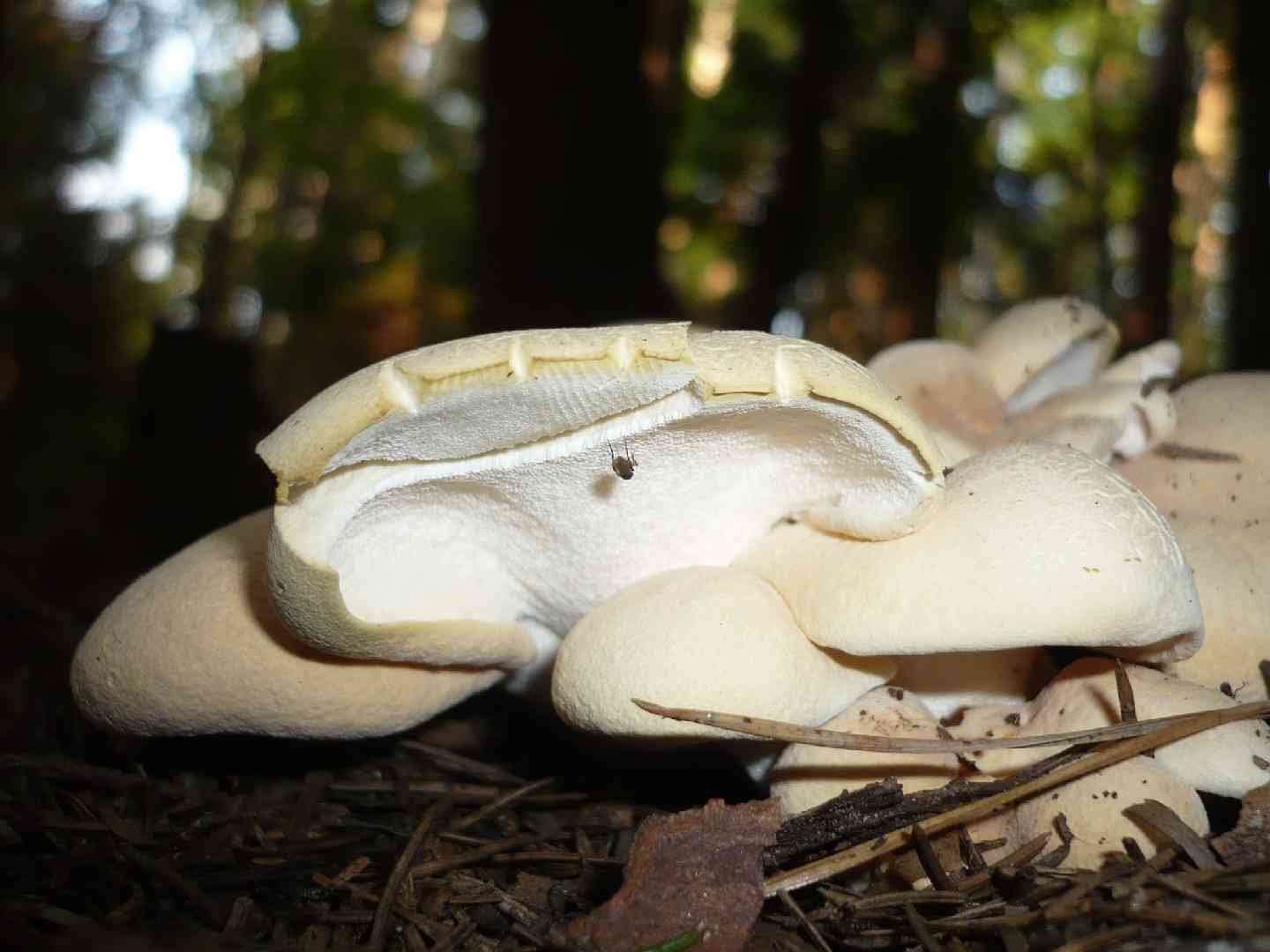
Albatrellus subrubescens
Albatrellus subrubescens
A species of Albatrellus.
Albatrellus subrubescens belongs to a unique fungal lineage characterized by its production of sporocarps that generally emerge near theground, frequently found in proximity to coniferous forests. This particular fungus is recognized by its fan-shaped or cluster-like form, and its consistency varies from tender to somewhat firm. The coloration of Albatrellus subrubescens typically harmonizes with the woodland environment, displaying shades that evolve as it matures.
In This Article
Attributes of Albatrellus subrubescens
Cap Diameter
6 - 15 cm
Height
3 - 7 cm
Cap
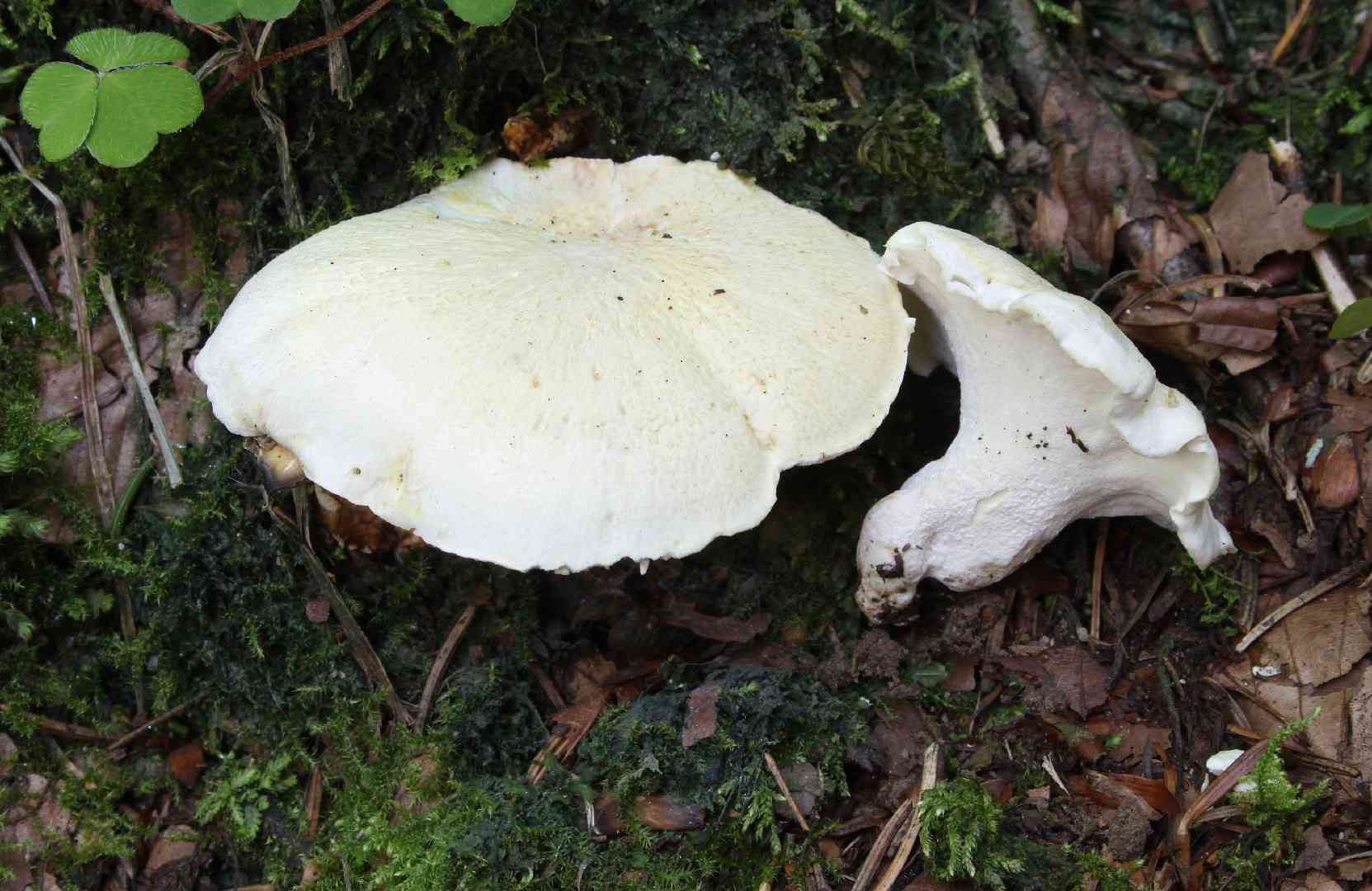
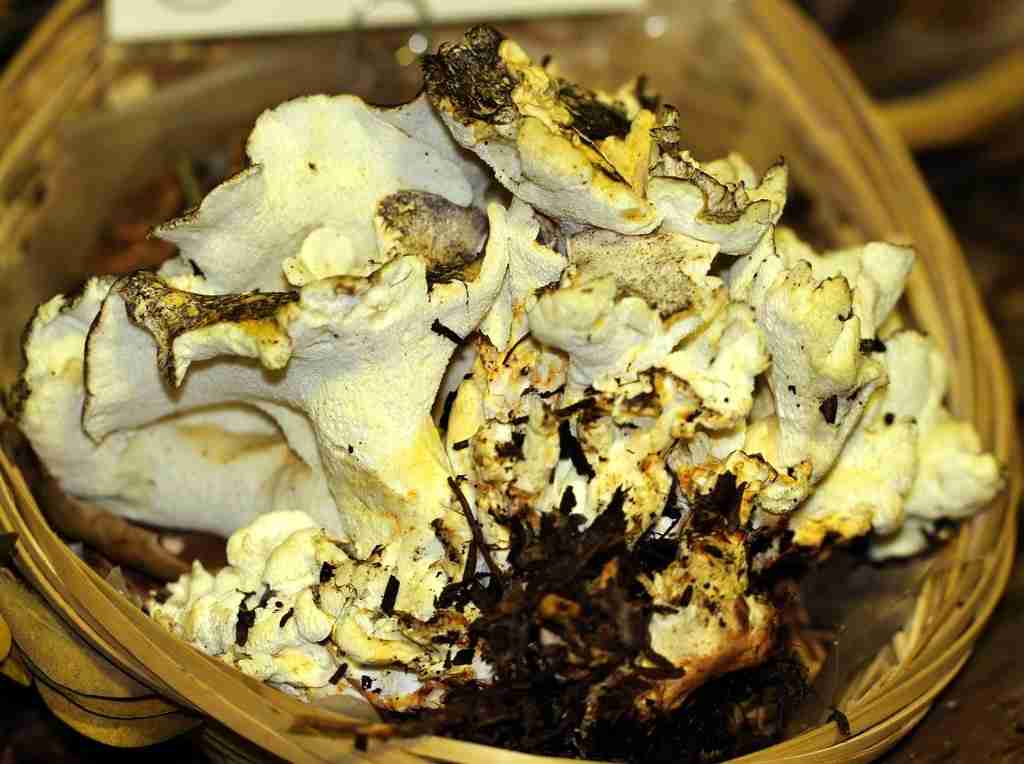
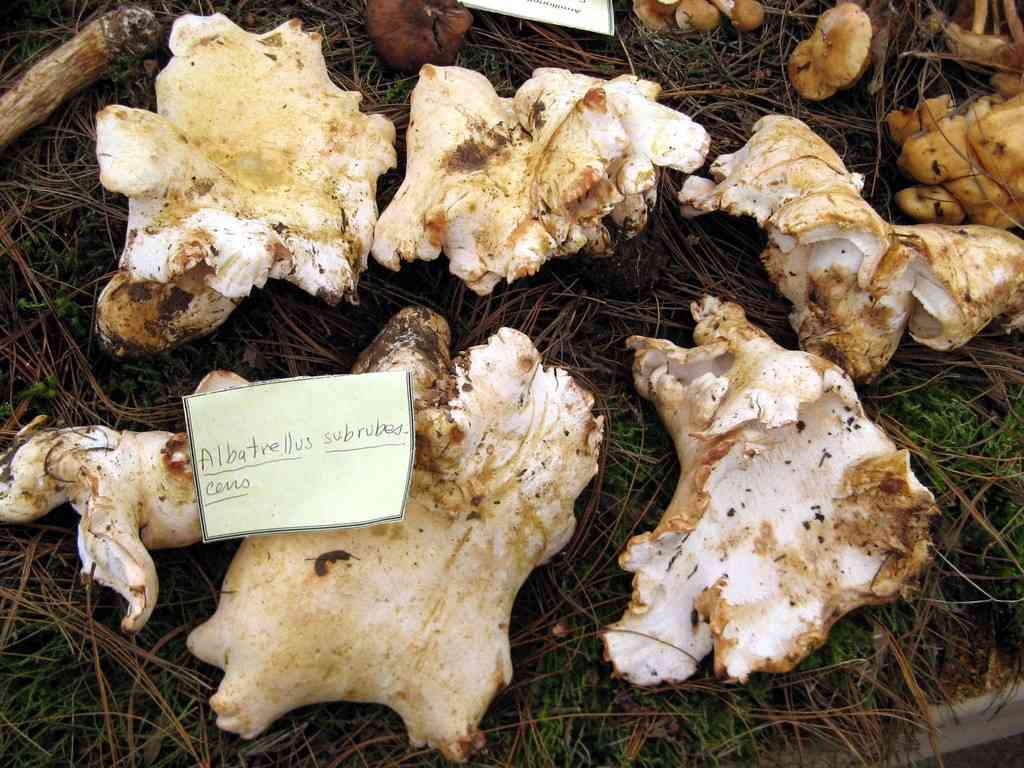
Cap 6 - 15 cm in diameter; convex to flatt; white margins, brownish-violet center; with an involute margin; displays yellowish when bruised
Cap Shape
Convex, Depressed
Cap Surfaces
Fibrillose-scaly
Stem
Stem 1.6 - 7 cm long, 1 - 2 cm thick; cylindrical, irregular; white, becoming orange or violet spots, brownish orange spots
Stem Shapes
Cylindrical
Stem Surfaces
Smooth
Flesh
Brittle; cream-colored, drying yellowish buff
Ring
Ringless
Spore Print Color
White
Odor
Mildly mushroomy but not distinctive.
Body Color
BrownWhiteOrangePurple
Flesh Bruises
The flesh or milk does not discolor when bruised or cut.
Growth Form
Solitary, Gregarious
Nutrient Gathering
Mycorrhizal
Substrate
On soil
You can find Albatrellus subrubescens by these plants
Pines, Oaks, Spruces
Occurence Habitats
Coniferous Woodland
Species Status
Uncommon to rare on mainland Europe
Endangered Species
No
Scientific Classification of Albatrellus subrubescens
Phylum
Club fungi
Class
Mushroom-forming fungi
Order
Russulales
Family
Albatrellaceae
Genus
Albatrellus
Toxicity and Edibility of Albatrellus subrubescens
Is Albatrellus subrubescens Toxic?
Toxicity information is not available for this mushroom. Always consult with an expert before consuming any wild mushrooms.