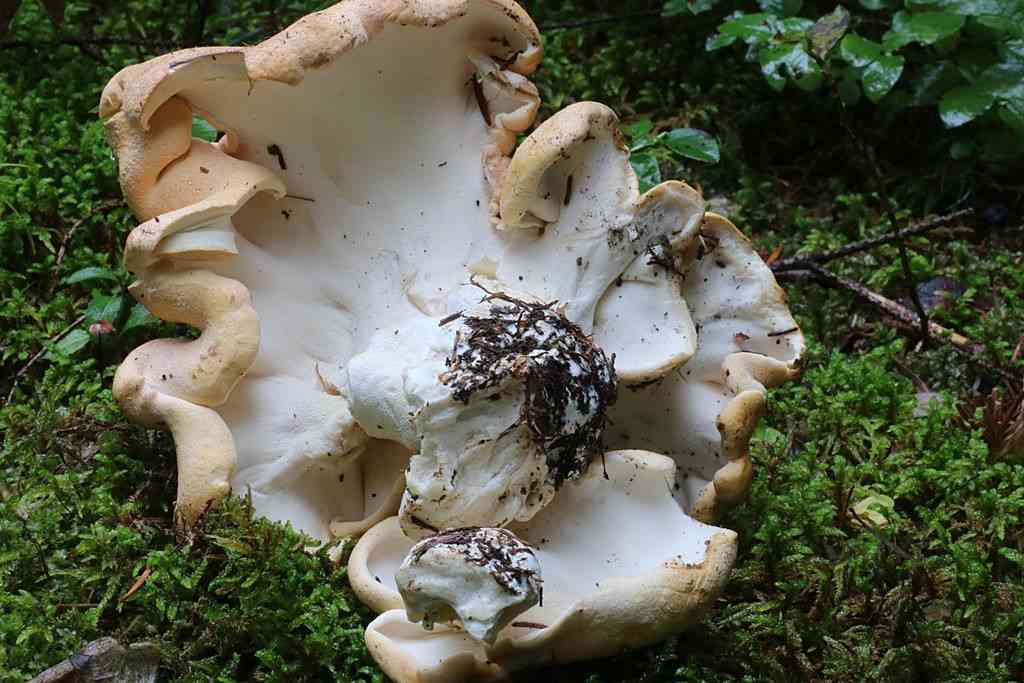
Fused polypore
Albatrellus confluens
A species of Albatrellus.
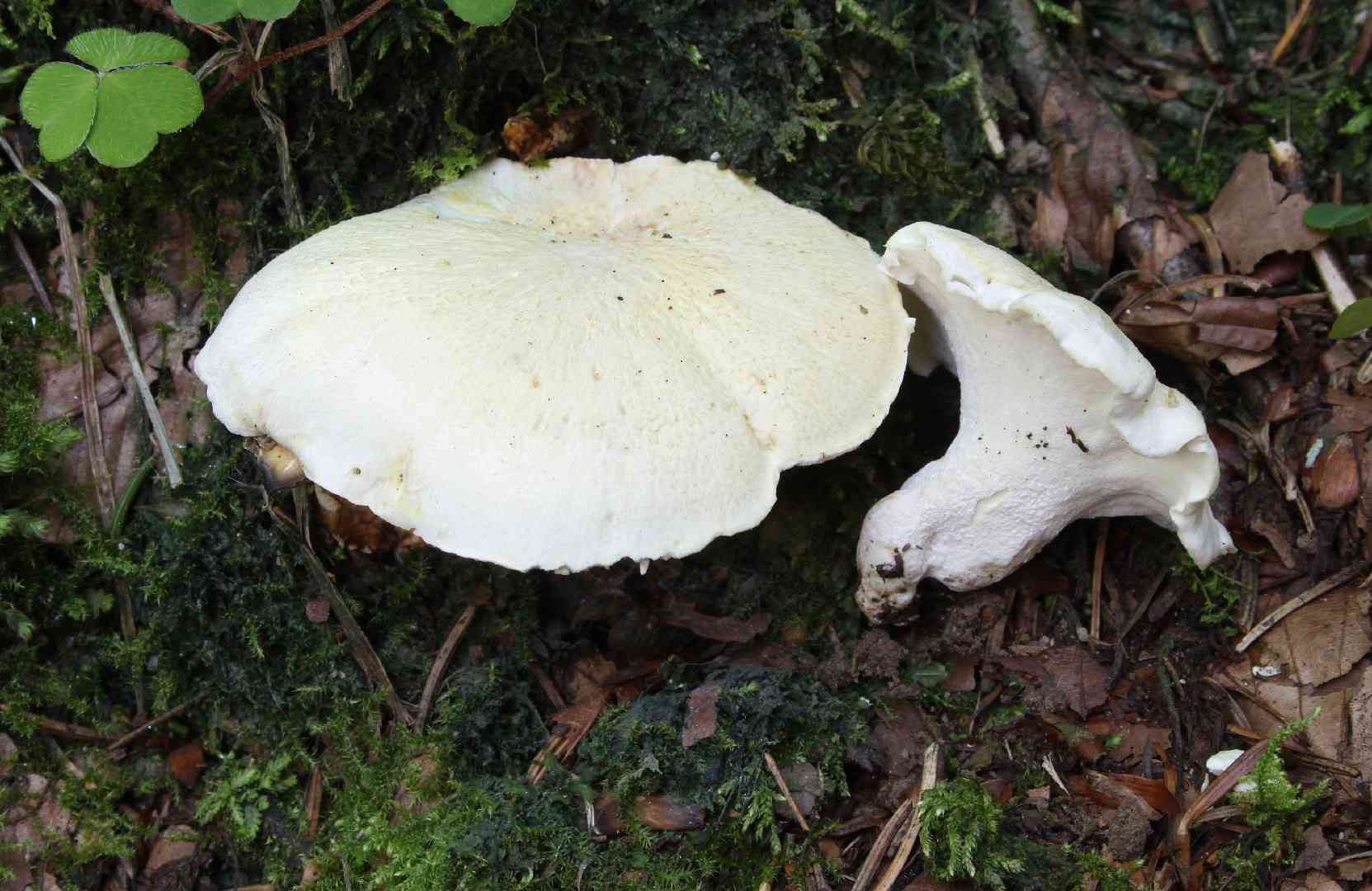
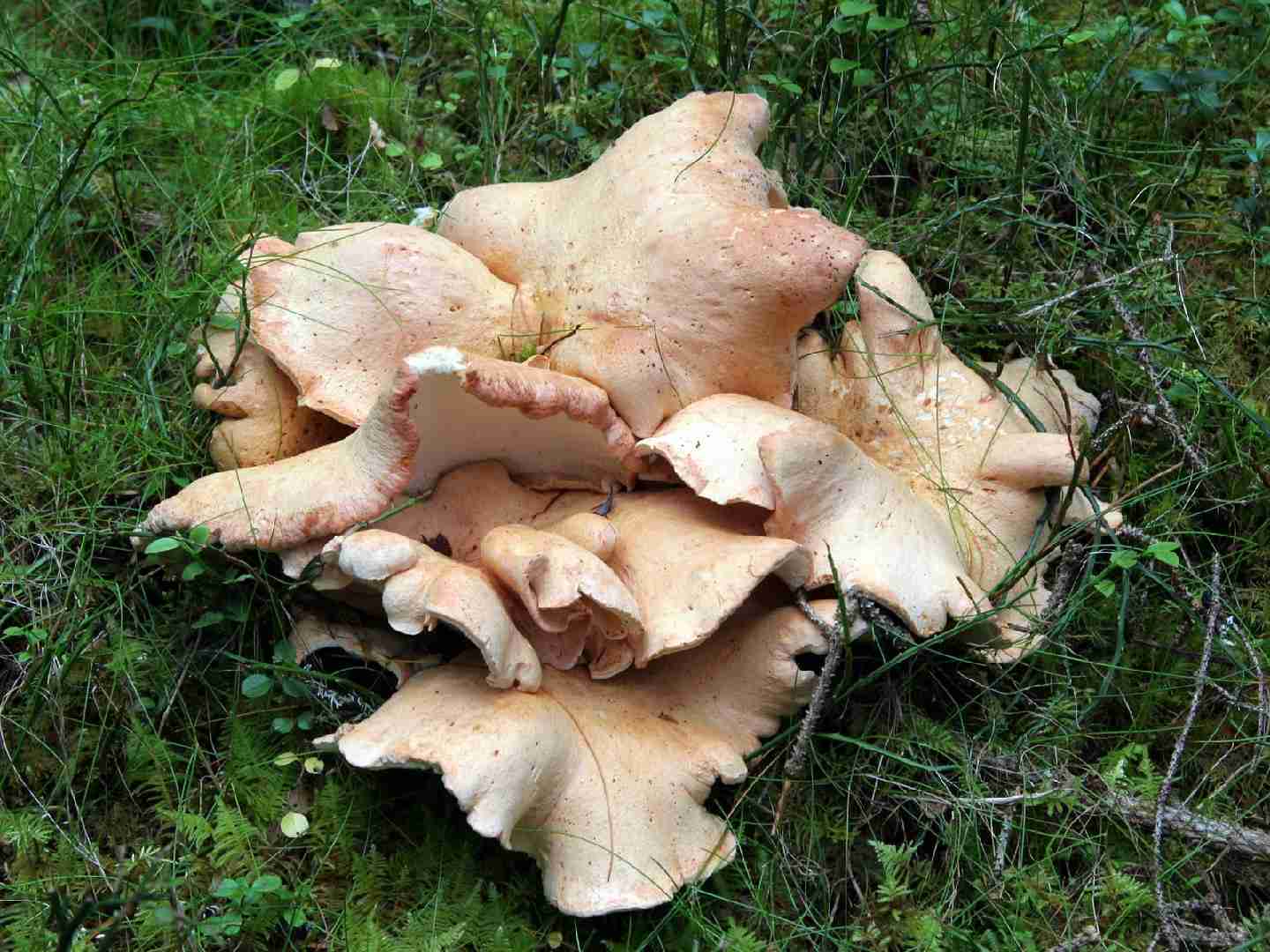
Fused polypore is recognized by its tiny, seemingly conjoined pores, which are typically whitish but can change to brown or red when damaged or under pressure. This fungus flourishes in spruce forests, commonly appearing in clusters with overlapping caps.
In This Article
Attributes of Fused polypore
Cap Diameter
3 - 20 cm
Height
3 - 6 cm
Cap
Cap 3 - 20 cm across; loosely convex to flat or irregular; pale orange, pinkish buff, orangish; surface smooth
Cap Shape
Convex, Flat
Cap Surfaces
Smooth
Stem
Stem 3 - 6 cm long, 1 - 3 cm thick; whitish, tan; surface smooth
Stem Shapes
Cylindrical
Stem Surfaces
Smooth
Flesh
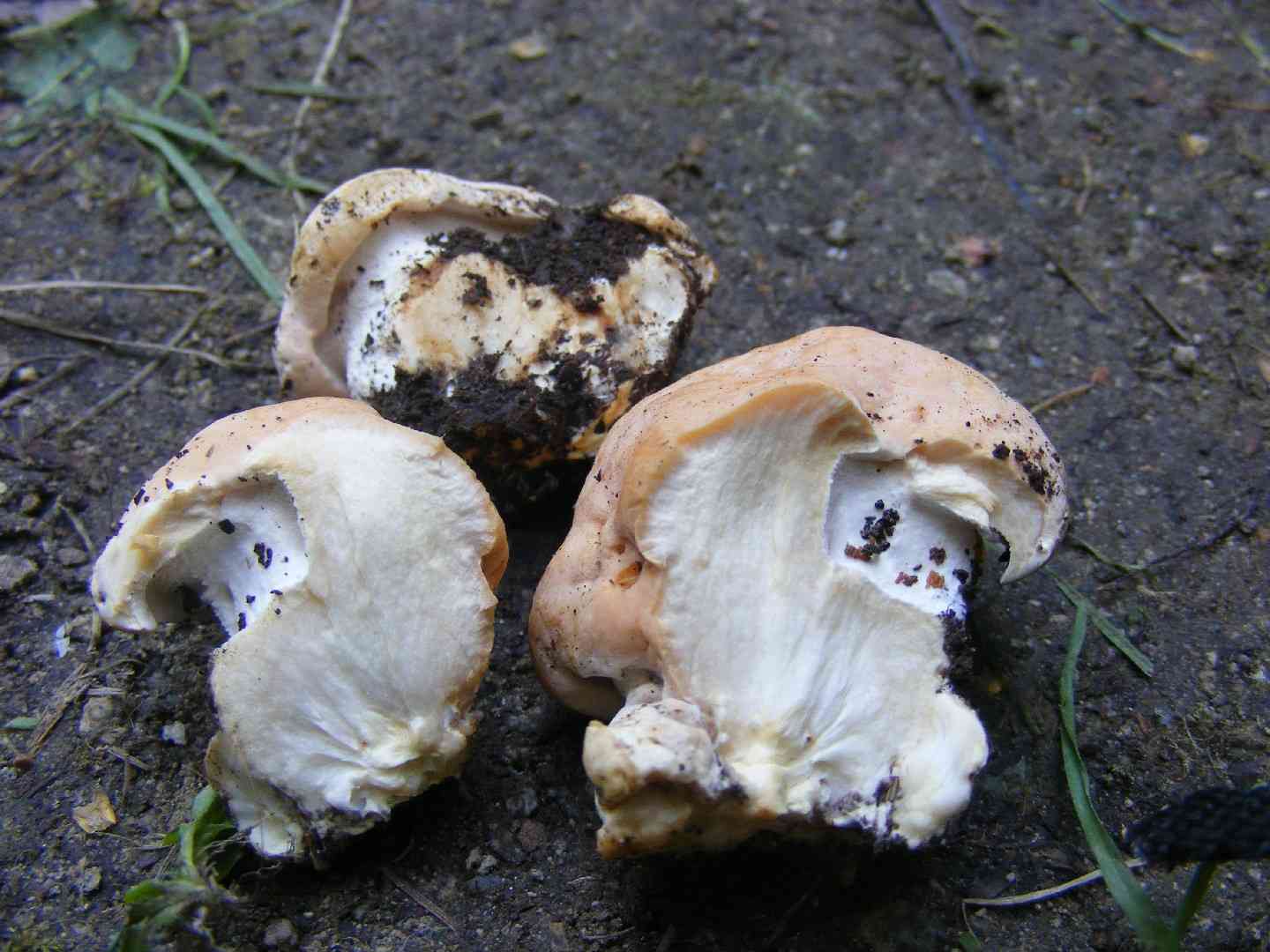
Fairly soft; whitish
Ring
Ringless
Spore Print Color
White
Odor
Slightly fragrant, mild, non-distinctive.
Body Color
BrownYellowWhiteOrange
Flesh Bruises
The flesh or milk does not discolor when bruised or cut.
Growth Form
Gregarious
Nutrient Gathering
Mycorrhizal
Substrate
On soil
You can find Fused polypore by these plants
Subalpine fir, Engelmann spruce
Occurence Habitats
Coniferous Woodland
Species Status
Least Concern
Endangered Species
No
Scientific Classification of Fused polypore
Phylum
Club fungi
Class
Mushroom-forming fungi
Order
Russulales
Family
Albatrellaceae
Genus
Albatrellus
Toxicity and Edibility of Fused polypore
Is Fused polypore Toxic?
Toxicity information is not available for this mushroom. Always consult with an expert before consuming any wild mushrooms.