How to Prune Four-stamen tamarisk?
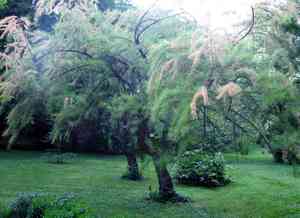
A deciduous bush recognized for its delicate limbs and wispy leaves, four-stamen tamarisk thrives with appropriate trimming. To preserve its form and stimulate robust development, conduct pruning in late winter or early spring prior to the emergence of new shoots. Eliminate any lifeless or compromised wood and thin out congested sections to maximize light exposure and air movement. Pruning not only refines the plant's architecture but can also boost blooming, as precise cuts encourage fresh branches that will flower in subsequent seasons.
Advantages of Trimming Four-stamen Tamarisk
Advantages of Trimming Four-stamen Tamarisk
Trimming four-stamen tamarisk promotes robust development and helps keep its desired form. Strategic cuts encourage fresh, healthy branches and prevent excessive growth, aiding in optimal plant structure and visual appeal.
Optimal Period for Pruning Four-stamen Tamarisk
Optimal Period for Pruning Four-stamen Tamarisk
Pruning four-stamen tamarisk in late winter and early spring is considered ideal as it coincides with the plant's dormant phase, just before the start of its new growth cycle. Pruning during this window ensures minimal stress to the plant and reduces the risk of harming new growths or flower buds that emerge later in spring. By removing unnecessary branches, gardeners can direct the plant's energy towards producing strong new growth in the upcoming growing season. Additionally, pruning before spring allows wounds to heal faster, decreasing susceptibility to diseases and pests. Finally, there is less foliage during this time, making it easier to see the structure of four-stamen tamarisk and perform a more effective and strategic trim.
Tools Required for Pruning Four-stamen Tamarisk
Hand Pruners
Perfect for cutting small, slender branches of four-stamen tamarisk during light trimming. Their size allows for precise control and minimal damage to surrounding leaves.
Loppers
Best for reaching into denser areas of four-stamen tamarisk and cutting thicker branches that hand pruners cannot manage. They provide leverage for clean cuts without straining the gardener's hands.
Pruning Saw
Essential for removing mature or dead branches from four-stamen tamarisk. A pruning saw can handle the thicker, woodier stems that neither hand pruners nor loppers can cut.
Hedge Shears
Useful for shaping four-stamen tamarisk if a formal hedge appearance is desired. Hedge shears allow for cutting multiple stems at once, which is efficient for creating a uniform shape.
How to Prune Four-stamen Tamarisk
Sanitize tools
Before starting, ensure all pruning tools are disinfected to prevent the spread of disease when cutting four-stamen tamarisk.
Identify sections
Carefully examine four-stamen tamarisk to locate dead branches, which may appear dry, brittle, and lack green growth. Also, look for branches showing signs of disease, such as discoloration, cankers, or unusual swelling.
Remove dead branches
Using clean, sharp shears, carefully cut dead branches at their origin point or back to a healthy lateral branch without harming the main structures of four-stamen tamarisk.
Remove diseased branches
Prune diseased branches on four-stamen tamarisk by cutting at least several inches below the affected area or removing the entire branch if necessary, ensuring not to spread the disease to healthy parts.
Clean up
After pruning four-stamen tamarisk, promptly remove all cuttings from the area to reduce the risk of disease and pests, and dispose of them appropriately away from healthy plants.
Common Pruning Errors with Four-stamen Tamarisk
Excessive pruning
Removing too much foliage or too many branches at once can stress four-stamen tamarisk, leading to poor health or reduced flowering. Aim to remove no more than one-third of the plant's total volume in a single pruning session.
Incorrect cuts
Making blunt or jagged cuts can damage four-stamen tamarisk and invite disease. Use sharp, cleaned pruning tools to make clean, angled cuts that heal more efficiently.
Neglecting tool cleanliness
Using dirty pruning tools can introduce pathogens to four-stamen tamarisk. Ensure tools are disinfected before use to prevent the spread of disease.
Ignoring deadwood
Failing to remove dead or diseased wood can hinder four-stamen tamarisk's growth and health. Regularly inspect and trim away problematic branches to maintain plant vitality.
Pruning for shape only
Focusing solely on four-stamen tamarisk's aesthetic shape may result in cutting out healthy growth that is necessary for the plant's overall well-being. Consider both form and health when pruning.
General Pruning Advice for Four-stamen Tamarisk
Selective thinning
Target older branches for thinning to improve air circulation and light penetration, which will promote four-stamen tamarisk's health and stimulate new growth.
Encouraging new shoots
Prune just above a bud facing the outside of the plant to encourage new outward growth, which helps maintain a pleasing shape and dense foliage of four-stamen tamarisk.
Post-flowering trimming
Since four-stamen tamarisk blooms on the current year's growth, light trimming after the blooming period can help encourage more flowers in the following season.
Gradual rejuvenation
For older four-stamen tamarisk plants that require rejuvenation, spread this out over several years. Prune back progressively to avoid shocking the plant, which helps in a healthier recovery.
Height control
If height control is necessary, make cuts to lateral branches to maintain a more compact form without excessively reducing the plant's size.



