How to Prune Blue-leaf honeysuckle?
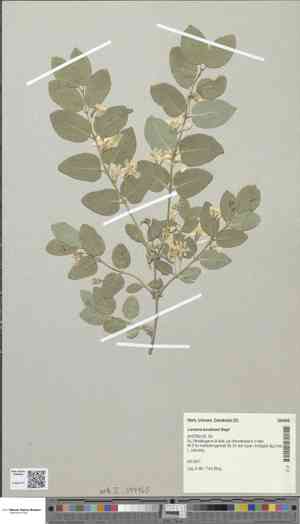
Lonicera korolkowii displays appealing blue-green foliage and aromatic blossoms. Perform pruning in late winter or early spring, prior to the emergence of new shoots. Concentrate on excising deceased or compromised limbs, reducing congested sections, and preserving its inherent form. Trimming enhances air movement and robust flowering, simultaneously deterring ailments. Consistent cutting fosters a robust, flourishing specimen. Always employ sanitized, keen implements for accurate incisions.
Advantages of Trimming Blue-leaf Honeysuckle
Advantages of Trimming Blue-leaf Honeysuckle
Pruning blue-leaf honeysuckle promotes robust development and helps maintain its form. This practice aids in managing its dimensions, improves air movement, prevents illnesses, and keeps the plant visually appealing. Consistent trimming fosters healthier, stronger growth.
Optimal Period for Pruning Blue-leaf Honeysuckle
Optimal Period for Pruning Blue-leaf Honeysuckle
Trimming blue-leaf honeysuckle in early spring or late winter is ideal as the plant is still dormant, minimizing stress and potential harm. Pruning before new growth starts allows the plant to channel energy into producing healthy new shoots and reduces disease risk. Furthermore, since blue-leaf honeysuckle typically blooms on new growth, pruning at this time ensures a more abundant flowering in the upcoming season.
Necessary Tools for Pruning Blue-leaf Honeysuckle
Hand Pruners
Perfect for making precise cuts on smaller branches and stems up to 1/2 inch in diameter. These are crucial for routine upkeep and shaping of blue-leaf honeysuckle.
Loppers
Suitable for cutting through thicker branches, typically up to 2 inches. They provide the leverage needed for tougher pruning tasks without harming the plant.
Pruning Saw
Utilized for cutting branches exceeding 2 inches in diameter. A pruning saw ensures clean cuts that minimize plant damage, vital for the health of blue-leaf honeysuckle.
Hedge Shears
Useful for trimming and shaping the plant, especially when maintaining its form and size. These shears assist in neat and even pruning of multiple small branches simultaneously.
How to Prune Blue-leaf Honeysuckle
Identify issues
Examine blue-leaf honeysuckle to find diseased leaves, withered foliage, dead branches, and infected stems. Mark problem areas for subsequent action.
Remove diseased material
Carefully trim all diseased leaves and branches using sanitized pruning shears to stop pathogen spread. Dispose of infected material away from the garden.
Trim withering parts
Eliminate withered leaves to encourage new growth. Ensure cuts are made at the base where the leaf meets the stem.
Clear dead wood
Cut off dead branches back to their origin point or the nearest healthy node, promoting regeneration and improved air circulation.
Maintain shape
Lightly trim the overall shape if needed, focusing on areas where excessive branching might block sunlight or air flow. Regularly clean your tools to maintain their effectiveness throughout.
Common Pruning Errors with Blue-leaf Honeysuckle
Over-pruning
Removing too much foliage at once can weaken blue-leaf honeysuckle and hinder its ability to recover and thrive.
Incorrect technique
Using dull or unsanitized tools can result in jagged cuts and introduce disease.
Pruning at the wrong location
Cutting directly above a bud in the wrong direction or too close to the main stem can damage the plant.
General Pruning Advice for Blue-leaf Honeysuckle
Use sharp, clean tools
Ensure pruning shears are sharp and disinfected to make clean cuts and reduce disease risk.
Remove dead or diseased wood
Begin by cutting away any dead, damaged, or diseased branches to maintain plant health.
Control growth direction
Cut just above outward-facing buds to encourage growth away from the center and improve air circulation.
Thin out crowded areas
Space out branches to allow light and air to penetrate the inner parts, promoting healthier growth.
Fine-tune shape
Make selective cuts to shape blue-leaf honeysuckle and maintain an aesthetically pleasing form without over-pruning.



