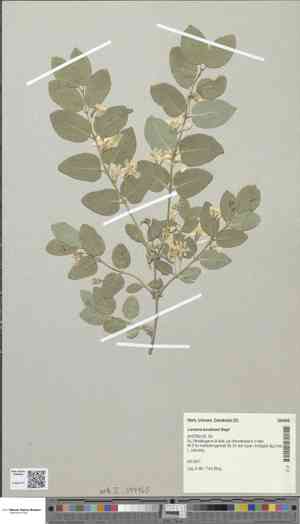
Blue-leaf honeysuckle (Lonicera korolkowii)
Also known as: Korolkow's Honeysuckle
Weigela is a deciduous shrub recognized for its trumpet-shaped, pinkish-violet flowers adorned with prominent yellow stamens. It features green foliage and thrives in well-drained soils, often flourishing in sunny locations. Blooming from late spring to early summer, Weigela attracts bees and butterflies, making it a favorite among pollinators.
In This Article
Attributes of Blue-leaf honeysuckle
Lifespan
Perennial
Plant Type
Shrub
Plant Height
6 to 10 feet (1.8 to 3 meters)
Spread
4 to 6 feet (1.2 to 1.8 meters)
Leaf Color
Green, turning yellow in autumn
Flower Size
1 to 1.5 inches (2.5 to 3.8 centimeters)
Flower Color
Pink to white
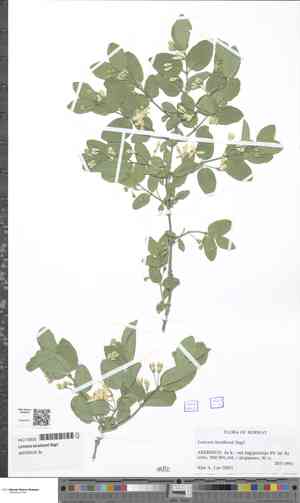
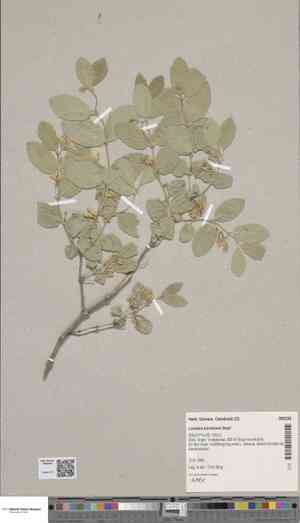
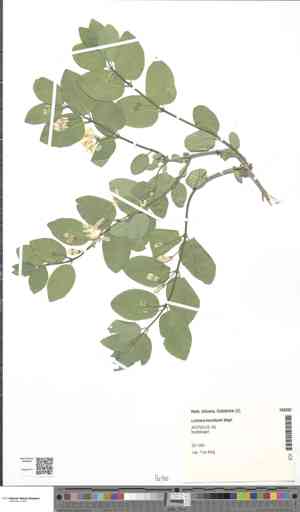
Images of Blue-leaf honeysuckle

Quickly Identify Blue-leaf honeysuckle
1
This plant can be identified by its opposite, elliptic to lanceolate leaves, and its pink to white tubular flowers. The flowers are usually followed by red or orange berries, which are a distinguishing feature.
Scientific Classification of Blue-leaf honeysuckle
Phylum
Vascular plants
Class
Dicotyledons
Order
Honeysuckles, moschatels and allies
Family
Honeysuckle
Genus
Honeysuckles
Species
Blue-leaf honeysuckle
Planting and Growing of Blue-leaf honeysuckle
Care Difficulty
Easy
Watering Schedule
Every 2 days
Sunlight Requirements
Partial sun
Sunshine Duration
4-8 hours
Ideal Temperature
60-75℉
Soil Type
Potting Mix, Peat Mix
Soil pH
6.5-7.5
Fertilizer Type
Balanced
Pruning Season
Spring, Summer
Pruning Area
Branches, Leaves
Pruning Frequency
2 times a year
Repotting Season
Spring
Pot Type
Plastic, Ceramic
 How to Water Blue-leaf honeysuckle?
The watering amount for Lonicera korolkowii should be sufficient to keep the soil consistently moist but not waterlogged. A general guide is to water around 500 ml each time, ensuring that the water penetrates deeply into the soil to reach the deep roots. It's important to check that the top inch of soil is dry before watering again.
What are the symptoms of an underwatered Blue-leaf honeysuckle?
›
What should I do if my Blue-leaf honeysuckle is not getting enough water?
›
What are the symptoms of an overwatered Blue-leaf honeysuckle?
›
How to save an overwatered Blue-leaf honeysuckle?
›
 What Are the Sunlight Requirements for Blue-leaf honeysuckle?
Lonicera korolkowii flourishes under partial sun environments. This condition fosters optimal growth and blooming, balancing daily light needs with protective shading to maintain leaf health and vitality.
What is the best light condition for Lonicera korolkowii?
›
How can I ensure it receives ideal lighting indoors?
›
Why is it important to maintain ideal lighting?
›
 What Is the Ideal Temperature Range for Blue-leaf honeysuckle?
Lonicera korolkowii thrives best within a temperature range of 60 to 75 degrees Fahrenheit. This range provides optimal conditions for photosynthesis, growth, and flowering, supporting overall plant vitality. Maintaining these temperatures ensures the plant can efficiently uptake nutrients and water, facilitating robust growth and high resistance to pests and diseases.
 What Soil is Best for Blue-leaf honeysuckle?
Lonicera korolkowii thrives in well-draining soil, preventing waterlogged roots which can lead to root rot. This condition enhances its growth and supports a healthier plant overall. This plant requires soil that retains moisture but not excessively, ensuring optimal hydration without risk of fungal diseases. This balance supports its lush foliage and flowering capability. Rich soil with ample organic matter provides essential nutrients, aiding in robust growth, vibrant leaf color, and increased resistance to pests and diseases.
 How to Fertilize Blue-leaf honeysuckle?
Lonicera korolkowii, commonly known as Korolkow's Honeysuckle, thrives when provided with a balanced approach to fertilization. It benefits from a moderate amount of nutrients, so applying about half the recommended amount specified on the fertilizer label is often ideal. Over-fertilization should be avoided, as it can lead to excessive growth at the expense of flowering.
 How to Prune Blue-leaf honeysuckle?
Start by removing any dead or damaged wood to prevent disease. This encourages healthy new growth and gives the plant a tidy appearance. Trim back longer branches slightly to maintain the desired shape of the shrub. This not only neaten the plant but also promotes denser growth. When pruning, thin out the inner growth to improve air circulation within the shrub. This helps reduce the risk of fungal infections. Be cautious not to over-prune as it can stress the plant. Aim to remove no more than a third of the plant's total growth at one time.
More About Pruning Techniques→
 How to Propagate Blue-leaf honeysuckle plant?
1
Fill seed trays with a mix of peat and perlite to provide a well-draining environment. Lightly water the mix and allow it to sit, ensuring adequate moisture before seeds are planted.
2
Select healthy stems from the parent plant and make a clean cut using pruning shears. Ensure each cutting is about 4-6 inches long and remove the lower leaves to expose nodes.
3
Bend a low-growing stem to the ground and cover a portion with soil, leaving the tip exposed. Secure it with a U-shaped wire to encourage rooting, monitoring moisture levels regularly.
 How to Repot Blue-leaf honeysuckle plant?
1
Lonicera korolkowii should be repotted when you notice its roots circling the bottom of the pot, a clear sign that it's becoming root-bound. The best time to do this is in spring or autumn, when the plant is not in active bloom, ensuring minimal stress on the plant.
2
Select a pot that is one size larger than the current pot with adequate drainage holes. Using a slightly larger pot prevents waterlogging while allowing roots more room to grow, promoting healthier development and better hydration balance.
3
The ideal soil for Lonicera korolkowii should be well-draining and rich in organic matter. Such soil prevents root rot by ensuring water does not accumulate at the bottom of the pot, while providing the necessary nutrients for robust growth.
Learn More About Blue-leaf honeysuckle Diseases
Anthracnose
Bacterial Leaf Spot
Crown Gall
Damping-off
Downy Mildew
Drought Stress
Fusarium Wilt
Gray Mold
Leaf Curl
Leaf Spot
Mosaic
Nutrient Deficiency
Nutrient Toxicity
Powdery Mildew
Root Rot
Root-knot Nematode
Rusts
Sooty Mold
Spider Mites
Temperature Stress
Thrips Damage
White Mold
Chemical Injury



