How to Prune Three-stamen waterwort?
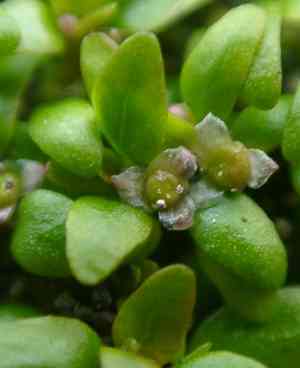
This water-loving plant flourishes in moist conditions and necessitates precise cutting to preserve its dense structure. Optimal trimming for three-stamen waterwort entails severing the stem's apex to foster a more robust, bushy appearance. The most suitable time for this maintenance is throughout its vigorous growth periods, generally from springtime through autumn. Swift elimination of any withered or discolored leaves is vital to avert decomposition. Trimming not only sculpts three-stamen waterwort but also promotes more vibrant, thicker foliage, thereby boosting its aesthetic value.
What Are the Benefits of Pruning Three-stamen Waterwort?
What Are the Benefits of Pruning Three-stamen Waterwort?
Trimming three-stamen waterwort promotes robust development by eliminating old or overgrown stems, allowing light and air to penetrate the core. It also helps maintain the desired form and size, ensuring three-stamen waterwort remains visually appealing and manageable within its environment.
What Is the Best Time for Pruning Three-stamen Waterwort?
What Is the Best Time for Pruning Three-stamen Waterwort?
For three-stamen waterwort, pruning in Spring is optimal as it marks the start of the growth cycle, enabling three-stamen waterwort to recover and produce new shoots. Summer trimming supports continuous growth and can help preserve the desired shape and dimensions. Fall pruning is advantageous as it prepares three-stamen waterwort for dormancy and removes any dead or dying foliage, which could harbor pests or diseases over winter. Pruning outside these seasons, especially in winter, is not recommended, as it might harm new buds and hinder the following year's growth.
What Tools Do I Need to Prune Three-stamen Waterwort?
Fine-tip Aquascaping Scissors
Given three-stamen waterwort's delicate and slender structure, aquascaping scissors with fine tips are crucial. These scissors allow for precise cuts without harming adjacent stems or leaves, which is vital for the health of three-stamen waterwort.
Spring-loaded Micro-tip Pruners
For slightly larger or denser growth, spring-loaded micro-tip pruners offer ease of use and can achieve accurate snips on three-stamen waterwort. These tools are particularly suitable for trimming stems that are too thick for scissors.
Curved Aquatic Plant Tweezers
Curved tweezers can be utilized to remove dead leaves or debris around three-stamen waterwort, as well as for planting or repositioning. The curved tip permits careful handling without disturbing the root structure or surrounding area.
Maintenance Razor Blades
For removing any excess growth from hard-to-reach areas of three-stamen waterwort, maintenance razor blades can provide clean cuts in tight spaces. Their utility is secondary to scissors and pruners but can be useful for detailed work.
How to Prune Three-stamen Waterwort
Select tools
Choose sharp, clean scissors or pruning shears to ensure precise cuts and prevent damage to three-stamen waterwort's delicate stems.
Identify sections
Locate the withered leaves on three-stamen waterwort, being careful not to confuse them with healthy or new growth.
Cut withered leaves
Carefully snip the withered leaves at their base where they connect to the stem, taking care not to harm adjacent healthy leaves or stems.
Dispose waste
Remove the cut withered leaves from the water to prevent decay and potential water quality issues.
Monitor plant
Observe three-stamen waterwort after pruning for any signs of stress and to ensure that new, healthy leaves continue to develop.
Common Pruning Mistakes with Three-stamen Waterwort
Over-pruning
Removing too much growth at once can stress three-stamen waterwort, leading to poor health and reduced vigor. Aim to prune less than one-third of the plant at any one time.
Rough cuts
Using dull or inappropriate tools can leave jagged cuts on three-stamen waterwort, which are more susceptible to disease and pests. Always use sharp, clean pruning shears.
Random cutting
Pruning without a strategy can result in uneven growth and may damage the aesthetic form of three-stamen waterwort. Understand the plant's natural shape before beginning.
Ignoring dead or diseased growth
Failing to remove dead or diseased parts of three-stamen waterwort can hinder its overall health and spread the problem to other parts of the plant.
Pruning too close
Cutting too near the main stem or nodes can damage three-stamen waterwort and reduce its ability to heal and produce new growth effectively.
Common Pruning Tips for Three-stamen Waterwort
Selective pruning
Carefully choose which parts to prune based on the plant's overall shape and health. Target leggy stems, overcrowded areas, and unhealthy growth to maintain the form of three-stamen waterwort.
Regular maintenance
Perform regular, light pruning rather than infrequent, heavy cuts to foster dense, healthy growth in three-stamen waterwort without stressing the plant.
Clean equipment
Always use sterilized pruning tools to prevent the spread of disease when working with three-stamen waterwort. Disinfect shears before and after use.
Angle cuts
Make cuts at a 45-degree angle just above a leaf node or junction, which promotes quicker healing and new growth on three-stamen waterwort.
Monitor growth
After pruning, closely observe three-stamen waterwort to evaluate the outcome and understand how the plant responds, adjusting future pruning techniques accordingly.



