How to Prune Orchid Tree?
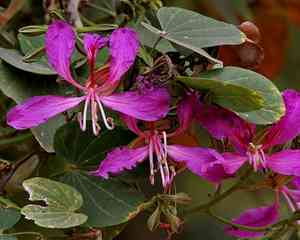
Recognizable by its bilobed foliage and orchid-like blossoms, orchid Tree flourishes with appropriate trimming. Perform pruning right after the flowering period concludes in late winter to encourage development and preserve an appealing form. Make cuts directly above leaf junctions, eliminating any lifeless or frail branches to improve air movement and light access. Pruning benefits orchid Tree by elevating the caliber of its flowers and regulating its dimensions, guaranteeing a lively exhibition of its characteristic blossoms.
Advantages of Trimming Orchid Tree
Advantages of Trimming Orchid Tree
Trimming orchid Tree is crucial for encouraging abundant blooms, boosting its vitality, and maintaining an appealing form. Strategic cuts can stimulate more robust development, leading to a healthier and more floriferous specimen.
Optimal Period for Pruning Orchid Tree
Optimal Period for Pruning Orchid Tree
Pruning orchid Tree in late winter is ideal, as it precedes the arrival of spring, which marks the start of the plant's active growth phase. This timing allows orchid Tree to recover quickly from pruning cuts and direct its energy towards producing new growth in spring. Late winter pruning also minimizes the risk of frost damage to fresh cuts, reduces stress on orchid Tree, and aids in preserving its desired shape. Furthermore, since orchid Tree typically flowers on the current year's growth, late winter pruning will not negatively impact its flowering potential and can even enhance blooming by removing old, unproductive wood. It is important to avoid pruning orchid Tree in the autumn, as the new growth stimulated by pruning may be too delicate to withstand the winter cold.
Required Tools for Pruning Orchid Tree
Hand Pruners
Perfect for making precise cuts on smaller branches and twigs of orchid Tree. Best suited for slender branches up to 1/2 inch in diameter.
Loppers
Effective for cutting through thicker branches of orchid Tree that hand pruners cannot manage. Appropriate for branches up to 2 inches in diameter, offering greater leverage and reach.
Pruning Saw
Utilized for trimming branches exceeding 2 inches in diameter. A curved blade pruning saw can easily handle the larger limbs of orchid Tree, and it is excellent for cutting at awkward angles.
Pole Pruner
Enables safe pruning of higher branches without needing a ladder, extending reach to trim parts of orchid Tree that are otherwise inaccessible.
Shears
Useful for shaping and trimming the foliage of orchid Tree, especially for creating a neat appearance on hedges or for topiary work.
Gloves
Safety is paramount; wear gloves to safeguard hands from thorns, sap, and rough bark while pruning orchid Tree.
Clean Cloth & Disinfectant
To prevent disease transmission, it is essential to clean and disinfect the blades of pruning tools before and after use on orchid Tree.
How to Prune Orchid Tree
Clean Tools
Before beginning, sterilize pruning tools using rubbing alcohol or a household disinfectant to prevent the spread of disease to orchid Tree.
Remove Dead Branches
Carefully cut away dead branches from orchid Tree, making cuts at a 45-degree angle approximately 1/4 inch above a bud or branch junction to encourage healthy new growth.
Eliminate Diseased Branches
Identify and remove diseased branches from orchid Tree, cutting well below the affected area to ensure complete removal of any diseased tissue.
Dispose Materials
Collect and properly discard all trimmed parts to reduce the risk of disease or pests spreading within orchid Tree or to other plants.
Inspect Plant
Examine orchid Tree after pruning to ensure a balanced structure and confirm that all necessary parts have been removed.
Common Pruning Errors with Orchid Tree
Over-Pruning
Removing excessive foliage or too many branches, which can stress orchid Tree and lead to reduced flowering as well as increased susceptibility to pests and diseases.
Improper Cutting Technique
Making cuts that are either too close to the main stem or leaving too large a stub can cause damage and impede the healing process of orchid Tree.
Using Dull Tools
Pruning with dull or unclean tools can result in jagged cuts that are more prone to disease and pest infestation in orchid Tree.
Not Removing Deadwood
Failing to regularly remove dead or diseased branches can hinder orchid Tree's growth and lead to a decline in the plant's overall health.
Pruning Without A Plan
Randomly cutting branches without understanding the growth pattern of orchid Tree can result in an undesirable shape and affect flowering.
General Pruning Advice for Orchid Tree
Sharp And Clean Tools
Use sharp, clean pruning shears or loppers to make clean cuts, which will minimize damage to orchid Tree and promote quicker healing.
Selective Thinning
Thin out crowded branches to improve air circulation and light penetration, which is essential for the healthy growth and flowering of orchid Tree.
Cutting Angle
Make cuts at a 45-degree angle, approximately 1/4 inch above a bud that faces the outside of the plant, which encourages outward growth in orchid Tree.
Shaping And Balance
Aim for a balanced, open shape that allows light into the center of orchid Tree, which helps to stimulate flowering and maintain plant health.
Timing Of Pruning
The best season for pruning has been omitted per instructions. Refer to another section for that information.
Healing Promotion
After pruning orchid Tree, allow the cuts to heal naturally without the application of wound dressings, which can sometimes harbor diseases.



