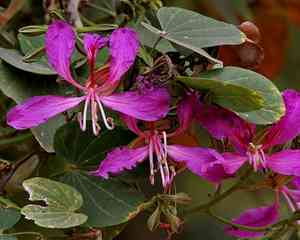
Orchid Tree (Bauhinia purpurea)
Also known as: Hawaiian Orchid Tree, Butterfly Tree
The **Bauhinia purpurea**, commonly known as the Orchid Tree, is a flowering deciduous tree species originating from India and Myanmar. Renowned for its durable wood, it is often used in cabinetry and tool-making. Named in honor of the botanist Bauhin, this tree blooms with vibrant purple flowers each spring. It is also recognized as the city flower of Hong Kong, China.
In This Article
Attributes of Orchid Tree
Lifespan
Perennial
Plant Type
Tree, Shrub
Plant Height
5 m
Spread
3 m
Leaf Color
Green
Flower Size
10 cm to 13 cm
Flower Color
Purple Pink
Images of Orchid Tree
Quickly Identify Orchid Tree
1
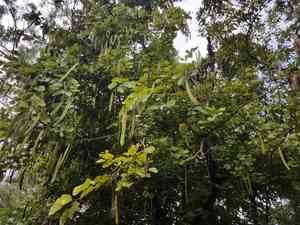
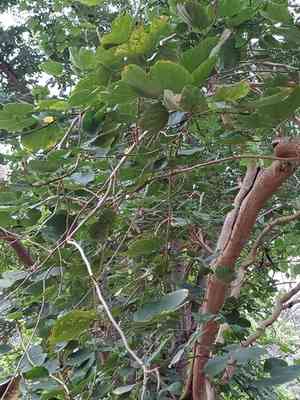
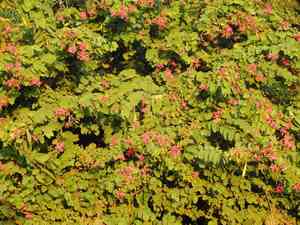
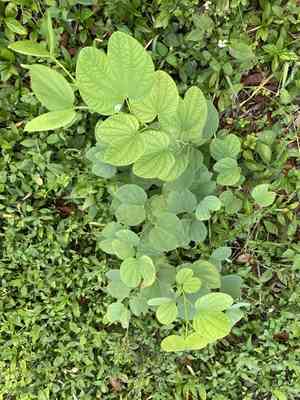
Bauhinia purpurea can be identified by its large, bilobed leaves which are split at the apex and resemble a butterfly's wings. Additionally, its fragrant, five-petaled, purple to pinkish flowers and distinctive seed pods help to distinguish this plant.
Scientific Classification of Orchid Tree
Phylum
Vascular plants
Class
Dicotyledons
Order
Legumes, milkworts and allies
Family
Legume
Genus
Orchid trees
Species
Orchid Tree
Planting and Growing of Orchid Tree
Care Difficulty
Easy
Watering Schedule
Every 3 days
Sunlight Requirements
Full sun
Sunshine Duration
4-8 hours
Ideal Temperature
68-86℉
Soil Type
Potting Mix, Peat Mix
Soil pH
6.5-7.5
Fertilizer Type
Balanced
Pruning Season
Spring, Summer
Pruning Area
Branches, Leaves
Pruning Frequency
2 times a year
Repotting Season
Spring
Pot Type
Plastic, Ceramic
 How to Water Orchid Tree?
Bauhinia purpurea requires a careful balance when it comes to watering. You should ensure the soil is evenly moist but never waterlogged. The best practice is to water about 500 milliliters each time until you see water beginning to drain from the bottom of the pot. This indicates that the root zone is fully moistened without excess water accumulation.
What are the symptoms of an underwatered Orchid Tree?
›
What should I do if my Orchid Tree is not getting enough water?
›
What are the symptoms of an overwatered Orchid Tree?
›
How to save an overwatered Orchid Tree?
›
 What Are the Sunlight Requirements for Orchid Tree?
Bauhinia purpurea ideally enjoys full sun to partial sun. Such exposure ensures efficient photosynthesis, resulting in lush growth and prolific flowering. Providing this range promotes the overall health and ornamental beauty of the plant.
More About Sunlight Requirements Techniques→
Optimal Sunlight Duration
›
Balancing Sun and Shade
›
Preventing Sun Damage
›
 What Is the Ideal Temperature Range for Orchid Tree?
The ideal temperature range for Bauhinia purpurea, commonly known as the Purple Orchid Tree, is between 68°F and 86°F. This warm environment allows for optimal growth and flowering. Keeping the plant within this range encourages robust foliage development and vibrant blooms. Temperatures within this range typically mimic the tropical and subtropical climates where Bauhinia purpurea naturally thrives.
 What Soil is Best for Orchid Tree?
Bauhinia purpurea thrives best in well-drained soils, which prevent water from logging around the roots, reducing the risk of root rot and other microbial infections. This plant prefers nutrient-rich soils. Fertile soil provides essential nutrients that support vigorous growth and vibrant flowering throughout the growing seasons. The soil should have the ability to retain moderate moisture, ensuring that the roots remain hydrated while avoiding over-saturation, which can lead to root decay.
 How to Fertilize Orchid Tree?
Bauhinia purpurea prefers a balanced amount of fertilizer to maintain vibrant growth. For liquid fertilizer, mix it at half the recommended strength to avoid overfeeding, which could differ based on the manufacturer's guidelines. One might use approximately one tablespoon per gallon of water, ensuring the mixture nourishes without overwhelming the plant.
 How to Prune Orchid Tree?
Begin by assembling essential pruning tools such as sharp pruning shears, loppers, or a pruning saw for larger branches. Sterilize these tools with rubbing alcohol or a bleach solution to prevent the spread of diseases before starting the process. Observe and mark branches that are dead, dying, or diseased, as these should be pruned first. Additionally, target branches that cross over each other or grow towards the center of the tree to improve airflow and sunlight penetration. Cut dead or diseased branches at the base where they meet healthy wood using a clean cut angled away from the center to prevent water accumulation. Also, trim back vigorous shoots by about one-third to maintain a balanced shape and encourage side growth.
More About Pruning Techniques→
 How to Propagate Orchid Tree plant?
1
Collect mature pods from the Bauhinia purpurea tree once they turn brown and dry. Open the pods carefully to extract the seeds, ensuring they are not damaged during the process.
2
Cut healthy, semi-ripe stems during early spring, about 10-15 cm long, ensuring each has several leaves. The cut should be made just below a node to maximize rooting potential.
3
Sow seeds in well-draining soil mix, covering lightly, and place cuttings in moist substrate. Ensure both methods have sufficient space and proper humidity to promote germination and rooting.
 How to Repot Orchid Tree plant?
1
Repot your Bauhinia purpurea when you notice the roots starting to crowd the pot, appearing through the drainage holes, or when growth appears stunted. This is a signal that the plant requires more space to promote healthier development and ensure proper nutrient uptake.
2
Select a pot that's 2-3 inches larger in diameter than the current one. A slightly bigger pot allows extra space for root expansion, preventing the plant from becoming root-bound too quickly. Ensure the pot has ample drainage holes to prevent waterlogging, which is detrimental to plant health.
3
Use a well-draining potting mix with a blend of peat moss, perlite, and compost. This mixture retains necessary moisture while allowing excess water to escape, preventing root rot and promoting healthy root breathing and growth.



