How to Propagate Bladderwort?
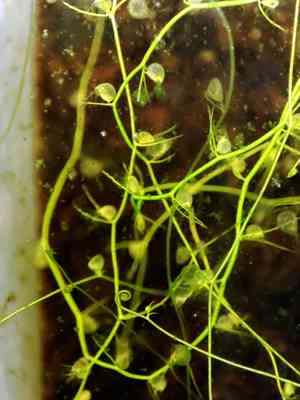
Utricularia flourishes in watery habitats and primarily reproduces via separation. For effective Utricularia propagation, meticulously separate the root ball, making certain that every segment possesses several robust bladders. Immediately reintroduce the separated portions into a water-soaked medium to facilitate rapid establishment and expansion. It is essential to uphold the specific humidity conditions vital for Utricularia's progression.
Optimal Period for Bladderwort Propagation
Propagation Method
Division
Propagation Period
Spring,Autumn
Tools Required for Bladderwort Propagation
Sharp scissors or garden shears
These implements are crucial for making clean cuts through the vegetative parts of bladderwort, including its delicate, thread-like stems. Precise cuts help prevent tissue damage and reduce infection risk, ensuring a successful propagation process.
Water trays or containers
Water trays are vital for bladderwort propagation, as they provide the aquatic environment essential for its growth. These receptacles should be shallow and capable of holding water, offering an ideal habitat for new growth post-division.
Rooting hormone (optional for faster rooting)
Though not always essential, rooting hormone can stimulate quicker root development in bladderwort. This can be advantageous for stabilizing new divisions more rapidly, particularly in a controlled propagation setting.
Tweezers
These are useful for handling small, fragile bladderwort components during the division process. Tweezers aid in accurately separating smaller sections without harming the plants, which is critical for maintaining the viability of each division.
Bladderwort Propagation Guide
Propagation Difficulty
Easy
Post-Propagation Care for Bladderwort
How to Care for Your Newly Propagated Bladderwort?
After propagation, keep bladderwort in a spot with bright, indirect illumination and elevated humidity. The water level should slightly cover the roots but not the shoots. Periodically check for and remove algae to prevent nutrient competition. During the growing season, apply a diluted liquid fertilizer monthly to encourage vigorous growth. Monitor for pests like aphids and address them promptly.
Common Errors to Avoid When Propagating Bladderwort
Overwatering
Even though bladderwort is an aquatic plant, it can still suffer from excessive watering if the water is stagnant. This condition can lead to poor oxygen circulation around the roots, fostering the growth of detrimental bacteria and fungi.
Insufficient Lighting
Bladderwort needs ample light to flourish, but too much direct sunlight can cause algal blooms, which compete with bladderwort for nutrients and light, impeding its development.
Using nutrient-rich media
Bladderwort naturally thrives in nutrient-poor conditions. Introducing bladderwort to nutrient-rich environments can lead to excessive growth of competing plants and algae, which can overwhelm and restrict bladderwort's development.
Tips For Propagating Bladderwort
Use of Distilled Water
To replicate the natural, nutrient-deficient conditions, use distilled water or rainwater for propagating bladderwort. This prevents the buildup of minerals that can promote undesirable algal growth.
Control Algae Growth
To maintain optimal growth conditions, regularly clean the container and replace old water to manage algae, which competes with bladderwort for light and nutrients.
Fragmentation
Bladderwort can be readily propagated through fragmentation. Gently dividing the plantâs stolons or shoots and replanting them can quickly spread bladderwort across new areas.



