How to Propagate Purple heart?
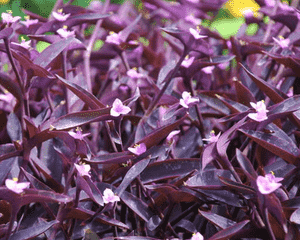
Tradescantia pallida can be readily multiplied using stem sections, ideally during the spring and summer periods. The emergence of new foliage and root formation signifies successful propagation. Maintain elevated humidity and steady dampness for the best outcomes.
Optimal Time for Purple Heart Propagation
Propagation Method
Cutting
Propagation Period
Spring, Summer
Tools Required for Purple Heart Propagation
Sharp pruning shears or scissors
These instruments are utilized for making precise cuts when gathering cuttings from purple heart. Clean cuts help prevent infection and ensure a higher success rate for propagation. Accuracy with such tools is crucial for avoiding unnecessary harm to both the parent plant and the new cuttings.
Rooting hormone powder or gel
This product stimulates root development on purple heart cuttings. It enhances the likelihood of successful rooting by promoting the growth of robust roots, which is vital for the cuttings to establish themselves once planted.
Sterile potting mix
This substrate is where purple heart cuttings are placed to root. A sterile mix prevents the introduction of potential disease-causing agents to the new cuttings, which can be critical during the vulnerable stage of root formation.
Small pots or propagation trays
These containers hold the sterile potting mix and the purple heart cuttings. They should possess adequate drainage to allow excess water to escape, thereby preventing root rot.
Plastic covers or propagation domes
These help maintain a high humidity environment around purple heart, which is advantageous for cuttings as it can prevent moisture loss through transpiration, thus improving rooting success.
Watering can with a fine nozzle or misting bottle
This is employed to gently irrigate the cuttings without disturbing them. A fine mist can provide sufficient moisture without compacting the soil or potentially dislodging the purple heart cuttings.
Heat mat (optional)
This device is used to gently warm the soil, which can improve the rooting success rate in purple heart by providing a consistent and ideal temperature, encouraging faster root growth.
Steps to Propagate Purple Heart
Propagation Method
Cutting
Difficulty Level
Easy
Caring for Your Newly Propagated Purple Heart
Caring for Your Newly Propagated Purple Heart?
Following propagation, position purple heart in bright, indirect light, and water it when the top inch of soil feels dry. Purple heart prefers a humid environment but can tolerate drier air. Fertilize monthly during the growing season with a balanced, water-soluble fertilizer. Avoid excessive watering, which could lead to root rot, and ensure proper drainage. Pruning can encourage bushier growth and should be performed as needed to maintain shape and promote new shoots.
Common Errors to Avoid When Propagating Purple Heart
Overwatering cuttings
Excessively watering the freshly cut stems of purple heart can lead to root rot before new roots have a chance to form. This is problematic as it hinders root development and can kill the cutting.
Using dull blades
Employing dull blades to take cuttings can crush the plant tissue, making it difficult for purple heart to heal the wound and potentially introducing pathogens. This increases the risk of disease and can lead to unsuccessful propagation.
Ignoring node placement
Cuttings taken without considering the position of the nodes may not root. Nodes are essential for root development in purple heart, and a cutting without a node is unlikely to succeed.
Advice for Propagating Purple Heart
Adequate light
Providing bright, indirect light for purple heart cuttings promotes healthy root development. Avoid direct sunlight, which can scorch young cuttings.
Moisture control
Maintain consistent moisture in the propagation medium, but avoid saturation. Overly wet conditions can lead to fungal infections that are detrimental to purple heart.
Use of rooting hormone
Applying a rooting hormone to the cut end of purple heart's cuttings can enhance rooting success, but it's important to follow the instructions and avoid using too much, which can harm the cuttings.



