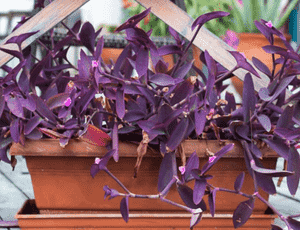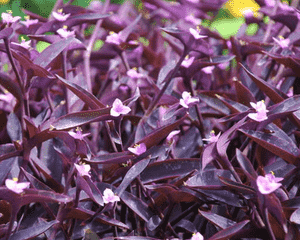
Purple heart(Tradescantia pallida)

Purple heart (Tradescantia pallida)

Also known as: Purple queen

Tradescantia pallida, also known as Purple Heart, is an evergreen perennial with striking deep purple, pointed leaves. This trailing plant is widely appreciated as a houseplant and is frequently utilized in landscaping for bedding purposes.

Attributes of Purple heart

Lifespan
Perennial, Annual
Plant Type
Herb
Plant Height
20 cm to 50 cm
Spread
45 cm
Leaf Color
Green Purple Blue
Flower Size
5 cm to 8 cm
Flower Color
Pink White Purple

ForwardPlant - Identify plants with a snap

Identify and diagnose plants, get toxicity alerts, and explore safety guides for all types of fungi.

Try for Free

Images of Purple heart

Purple heart(Tradescantia pallida)

Quickly Identify Purple heart

1
Look for elongated, lance-shaped leaves that are typically deep purple in color. The stems are also purplish and somewhat fleshy. Small pink or purple flowers appear at the ends of the stems.

Scientific Classification of Purple heart

Phylum
Vascular plants
Class
Monocotyledons
Order
Spiderworts and allies
Family
Spiderwort
Genus
Spiderworts
Species
Purple heart

Planting and Growing of Purple heart

Care Difficulty
Easy
Watering Schedule
Every 3 days
Sunlight Requirements
Full sun
Sunshine Duration
4-8 hours
Ideal Temperature
65-75℉
Soil Type
Potting Mix, Peat Mix
Soil pH
6.5-7.5
Fertilizer Type
Balanced
Pruning Season
Spring, Summer
Pruning Area
Branches, Leaves
Pruning Frequency
2 times a year
Repotting Season
Spring
Pot Type
Plastic, Ceramic

water icon How to Water Purple heart?

The amount of water needed for Tradescantia pallida should be enough to keep the soil consistently moist but never soggy. Water until it starts to drain from the bottom of the pot. This typically means around 250 milliliters. Ensure the top inch of soil is dry before watering again.
What are the symptoms of an underwatered Purple heart?
What should I do if my Purple heart is not getting enough water?
What are the symptoms of an overwatered Purple heart?
How to save an overwatered Purple heart?
More About Watering Techniques

sunlight icon What Are the Sunlight Requirements for Purple heart?

Sunlight Requirements: Full sun, Partial sun
Duration of light: 6 to 8 hours daily
Tradescantia pallida does best with full to partial sunlight. Providing this range ensures vibrant leaf colors and compact growth. Ideal light conditions enhance the plant's aesthetic and health by encouraging more energy production for growth and maintenance.
What is the ideal lighting condition for Tradescantia pallida?
How can you ensure Tradescantia pallida receives adequate light?
What are the benefits of providing ideal lighting for Tradescantia pallida?
More About Sunlight Requirements Techniques

temperature icon What Is the Ideal Temperature Range for Purple heart?

Ideal Temperature: 65 ~ 75℉
The ideal temperature range for Tradescantia pallida, also known as the Purple Heart plant, is between 65°F and 75°F. This range ensures optimal growth and vibrant coloration of the leaves. Maintaining the temperature within this range provides a stable environment moderate enough to mimic the plant's natural habitat, which can be found in the subtropical regions.

soil icon What Soil is Best for Purple heart?

Soil type: Loam, Sandy loam
Soil PH: 6.5 ~ 7.5
Tradescantia pallida thrives best in well-draining soil as it helps prevent root rot by allowing excess water to escape. This ensures the plant remains healthy and vibrant, with access to necessary nutrients without being waterlogged. Rich, organic soil provides Tradescantia pallida with essential nutrients needed for robust growth. It responds well to soil enhanced with compost or organic matter, offering a nutrient boost that promotes vibrant leaf coloration and healthier plants. Soil with a pH of 6.5 to 7.5 suits Tradescantia pallida well, maintaining the right conditions for nutrient absorption. This pH range ensures that essential minerals remain available, supporting the plant's lively growth and resilience. More About Soil

fertilize icon How to Fertilize Purple heart?

Fertilizer type: Balanced
For Tradescantia pallida, it is crucial to use a balanced liquid fertilizer diluted to half strength. Apply approximately 1-2 teaspoons per gallon of water to prevent over-fertilization. This should suffice to meet the nutritional needs without causing harm to the plant. More About Fertilizing Techniques

prune icon How to Prune Purple heart?

Pruning Time: Spring, Summer, Autumn, Winter
Tradescantia pallida, known for its sprawling nature, can be pruned back with ease. Begin by identifying the main stems of the plant, which often develop a leggy look. Focus on shaping the plant and choose the points where the stems are too long or unbalanced, and prepare to cut just above a leaf node. For cutting, ensure you have a pair of sharp, sterilized pruning scissors. Rough or dull scissors can tear the plant tissue, making it prone to infections. Clean cuts promote faster healing and regrowth. After each cut, consider sterilizing the blades again if you suspect any disease presence. Always cut just above a leaf node or joint. This encourages new growth to sprout near the cut area. If you cut too high above a node, it can leave the stem exposed to drying out, reducing the chances of healthy new growth. More About Pruning Techniques

propagate icon How to Propagate Purple heart plant?

Propagate Time: Spring, Early summer
1
Choose healthy, non-flowering stems from your Tradescantia pallida. These should be at least 4-6 inches long. Use sharp, sterilized tools to cut just below a node, as this is where roots will form most readily.
2
Remove the leaves from the lower half of the cutting to expose nodes. This encourages root growth and prevents fungal problems caused by decaying foliage. Optionally, dip the cut end in rooting hormone to enhance root development.
3
Insert the cuttings into a pot filled with moist, well-draining soil mix. Firm the soil around the stems to support them upright. Ensure that at least one node is buried in the soil, as this increases the chances of successful rooting.
More About Propagating Techniques

repot icon How to Repot Purple heart plant?

Repotting frequency: Every 1-2 years
1
Tradescantia pallida needs repotting when its roots start outgrowing the current pot or when the soil becomes compacted, hindering proper water drainage. It's best to check the root ball in spring or summer and plan for repotting if necessary.
2
Select a pot that is 1-2 inches larger in diameter than the current one, with ample drainage holes to allow excess water to escape. A pot that's too large can lead to waterlogged soil, so choosing the right size helps prevent root rot.
3
Opt for a well-draining potting mix that balances moisture retention and aeration. Adding perlite or coarse sand can enhance drainage, ensuring the roots have enough air circulation and preventing the risk of root rot.
More About Repotting Techniques

ForwardPlant - Identify plants with a snap

Find the best spots for them to optimize their health, simply using your phone.

Try for Free

Toxicity of Purple heart

Is Purple heart toxic to cat?

The purple heart plant is harmful to cats, presenting a risk when its sap or juice is consumed, often occurring when cats mistakenly nibble on sections of the plant. Contact with the toxic elements in purple heart may result in various symptoms that signify physical distress, manifesting differently in each affected cat. Pet owners who notice any signs of sickness after ingestion should regard it as an urgent matter to seek immediate attention at a veterinary clinic to safeguard the health and well-being of their feline friend.

Is Purple heart toxic to dog?

The purple heart plant is recognized as toxic to dogs. When dogs consume various parts of the purple heart, especially its sap or juice, they can become poisoned. Following exposure, dogs may display symptoms including vomiting, diarrhea, lethargy, and potentially more severe reactions based on the quantity consumed. It is essential for dog owners to restrict their pets' access to this plant and to obtain prompt veterinary assistance if any symptoms of poisoning arise.

Identify toxic plants for your safety

Learn which plants are harmful to you and your pets, and make informed choices for a safer home!

Try for Free
WARNING
The judgment on toxicity and danger is for reference only. We DO NOT GUARANTEE any accuracy of such judgment. Therefore, you SHALL NOT rely on such judgment. It is IMPORTANT TO SEEK PROFESSIONAL ADVICE in advance when necessary.
More About Toxic Techniques