How to Propagate Sugarcane?
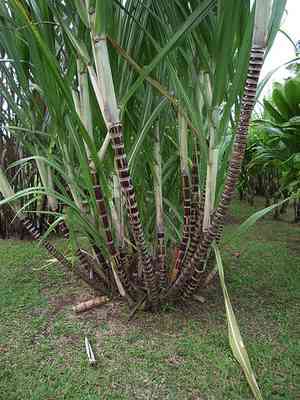
Sugarcane is primarily multiplied through division during the optimal periods of spring and fall. Its ease of propagation is confirmed by the emergence of new shoots. Proper hydration and ample nourishment contribute to successful propagation.
What Is the Best Time To Propagate Sugarcane?
Propagation Type
Splitting
Propagation Season
Spring, Autumn
What Tools Are Used in Sugarcane Propagation?
Sharp, Clean Cutting Tools (e.g., knives, machetes, saws)
These are vital for separating sugarcane stalks with minimal harm, ensuring precise cuts that encourage better recovery and lessen disease risk. A sharp tool aids in making accurate divisions of the setts (stalk sections) used for planting new crops.
Measuring Tape or Ruler
Utilized to confirm each sugarcane sett is the correct length, typically around 15-20 inches, which is key for maintaining consistency and maximizing growth potential in new plantings.
Protective Gloves
Offer safety for the individual performing the propagation, as handling sugarcane can result in cuts or scrapes. Gloves also provide a better grip on tools during divisions.
Garden Hoe or Shovel
These are employed for preparing the soil before planting sugarcane setts. The hoe or shovel is crucial for creating furrows or trenches where setts are placed, and for covering them with soil after planting.
Watering Can or Hose
Essential for supplying sufficient moisture to newly planted sugarcane setts, which is vital for root establishment and growth. Consistent watering helps cuttings recover from transplant shock and promotes new shoot development.
Garden Labels or Markers
Used to identify planting rows and dates, important for tracking growth progress and planning subsequent care for propagated sugarcane. Markers can prevent confusion, especially in larger operations, and assist in research and development.
How to Propagate Sugarcane?
Propagation Type
Division
Difficulty Level
Simple
How to Care for Your Newly Propagated Sugarcane?
How to Care for Your Newly Propagated Sugarcane?
After sugarcane has been successfully propagated, the plant will need consistent watering, particularly during dry spells, to maintain steady soil moisture. Fertilize sugarcane with a balanced N-P-K fertilizer according to soil test recommendations to support robust growth. Shield young sugarcane plants from pests and diseases by monitoring and implementing appropriate control measures when necessary. As the sugarcane matures, periodic thinning might be required to prevent overcrowding and enhance air circulation. Harvesting of sugarcane typically occurs when the canes are ripe and possess high sugar content; this usually aligns with the plant's age ranging from 10 to 24 months.
Common Mistakes to Avoid When Propagating Sugarcane
Improper cutting selection
Choosing unhealthy or immature sugarcane cuttings can lead to poor root development and propagation failure. Selecting strong and disease-free cuttings is crucial for successful propagation.
Inadequate preparation of cuttings
Failing to properly prepare sugarcane cuttings by not trimming leaves or buds can reduce rooting chances as the plant may prioritize leaf growth over root development.
Incorrect planting depth
Planting sugarcane cuttings either too shallow or too deep can hinder root establishment. The correct depth ensures optimal contact with soil moisture and air, which are vital for root development.
Over-watering or under-watering
Both excessive and insufficient watering can cause root rot or dehydration in sugarcane, impeding healthy root growth and slowing the propagation process.
Neglecting pest control
Ignoring pest control during the early propagation stages can severely damage or disease young sugarcane cuttings, jeopardizing their survival.
Tips For Propagating Sugarcane
Healthy cutting selection
Always choose healthy and mature sugarcane stalks with several bud nodes. This increases the likelihood of successful rooting and vigorous growth.
Cutting preparation
Properly prepare each sugarcane cutting by making clean cuts above and below the bud nodes and avoiding damage to the nodes, which are essential for root initiation.
Optimal planting depth
Plant each sugarcane cutting at the correct depth, usually a few inches into the soil, to establish a balance between support, moisture, and aeration critical for root development.
Balanced watering
Maintain consistent soil moisture around sugarcane cuttings without over-saturating the soil. A balanced watering regimen ensures adequate hydration for root growth without causing water-logging.
Pest and disease management
Monitor sugarcane cuttings regularly for signs of pests and diseases. Early detection and treatment can protect the young plants and encourage healthy propagation.



