How to Propagate Burmese rosewood?
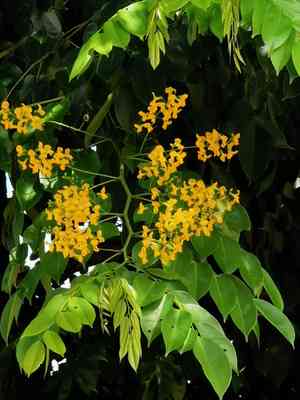
Originating from Southeast Asia, burmese rosewood is a prized timber known for its aesthetic and structural attributes. To ensure successful propagation, choose semi-hardwood cuttings from robust, pathogen-free donor plants. These cuttings require treatment with a rooting stimulant to encourage root formation and should be placed in a substrate that drains efficiently, keeping it uniformly damp. A steady environment with diffused illumination will facilitate effective rooting, after which a period of adjustment is necessary before moving them to their permanent spot.
When Is the Optimal Time to Propagate Burmese Rosewood?
Propagation Method
Cutting
Propagation Period
Autumn,Winter
What Equipment Is Utilized for Burmese Rosewood Propagation?
Sharp Pruning Shears
These are vital for making clean, precise cuts on burmese rosewood. Sharp blades ensure smooth cuts, which aids in better healing and rooting. Jagged cuts can heighten infection risk and hinder root growth.
Rooting Hormone Powder
This helps stimulate root development from burmese rosewood cuttings. Applying rooting hormone to the cut end before planting can significantly boost the chances of successful root formation, crucial for the sustainability of propagated plants.
Sterile Potting Mix
A well-draining, sterile potting mix offers an ideal environment for new burmese rosewood roots to grow without the threat of soil-borne diseases. The mix's sterility ensures young, vulnerable cuttings aren't exposed to pathogens that could impede their growth.
Moisture Meter
This device assists in monitoring the soil's moisture level where burmese rosewood cuttings are planted. Proper moisture is critical for rooting; either too much or too little water can be detrimental to propagation success.
Propagation Trays
These trays are used to organize and manage multiple burmese rosewood cuttings in a controlled setting. They help maintain consistent soil moisture and temperature, both essential for encouraging root development.
Clear Plastic Dome or Cover
Placing a clear plastic cover over propagation trays creates a greenhouse-like environment, maintaining high humidity and stable temperature, which are beneficial for the rooting process of burmese rosewood.
How to Propagate Burmese Rosewood?
Propagation Type
Moderately Difficult
How to Care for Your Newly Propagated Burmese Rosewood?
How to Care for Your Newly Propagated Burmese Rosewood?
Once the burmese rosewood cutting has developed a robust root system, it can be gradually acclimated to less humid conditions by removing the plastic cover for extended periods. When new growth appears, indicating successful rooting, transplant the new burmese rosewood into a larger pot with a similar well-draining soil mix. Water thoroughly but allow the soil to dry slightly between waterings. Position the young burmese rosewood in a spot with bright, indirect sunlight and shield it from strong winds and extreme temperatures. Fertilize every 4-6 weeks during the growing season with a balanced, water-soluble fertilizer. Regular pruning will help maintain a desired shape and encourage branching.
Common Errors to Avoid When Propagating Burmese Rosewood
Overwatering
This leads to root rot, impeding the growth of new roots from burmese rosewood cuttings or seeds.
Using unsterilized tools
This can introduce pathogens that may cause diseases, harming or killing burmese rosewood propagules.
Neglecting humidity
Insufficient humidity can cause burmese rosewood cuttings to dry out before they establish roots.
Planting seeds too deeply
This can prevent burmese rosewood germination as seedlings may not be able to break through the soil surface.
Ignoring soil composition
The incorrect soil mix can hinder proper drainage and aeration, vital for burmese rosewood root development.
Excessive use of fertilizers
While nutrients are necessary, too much fertilizer can burn young roots or inhibit root formation in burmese rosewood.
Tips For Propagating Burmese Rosewood
Proper cut preparation
Make a clean cut just below a node using a sterilized cutting tool to increase the successful establishment of burmese rosewood cuttings.
Appropriate soil mix
Use a well-draining soil mix, rich in organic matter, to promote healthy root growth of burmese rosewood.
Maintain humidity levels
Use a humidity dome or mist regularly to keep the humidity high around burmese rosewood cuttings, aiding in root formation.
Adequate water supply
Water burmese rosewood cuttings or seeds just enough to keep the soil moist, not waterlogged, to avoid root rot.
Seed depth consideration
Sow the seeds of burmese rosewood at the right depth, usually not more than twice the diameter of the seed, to facilitate germination.
Gradual fertilization
Begin fertilizing burmese rosewood only after the initial establishment of roots and do so sparingly to avoid damage.



