How to Propagate Amur chokecherry?
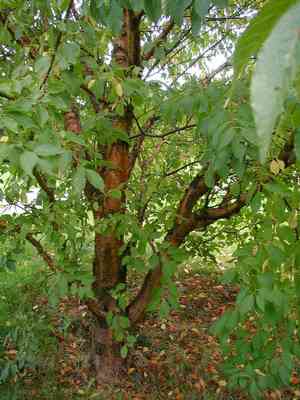
Amur chokecherry can be successfully multiplied through either softwood or semi-hardwood cuttings. For optimal results, collect cuttings from robust specimens during their period of vigorous development. Select stems possessing multiple nodes, make a cut beneath a node, and strip away the bottom leaves. Immerse the cut end in a rooting stimulant to foster development and insert into a potting medium that drains efficiently. Create a damp atmosphere by enclosing with plastic and provide diffused illumination. Verify that the substrate stays hydrated but not oversaturated to facilitate root formation.
Optimal Period for Amur Chokecherry Propagation
Propagation Method
Cutting
Propagation Period
Autumn,Winter
Equipment for Amur Chokecherry Propagation
Sharp Pruning Shears
These are crucial for obtaining cuttings from amur chokecherry. Pruning shears must be sharp to ensure a clean cut, minimizing harm to the parent plant and boosting the success rate for the cuttings. A precise cut helps prevent disease entry and promotes faster healing and rooting.
Rooting Hormone
This substance significantly improves the rooting success rate of cuttings by encouraging root formation at the cut site. Applying a rooting hormone to the base of amur chokecherry cuttings can shorten propagation time and increase the uniformity and vigor of new plants, especially vital for hardwood cuttings which tend to root more slowly.
Sterile Potting Mix
Employing a sterile potting mix for planting amur chokecherry cuttings is essential to prevent soil-borne diseases which can be detrimental during the vulnerable stage of root development. A high-quality, well-draining potting mix also provides the necessary support and moisture retention to aid the establishment of new roots.
Humidity Dome or Plastic Cover
This item helps maintain a high humidity environment crucial for the successful rooting of amur chokecherry cuttings. It prevents excessive moisture loss from the cuttings, promotes faster root growth, and enhances overall survival rates by creating an ideal microclimate.
How to Propagate Amur Chokecherry?
Propagation Difficulty
Moderately Difficult
Post-Propagation Care for Amur Chokecherry
Post-Propagation Care for Amur Chokecherry
Once rooted, gradually introduce the young amur chokecherry to outdoor conditions if they were rooted indoors. Transplant into a larger container or a permanent spot with well-draining soil. Water consistently to keep the soil moist but not waterlogged, especially during dry periods. Apply a balanced, slow-release fertilizer in the spring. As the amur chokecherry matures, prune to shape and encourage a robust structure while monitoring for common pests and diseases affecting amur chokecherry.
Common Errors to Avoid When Propagating Amur Chokecherry
Overwatering cuttings
Excessive watering can lead to root rot and fungal infections, weakening or killing cuttings before they can establish.
Inadequate cutting size
Using cuttings that are too small or too large can hinder rooting; undersized cuttings may lack sufficient energy reserves, while oversized ones may rot before rooting.
Poor sanitation practices
Failing to use sterilized tools and containers can introduce pathogens leading to disease outbreaks in cuttings or seedlings.
Neglecting aftercare
Overlooking post-propagation care such as proper acclimatization and gradual exposure to conditions can result in shock and dieback.
Unsuitable soil medium
Using an inappropriate soil mix can lead to poor aeration and drainage, negatively impacting root development and growth.
Advice for Propagating Amur Chokecherry
Optimal cutting selection
Choose semi-hardwood cuttings from healthy, disease-free amur chokecherry that are about 4-8 inches long and have several leaf nodes.
Clean preparation environment
Always use clean, sterilized tools and pots to avoid contamination and ensure healthy rooting.
Appropriate moisture levels
Maintain consistent moisture without overwatering; a well-draining, moist medium is ideal for rooting cuttings.
Use of rooting hormones
Dip the base of the cuttings in a rooting hormone to stimulate root growth and enhance the chances of successful propagation.
Providing ideal conditions
Place cuttings in a bright, indirect sunlight environment with stable, moderate temperatures to encourage rooting without stress.



