How to Propagate Quacimmila de canario?
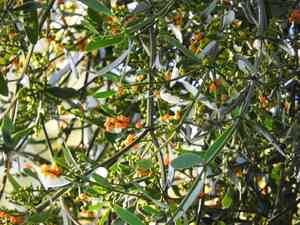
Quacimmila de canario, frequently encountered in Central and South America, flourishes as a hemi-parasitic organism. Its reproduction is generally achieved via cuttings. For optimal development, choose robust branches for cuttings, ensuring they measure approximately 10-15 cm in length. Submerge the cut end in rooting stimulant prior to inserting them into adequately draining substrate. Steady hydration and diffused illumination significantly boost the likelihood of successful root formation.
Optimal Period for Quacimmila De Canario Propagation
Propagation Method
Cutting
Propagation Period
Spring,Summer
Tools Required for Quacimmila De Canario Propagation
Pruning Shears
Utilized for taking clean and precise cuttings from quacimmila de canario. Quality pruning shears are vital to lessen harm to plant tissues, lowering infection risk and ensuring cuttings have the best chance to root successfully.
Rooting Hormone
A rooting hormone can significantly boost the likelihood of successful root formation. Applying rooting hormone to quacimmila de canario cuttings promotes quicker and stronger root development, which is crucial for the new plants' health.
Sterile Potting Medium
Employing a sterile potting medium is essential to ward off diseases and pests. A well-draining, sterile medium offers the ideal environment for quacimmila de canario cuttings to establish roots, ensuring proper moisture and air circulation.
Propagation Trays
Propagation trays assist in organizing and maintaining cuttings in an optimal setting. They often feature compartments perfect for rooting multiple quacimmila de canario cuttings, allowing for better management and reduced cross-contamination risk.
Humidity Dome
Maintaining appropriate humidity is critical for successful cutting root development. A humidity dome placed over propagation trays helps retain moisture around quacimmila de canario cuttings, preventing them from drying out during the root formation phase.
Spray Bottle
A fine mist spray bottle is necessary to keep cuttings and the medium uniformly moist without overwatering, which is crucial for delicate quacimmila de canario cuttings. Regular misting ensures consistent moisture levels, fostering healthy root growth.
How to Propagate Quacimmila De Canario?
Propagation Difficulty
Moderately Difficult
Caring for Your Newly Propagated Quacimmila De Canario
Caring for Your Newly Propagated Quacimmila De Canario
Once quacimmila de canario cuttings have rooted and been transplanted, a consistent care regimen is important. Water plants regularly but allow soil to dry slightly between waterings to prevent root rot. Provide support if needed, as quacimmila de canario may benefit from physical support during growth. Ensure adequate light, ideally bright but indirect sunlight, and protect from extreme temperatures. Regularly check for pests and diseases, and prune as needed to maintain a healthy, well-shaped plant.
Common Errors to Avoid When Propagating Quacimmila De Canario
Incorrect Cutting Methods
Improper cuts can harm plant tissue, leading to infections and poor establishment of new plants.
Excessive Watering
Too much water can cause root rot and other fungal diseases, hindering successful propagation.
Insufficient Illumination
Lack of adequate light can result in weak, elongated growth that cannot sustain the new plant.
Using Inferior Soil
Poor soil quality can stunt growth and fail to provide necessary nutrients for healthy development.
Neglecting Humidity Levels
Improper humidity can slow down the rooting process and reduce overall plant vitality.
Advice for Propagating Quacimmila De Canario
Employ Clean, Sharp Implements
Always use sterilized and sharp tools to make clean cuts and minimize the risk of infection.
Moderate Irrigation
Keep the soil lightly moist but not waterlogged to prevent root rot and encourage healthy root development.
Ensure Bright, Indirect Illumination
Provide plenty of indirect sunlight to promote strong growth without causing leaf burn.
Utilize Well-Draining Substrate
Opt for soil that drains well, enriched with organic matter to support growing plants.
Maintain Proper Humidity
Keep the humidity levels high, which can be achieved by using a humidity dome or misting, to support successful rooting.



