How to Propagate Baccharisleaf beardtongue?
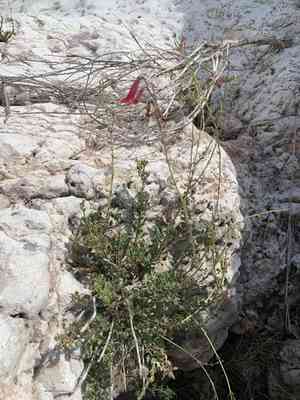
Baccharisleaf beardtongue, a robust and decorative perennial, is most effectively multiplied by planting its seeds. Provide a growing medium with good drainage and scatter the seeds on the surface, avoiding excessive coverage, as illumination assists their sprouting. Maintain consistent soil dampness, but prevent saturation. After the young plants emerge, progressively expose them to more light. Optimal cultivation requires ample sunlight and either stony or sandy substrates.
Optimal Period for Baccharisleaf Beardtongue Propagation
Propagation Method
Seeding
Propagation Period
Spring
Tools Utilized in Baccharisleaf Beardtongue Propagation
Seed Trays
Seed trays offer a controlled setting for baccharisleaf beardtongue seedlings to sprout. They guarantee sufficient spacing and foster root growth, vital for robust young plants.
Fine Potting Mix
A fine potting mix guarantees proper drainage and aeration, crucial for the germination and root establishment of baccharisleaf beardtongue seeds.
Humidity Dome
A humidity dome sustains consistent moisture and temperature, creating an ideal microclimate for baccharisleaf beardtongue seed germination, particularly in early stages.
Spray Bottle
A spray bottle is employed to mist the soil surface, keeping it uniformly moist without over-saturating, which can cause seed or seedling decay in baccharisleaf beardtongue.
Labeling Stakes
Labeling stakes assist in tracking baccharisleaf beardtongue seeds and seedlings, ensuring various propagation stages are well-organized and monitored.
Heating Mat
A heating mat delivers consistent bottom warmth, which can accelerate baccharisleaf beardtongue seed germination by replicating the warm soil conditions they require.
Small Hand Trowel
A small hand trowel is useful for carefully transplanting baccharisleaf beardtongue seedlings once they are sturdy enough, ensuring minimal root disturbance.
Organic Fertilizer
Organic fertilizer supplies essential nutrients to baccharisleaf beardtongue seedlings, promoting vigorous growth and healthy development as they transition from germination to more mature stages.
How to Propagate Baccharisleaf Beardtongue?
Propagation Type
Simple
How to Nurture Your Newly Propagated Baccharisleaf Beardtongue?
How to Nurture Your Newly Propagated Baccharisleaf Beardtongue?
Post-propagation, continue to care for baccharisleaf beardtongue by watering moderately, allowing the soil to dry slightly between waterings to prevent root rot. Fertilize sparingly with a balanced, slow-release fertilizer and ensure the plants receive full sunlight. Regularly check for pests and diseases, and prune as needed to maintain shape and encourage healthy growth. Mulching around the base can help retain soil moisture and suppress weeds.
Common Errors to Avoid When Propagating Baccharisleaf Beardtongue
Overwatering
Excessive water can lead to root decay and fungal infections, which are detrimental to the plant's health and survival.
Using Poor Soil
Unsuitable soil that retains too much moisture or lacks proper drainage can hinder root development and impair growth.
Insufficient Light
Failure to provide adequate sunlight can impede the plant's growth and reduce its chances of successful propagation.
Improper Cuttings
Taking cuttings that are too large, too small, or incorrectly cut can decrease the likelihood of successful rooting.
Advice for Propagating Baccharisleaf Beardtongue
Well-Drained Soil
Utilize a well-drained mix that allows excess water to escape and prevents root rot.
Proper Watering
Water sparingly to avoid waterlogged soil; this plant prefers slightly dry conditions once established.
Adequate Light
Ensure the cuttings receive bright, indirect light to encourage healthy growth without scorching the leaves.
Healthy Cuttings
Select healthy, mature cuttings and make clean cuts just below a node to enhance rooting success.



