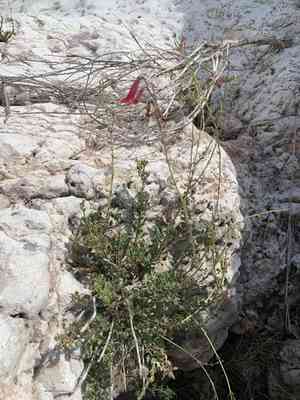
Baccharisleaf beardtongue (Penstemon baccharifolius)
Also known as: Rock Penstemon, False Heather, Sampson's Snakeroot
Penstemon baccharifolius, also known as Baccharisleaf beardtongue, is a resilient perennial known for its tubular red to orange flowers that draw in hummingbirds. Its foliage, similar to oregano, flourishes in dry, rocky soils and can often be found adorning cliffs or hillsides. This drought-tolerant plant stands out in arid environments, offering bright, colorful blooms that enhance the landscape.
In This Article
Attributes of Baccharisleaf beardtongue
Lifespan
Perennial
Plant Type
Herb
Plant Height
30 cm to 91 cm
Spread
60 cm
Leaf Color
Dark green
Flower Size
1 inch (2.5 cm)
Flower Color
Bright red
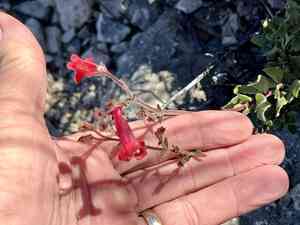
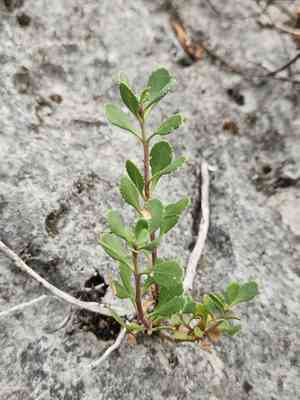
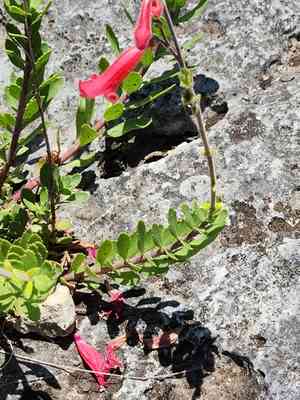
Images of Baccharisleaf beardtongue
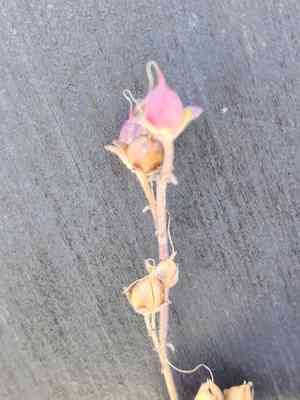
Quickly Identify Baccharisleaf beardtongue
1
The plant can be identified by its lance-shaped, serrated leaves that resemble those of Baccharis. Its flowers are tubular and typically bright red, making them easily distinguishable.
Scientific Classification of Baccharisleaf beardtongue
Phylum
Vascular plants
Class
Dicotyledons
Order
Lamiales
Family
Plantain
Genus
Penstemon
Species
Baccharisleaf beardtongue
Planting and Growing of Baccharisleaf beardtongue
Care Difficulty
Moderate
Watering Schedule
Every 2 days
Sunlight Requirements
Full sun
Sunshine Duration
6-10 hours
Ideal Temperature
70-85℉
Soil Type
Potting Mix, Peat Mix
Soil pH
6.5-7.5
Fertilizer Type
Balanced
Pruning Season
Spring, Summer
Pruning Area
Branches, Leaves
Pruning Frequency
2 times a year
Repotting Season
Spring
Pot Type
Plastic, Ceramic
 How to Water Baccharisleaf beardtongue?
The watering amount for Penstemon baccharifolius should be around 250 milliliters per session. Make sure to water the plant until the soil is moist but not waterlogged. The aim is to keep the soil consistently damp, allowing the plant to access the moisture it needs to thrive without becoming oversaturated.
What are the symptoms of an underwatered Baccharisleaf beardtongue?
›
What should I do if my Baccharisleaf beardtongue is not getting enough water?
›
What are the symptoms of an overwatered Baccharisleaf beardtongue?
›
How to save an overwatered Baccharisleaf beardtongue?
›
 What Are the Sunlight Requirements for Baccharisleaf beardtongue?
Penstemon baccharifolius benefits from full sun to partial sun exposure. This ideal light range supports maximum blooming and vigorous growth, helping the plant develop into its best possible form.
How much sunlight does Penstemon baccharifolius prefer?
›
What are the solutions to provide ideal lighting for Penstemon baccharifolius?
›
What are the benefits of ideal lighting for Penstemon baccharifolius?
›
 What Is the Ideal Temperature Range for Baccharisleaf beardtongue?
The ideal temperature range for Penstemon baccharifolius is between 70°F and 85°F. This range allows the plant to thrive, promoting optimal photosynthesis and growth. Within these temperatures, the overall physiological functions of the plant operate efficiently, enhancing its resilience and ornamental appeal.
 What Soil is Best for Baccharisleaf beardtongue?
Penstemon baccharifolius thrives in well-drained soil, which prevents waterlogging and root rot. Good drainage is essential for the plant's health and flowering capacity, allowing roots to breathe and absorb nutrients efficiently. Although it can survive in poorer soils, a nutrient-rich substrate will boost growth and flowering. Adding organic matter improves soil fertility, providing essential nutrients that help maintain vibrant foliage and robust blooms. Soil with good aeration is crucial for Penstemon baccharifolius. Aerated soil supports root health, allowing for essential gas exchange and fostering a robust root system that can better tolerate environmental stressors.
 How to Fertilize Baccharisleaf beardtongue?
For optimal growth, Penstemon baccharifolius requires a modest amount of fertilizer. A quarter to half strength of an all-purpose liquid fertilizer suffices, ensuring nutrients without overwhelming the plant's system. Use approximately 1 tablespoon per gallon.
 How to Prune Baccharisleaf beardtongue?
When pruning Penstemon baccharifolius, you'll require a sharp pair of garden shears and possibly some disinfectant wipes. Sharp shears ensure clean cuts, which heal faster, reducing plant stress. Disinfectant wipes help to clean your tools between cuts, especially when transitioning between plants, thus preventing the spread of any potential diseases. Begin pruning by identifying spent flowers on your Penstemon baccharifolius and cutting them back to the nearest set of healthy leaves. This encourages the plant to direct energy toward new growth and more blooms. Additionally, trim any dead or damaged stems at their base. Ensure each cut is made at a 45-degree angle to prevent water accumulation and rot. Pruning during the active growing seasons of spring and summer ensures the plant can quickly recover and produce new blooms. In autumn, focus on removing any weak or diseased growth as the plant begins to prepare for dormancy. Winter is generally not recommended for heavy pruning, but removing any obviously dead wood is acceptable to prepare for the upcoming growth season.
More About Pruning Techniques→
 How to Propagate Baccharisleaf beardtongue plant?
1
Harvest healthy seeds from mature Penstemon baccharifolius plants. Clean them and allow them to dry before sowing them in a seed tray filled with soil mix.
2
Select healthy stems and use sharp pruning shears to take semi-hardwood cuttings. Ensure the cuttings are 4-6 inches long and have several nodes.
3
Place seeds or cuttings in a moderately warm environment. Water them lightly, being careful not to overwater, as the roots may rot in overly damp soil.
 How to Repot Baccharisleaf beardtongue plant?
1
Watch for signs like roots growing out of the pot's drainage holes or the plant becoming top-heavy. These are clear indicators that your Penstemon baccharifolius needs more room to grow. Repotting ensures your plant has the necessary space for healthy root development, promoting vibrant foliage and blossoms.
2
Select a pot that is one size larger than the current one, with ample drainage holes. A slightly larger pot prevents waterlogging, which is crucial for preventing root rot and supporting optimal growth conditions. Terra cotta pots are ideal as they allow excess moisture to evaporate, creating a healthy environment for your plant.
3
Opt for a well-draining cactus mix, as this mimics the natural environment of Penstemon baccharifolius. Such soil prevents soggy roots and encourages healthy moisture balance, promoting robust growth and resilience against diseases.



