How to Propagate Watercress?
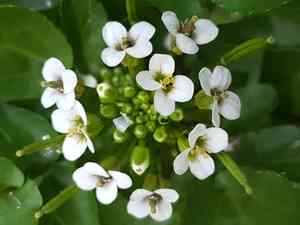
Watercress flourishes when propagated by division, ideally in spring or fall. Reproduction is straightforward, marked by the emergence of new shoots. Guarantee adequate root separation for successful planting.
Optimal Period for Watercress Propagation
Propagation Method
Division
Propagation Period
Spring, Autumn
Tools Required for Watercress Propagation
Garden Shears
Garden shears are vital for making clean cuts through watercress stems during division. Their sharp blades ensure precise severance, minimizing tissue damage and promoting faster recovery.
Watering Can with Fine Rose
A watering can equipped with a fine rose attachment is used to gently irrigate watercress post-propagation, ensuring delicate stems and roots remain undisturbed while providing necessary hydration for establishment.
Aquatic Planting Basket
An aquatic planting basket is essential for successful watercress propagation by division in an aquatic setting. It provides secure placement in water, allowing roots to grow through its mesh while preventing the plant from drifting.
Rooting Hormone
While not always necessary, rooting hormone can aid watercress propagation by stimulating root development from cut sections, thereby increasing the likelihood of successful establishment.
Sterilizing Solution (e.g., Rubbing Alcohol or Bleach Solution)
A sterilizing solution is employed to sanitize tools before and after propagation, reducing the risk of disease transmission and ensuring the health and vitality of watercress.
Non-porous Tray
A non-porous tray is useful for holding watercress divisions before and after applying rooting hormone, as well as during transport to the planting site. It aids in maintaining cleanliness and organization.
Substrate (Gravel or Clay Pellets)
A suitable substrate, such as gravel or clay pellets, supports watercress rooting in the aquatic basket by offering stability and a medium for root growth without compacting over time.
How to Propagate Watercress?
Propagation Method
Division
Difficulty Level
Easy
Caring for Your Newly Propagated Watercress
Caring for Your Newly Propagated Watercress?
Post-propagation, ensure watercress remains in a water-rich environment, as it thrives in moist conditions. Consistently replenish water or keep the soil uniformly damp. Position watercress in partial to full sunlight and fertilize with a diluted liquid feed bi-weekly during the growing season. Prune watercress to encourage bushier growth and prevent legginess. Monitor for pests and diseases, treating them promptly if observed.
Common Errors to Avoid When Propagating Watercress
Insufficient or excessive watering
Improper watering can be detrimental to watercress. Too little water can lead to dehydration, as it thrives in consistently moist conditions. Conversely, overwatering may cause root rot and other fungal issues due to excessive moisture around the roots.
Poor cutting selection
When propagating watercress from cuttings, choosing weak or diseased stems can result in inadequate root development and feeble growth. Healthy cuttings are crucial for successful propagation.
Ignoring water quality
Using water with high levels of chlorine or other chemicals can harm watercress. As watercress is sensitive to water quality, using untreated tap water can lead to poor plant health and impede growth.
Neglecting hygiene
Failing to use clean tools or containers for propagation can introduce pathogens to watercress, potentially leading to disease and poor growth. Proper sanitation is vital for preventing contamination.
Tips For Propagating Watercress
Consistent moisture
Maintaining steady moisture is critical for watercress propagation. Use a water-filled tray to keep the growing medium uniformly moist, but not saturated, to support healthy root development.
Robust cuttings
Always select healthy, vigorous stems for cuttings when propagating watercress. Cuttings should be at least 4-6 inches long with several leaves, and the cut should be made just below a leaf node.
Filtered water
For optimal results, use filtered or rainwater when irrigating watercress. This ensures that the sensitive roots of watercress are not exposed to harmful chemicals commonly found in tap water.
Clean practices
Ensure all tools, containers, and surfaces are clean before propagating watercress to prevent disease spread. Disinfect tools and containers with a mild bleach solution or alcohol before use.



