How to Propagate Giant honey flower?
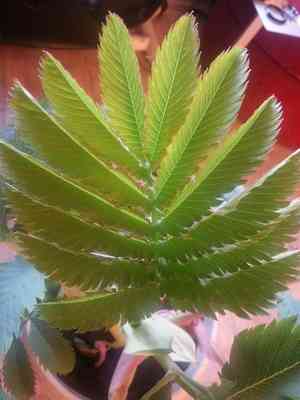
Melianthus major, or giant honey flower, is recognized for its appealing leaves and towering inflorescences that emit a honey-like fragrance. To multiply giant honey flower, obtain cuttings from robust, established specimens. Select softwood cuttings, which are segments of pliable, recent growth. Verify that each cutting possesses a minimum of two leaf pairs. Submerge the severed end in rooting compound to stimulate root formation and embed it in a growing medium that drains effectively. Sustain uniform dampness and supply filtered sunlight until roots are firmly set and fresh growth signifies successful multiplication.
When Is the Optimal Time to Propagate Giant Honey Flower?
Propagation Method
Cutting
Propagation Period
Spring,Summer
What Equipment Is Used for Giant Honey Flower Propagation?
Sharp Pruning Shears
Essential for obtaining clean cuttings, sharp pruning shears ensure precise, smooth cuts, minimizing damage to giant honey flower's tissues. This improves the likelihood of successful root growth by preventing infection and decay at the cut site.
Rooting Hormone Powder
This product encourages root development when applied to the base of giant honey flower cuttings. Rooting hormone speeds up root initiation, boosting the overall success rate of propagation.
Sterile Potting Mix
A well-draining and sterile potting mix offers an ideal environment for giant honey flower's rooting. It prevents fungal and bacterial growth, which is vital for young cuttings' survival and health, promoting successful establishment without competition or disease.
Propagation Tray with Lid
Maintaining controlled humidity and temperature is made easier by using a propagation tray with a clear lid. This tool is crucial for giant honey flower, creating a greenhouse-like effect that supports the cutting until it develops roots.
Heat Mat
An optional, but beneficial tool, heat mats assist in maintaining an optimal rooting temperature. This is particularly useful during colder climates or seasons, enhancing the rooting process for giant honey flower by providing consistent warmth.
How to Propagate Giant Honey Flower?
Propagation Difficulty
Easy
How to Care for Your Newly Propagated Giant Honey Flower?
How to Care for Your Newly Propagated Giant Honey Flower?
After propagating giant honey flower, gradually acclimate the new plants to less humid conditions by opening the plastic bag or dome daily. Once rooted, transplant into individual pots with well-draining soil and place them in bright, indirect sunlight. Water consistently to keep the soil moist but not waterlogged, and apply a balanced, slow-release fertilizer to support growth. Protect young plants from extreme temperatures and winds until they are fully established.
Common Errors to Avoid When Propagating Giant Honey Flower
Incorrect cutting selection
Using unhealthy or immature cuttings for propagation can result in poor root development and unsuccessful propagation of giant honey flower.
Excessive watering
Too much moisture can lead to root rot in giant honey flower cuttings, impeding root formation and potentially killing the propagation material.
Neglecting hygiene
Not sterilizing tools or using contaminated soil may introduce pathogens, negatively impacting the health and growth of giant honey flower.
Inappropriate soil composition
Using a soil mix that lacks proper drainage can cause waterlogging and root diseases for giant honey flower.
Ignoring humidity control
Failing to maintain a stable humidity environment can cause the cuttings of giant honey flower to dry out, reducing the chances of successful rooting.
Advice for Propagating Giant Honey Flower
Healthy cutting selection
Choose healthy, mature stems with robust leaf growth to increase the chances of successful rooting for giant honey flower.
Adequate watering
Provide just enough water to keep the soil moist, ensuring it never becomes waterlogged to protect giant honey flower's developing roots.
Sanitation practices
Always use sterilized tools and fresh, disease-free soil to prevent the spread of pathogens to giant honey flower.
Well-draining soil mix
Use a soil mix with good drainage properties, such as a combination of peat, perlite, and well-rotted compost, suitable for giant honey flower's root development.
Humidity and moisture control
Maintain a high humidity level around the cuttings of giant honey flower with the help of a humidity dome or regular misting, without over-saturating the plant material.



