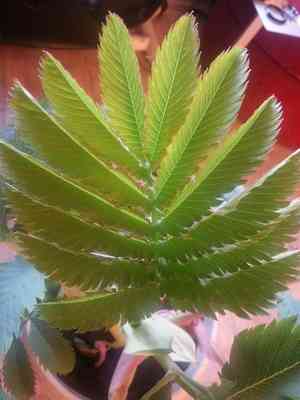
Giant honey flower (Melianthus major)
Also known as: Cape honey flower
The giant honey flower, also known as honey bush, is a robust and toxic perennial shrub. Native to South Africa, it is scientifically named *Melianthus major*. This plant should not be confused with the similarly named honeybush (*Cyclopia spp.*), which is used for making tea. Locally referred to as "kruidjie-roer-my-nie" (meaning "herb-touch-me-not" in Afrikaans), the giant honey flower features large, serrated blue-green leaves and produces clusters of reddish-brown or maroon flowers filled with nectar that attract birds like hummingbirds. While it is easy to cultivate, care should be taken due to its poisonous nature and the potential for skin irritation from its sap.
Attributes of Giant honey flower
Images of Giant honey flower
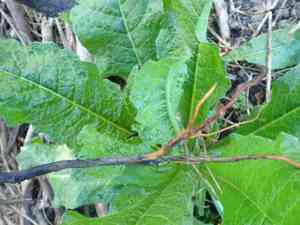
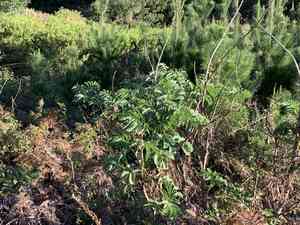
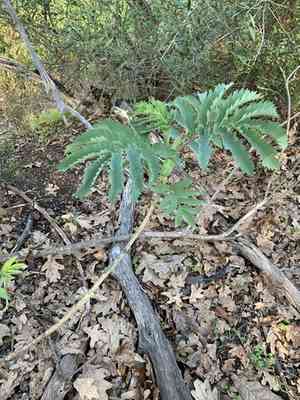
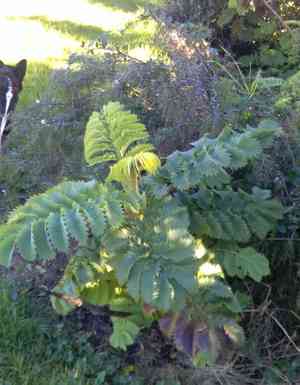
Quickly Identify Giant honey flower
Scientific Classification of Giant honey flower
Planting and Growing of Giant honey flower
 How to Water Giant honey flower?
 What Are the Sunlight Requirements for Giant honey flower?
 What Is the Ideal Temperature Range for Giant honey flower?
 What Soil is Best for Giant honey flower?
 How to Fertilize Giant honey flower?
 How to Prune Giant honey flower?
 How to Propagate Giant honey flower plant?
 How to Repot Giant honey flower plant?
Toxicity of Giant honey flower
Is Giant honey flower toxic to humans?
The giant honey flower presents a significant toxicity hazard to humans when ingested. Each component of the plant harbors bufadienolides, a subclass of cardiac glycosides renowned for their strong effects on the heart. Even minimal ingestion can trigger serious symptoms, which may include cardiac arrhythmias, vomiting, diarrhea, and potentially life-threatening disruptions in cardiac function. Every part of the plant is poisonous, leaving no section safe for consumption. Accidental ingestion is possible, highlighting the importance of recognizing the plant's extreme toxicity to avert poisoning incidents. The general public should exercise caution, particularly in regions where the giant honey flower thrives, to prevent any interactions that could result in unintended ingestion.
Is Giant honey flower toxic to cat?
The giant honey flower presents a significant danger to the health of cats, as every part of the plant is toxic. Should a cat inadvertently consume any portion of the giant honey flower, they risk poisoning due to the presence of bufadienolides (cardiac glycosides), which are the cause of its toxic effects. Upon exposure, cats may go through considerable physical suffering, displaying distressing symptoms. In order to prevent serious health issues, it is crucial to seek immediate veterinary care if a cat is thought to have been in contact with the giant honey flower.
Is Giant honey flower toxic to dog?
The giant honey flower presents a significant toxicity hazard to dogs. If dogs consume any portion of the giant honey flower, they face a poisoning risk caused by the presence of bufadienolides, which are a type of cardiac glycoside recognized for their harmful effects. Dogs may unintentionally ingest parts of the giant honey flower, resulting in potential poisoning. Symptoms that may develop following such ingestion include vomiting, diarrhea, lethargy, irregular heart rate, and possibly more serious clinical manifestations due to its effect on the cardiovascular system. It is crucial for dog owners to ensure their pets cannot access giant honey flower and to seek prompt veterinary attention if their dog has consumed any part of this toxic plant.



