How to Propagate Tahitian gardenia?
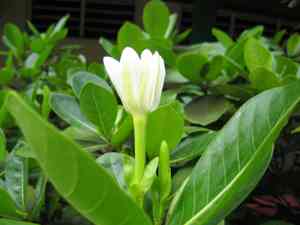
Tahitian gardenia, a member of the Rubiaceae family, is highly amenable to propagation via cuttings. To ensure successful root development, it is crucial to choose robust, semi-lignified stems. Employ a keen, disinfected tool to execute precise incisions directly beneath a foliar node, and strip away the lower leaves to reveal the stem. Applying a rooting stimulant can enhance the likelihood of success. Insert the cutting into a well-aerated, damp propagation substrate and sustain elevated atmospheric moisture levels around it, which can be accomplished by covering it with a plastic enclosure or lid. A stable temperature is vital for root formation, being mindful not to expose tahitian gardenia to direct solar radiation, as this can be harmful.
When Is the Optimal Time to Propagate Tahitian Gardenia?
Propagation Type
Cutting
Propagation Season
Fall,Winter
What Tools Are Utilized for Tahitian Gardenia Propagation?
Sharp Pruning Shears
These are crucial for achieving clean, precise cuts when harvesting sections from tahitian gardenia. Keen blades help ensure a smooth, non-jagged cut, vital for the cutting's health. A clean cut aids in disease prevention and promotes better root formation.
Rooting Hormone
This chemical encourages root development from tahitian gardenia cuttings. By dipping the cut end into the rooting hormone, the likelihood of successful rooting significantly increases. It facilitates quicker establishment and stronger root systems, essential for delicate plants like tahitian gardenia.
Sterile Potting Mix
A pathogen-free sterile potting mix is necessary for planting tahitian gardenia cuttings. It ensures the cutting doesn't compete with microorganisms that could cause decay or disease while attempting to establish roots. A mix specifically formulated for cuttings or seedlings is often lighter and supports better root growth.
Humidity Dome or Plastic Wrap
Maintaining a high-humidity environment is critical for the successful rooting of tahitian gardenia cuttings. A humidity dome placed over the planting area or the use of plastic wrap can help retain moisture and create a greenhouse-like setting that supports new root development.
Heating Mat
Consistent, gentle bottom heat can significantly enhance the rooting success rate for tahitian gardenia cuttings, especially in cooler climates. A heating mat helps maintain an ideal temperature, stimulating root growth and overall plant health during the crucial initial stages.
How to Propagate Tahitian Gardenia?
Propagation Type
Moderately Challenging
How to Care for Your Newly Propagated Tahitian Gardenia?
How to Care for Your Newly Propagated Tahitian Gardenia?
After rooting, gradually acclimatize tahitian gardenia to less humid conditions by removing the plastic cover over several weeks. Keep the soil consistently moist but not waterlogged, and provide bright, indirect sunlight. Fertilize monthly with a balanced, water-soluble fertilizer during the active growth period. Protect tahitian gardenia from temperatures below 50 degrees Fahrenheit.
Common Errors to Avoid When Propagating Tahitian Gardenia
Overwatering
Excessive water can lead to root rot in tahitian gardenia, as their roots require a balance of moisture and air circulation. Overwatering can suffocate the roots, causing the plant to wilt and potentially perish.
Using the wrong soil mix
A soil mix that lacks adequate drainage can retain too much moisture and cause root rot for tahitian gardenia. These plants prefer well-draining soils to prevent waterlogging.
Incorrect cutting size
Taking cuttings that are either too short or too long can negatively impact the rooting success of tahitian gardenia. Cuttings of inappropriate size may lack the necessary resources to develop roots.
Not using a rooting hormone
Omitting the use of a rooting hormone can result in a lower success rate for tahitian gardenia cuttings. Rooting hormones promote faster and more dependable root development.
Neglecting humidity requirements
Tahitian gardenia cuttings need a specific level of humidity to root successfully. Insufficient humidity can cause the cuttings to lose moisture and fail to root.
Tips For Propagating Tahitian Gardenia
Proper water management
Water tahitian gardenia cuttings sparingly, keeping the soil consistently damp but not saturated. Avoid allowing the soil to completely dry out between watering sessions.
Use a suitable soil mix
Propagate tahitian gardenia in a soil mix that includes components like perlite, sand, or pine bark for enhanced drainage and aeration.
Take appropriate-sized cuttings
Cuttings for tahitian gardenia should be approximately 4-6 inches long with several leaf nodes. This size offers a balance between sufficient energy reserves and surface area for rooting.
Apply rooting hormone
Dip the base of tahitian gardenia cuttings in rooting hormone before planting to stimulate root growth and improve the chances of successful propagation.
Maintain optimal humidity
Cover tahitian gardenia cuttings with a clear plastic bag or place them in a humidity dome to maintain high humidity levels, aiding in moisture retention and encouraging root development.



