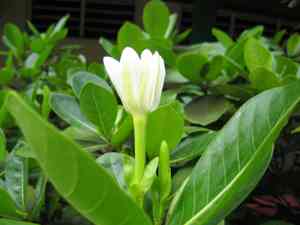
Tahitian gardenia (Gardenia taitensis)
Also known as: Tahitian gardenia, Tiare flower, Tiare Tahiti
The Tahitian gardenia, originally from Melanesia and Western Polynesia, is now widespread in Tahiti. It is the national flower of the Cook Islands and French Polynesia. Known for its captivating fragrance, it is often used decoratively for screens, hedging, and container gardens.
In This Article
Attributes of Tahitian gardenia
Lifespan
Perennial
Plant Type
Tree
Plant Height
1.8 m to 3.5 m
Spread
60 cm to 1.2 m
Leaf Color
Green
Flower Size
2.5 cm to 15 cm
Flower Color
White
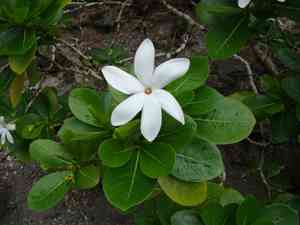
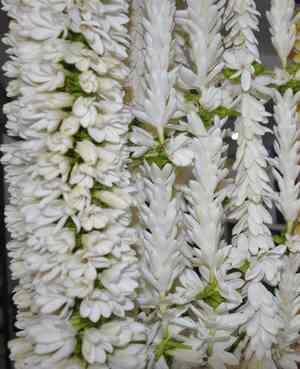
Images of Tahitian gardenia
Quickly Identify Tahitian gardenia
1
Gardenia taitensis can be identified by its large, glossy, dark green leaves, and its distinctive, highly fragrant, white flowers with overlapping petals. The flowers often have a creamy center.
Scientific Classification of Tahitian gardenia
Phylum
Vascular plants
Class
Dicotyledons
Order
Gentianales
Family
Madder
Genus
Gardenias
Species
Tahitian gardenia
Planting and Growing of Tahitian gardenia
Care Difficulty
Hard
Watering Schedule
Every 8 days
Sunlight Requirements
Full sun
Sunshine Duration
6-10 hours
Ideal Temperature
65-77℉
Soil Type
Potting Mix, Peat Mix
Soil pH
5.5-6.5
Fertilizer Type
Balanced
Pruning Season
Spring, Summer
Pruning Area
Branches, Leaves
Pruning Frequency
2 times a year
Repotting Season
Spring
Pot Type
Plastic, Terracotta
 How to Water Tahitian gardenia?
For Gardenia taitensis, ensure the soil is evenly moist but not soggy. Water should be sufficient to moisten the top 2-3 inches of soil, approximately 300 ml per session, depending on the pot size and drainage.
What are the symptoms of an underwatered Tahitian gardenia?
›
What should I do if my Tahitian gardenia is not getting enough water?
›
What are the symptoms of an overwatered Tahitian gardenia?
›
How to save an overwatered Tahitian gardenia?
›
 What Are the Sunlight Requirements for Tahitian gardenia?
Gardenia taitensis flourishes in partial shade to full sun, ideally receiving 4 to 6 hours of sunlight. This range supports vigorous growth, lush foliage, and prolific blooming.
More About Sunlight Requirements Techniques→
How much light does Gardenia taitensis need?
›
What is the best position for obtaining ideal light for Gardenia taitensis?
›
What benefits arise from ideal lighting for Gardenia taitensis?
›
 What Is the Ideal Temperature Range for Tahitian gardenia?
Gardenia taitensis thrives best within temperatures ranging between 65°F and 77°F. This temperature range allows for optimal physiological processes essential for growth and flowering. Maintaining this range ensures that the plant’s metabolic activities occur at peak efficiency, providing robust growth and abundant blooms.
 What Soil is Best for Tahitian gardenia?
Gardenia taitensis thrives in soil that provides excellent drainage. This prevents waterlogging, which can suffocate roots and lead to root rot, ensuring healthy growth and vibrant blooms. A nutrient-rich soil benefits Gardenia taitensis by promoting strong growth and abundant flowering. This plant requires a supply of organic matter to support its vigorous growth and lovely blooms. Gardenia taitensis prefers slightly acidic soil with a pH between 5.5 and 6.5. This acidity level ensures optimal nutrient availability and prevents nutrient lock-out, promoting lush foliage and prolific flowering.
 How to Fertilize Tahitian gardenia?
For Gardenia taitensis, it's crucial to use a balanced fertilizer with an N-P-K ratio like 10-10-10. Apply approximately one tablespoon per gallon of water for liquid fertilization. When using slow-release pellets, use about half a cup around the base of the plant, ensuring even distribution.
 How to Prune Tahitian gardenia?
Begin by identifying and removing any old or dead branches. These are typically less productive and can be distinguished by their dark, brittle appearance compared to the lush, green newer growth. Prune the plant to maintain a desired shape, focusing on cutting just above a leaf node. This encourages new, healthy growth and ensures the plant maintains a bushy, attractive form.
More About Pruning Techniques→
 How to Propagate Tahitian gardenia plant?
1
Choose a healthy, mature stem from the Gardenia taitensis that is neither too old nor too young. Typically, a stem with a length of about 4-6 inches is ideal. Look for stems that have a few leaves but are free of flowers.
2
Use pruning shears to make a clean cut just below a node. Remove the lower leaves to expose some nodes, as this is where new roots are most likely to develop. Dipping the cut end in rooting hormone can further encourage root development.
3
Prepare a pot with well-draining soil, preferably a mix of sand, peat, and perlite. Insert the cutting into the soil, ensuring that the nodes are beneath the soil surface. Water the soil lightly to settle it around the cutting.
 How to Repot Tahitian gardenia plant?
1
Look for signals such as roots growing out of the drainage holes, soil that dries out too quickly, or a noticeably stunted growth rate. Ideally, perform the repotting when the plant is actively growing in spring or summer.
2
Opt for a pot that is one size larger than the current one, ideally with good drainage holes. The pot's size should complement the plant root system, allowing extra room for growth and preventing waterlogging, which can harm the roots.
3
Select a soil that is both well-draining and slightly acidic to mimic the plant's natural habitat. This type of soil helps to prevent root rot and supports the plant’s need for adequate aeration and proper nutrient intake.
Learn More About Tahitian gardenia Diseases
Anthracnose
Bacterial Leaf Spot
Bacterial Soft Rot
Bacterial Wilt
Black Spot
Chemical Injury
Crown Gall
Damping-off
Drought Stress
Fusarium Wilt
Gray Mold
Leaf Curl
Leaf Spot
Mosaic
Nutrient Deficiency
Nutrient Toxicity
Powdery Mildew
Root Rot
Root-knot Nematode
Sooty Mold
Spider Mites
Temperature Stress
Thrips Damage
White Mold



