How to Propagate Bride's saddle?
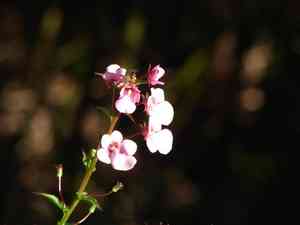
Bride's saddle flourishes when reproduced via cuttings, a technique ideal for preserving the distinct traits of the variety. For best outcomes, select robust, non-blooming stems and employ a precise, sterile incision to reduce plant trauma. A rooting stimulant can improve root development, situated in porous soil under diffused illumination. Steady humidity and warmth are vital until the cuttings are completely rooted.
Optimal Period for Propagating Bride's Saddle?
Propagation Method
Cutting
Propagation Period
Spring,Summer
Tools Required for Bride's Saddle Propagation?
Sharp Pruning Shears
Crucial for obtaining clean, precise cuttings from bride's saddle, sharp pruning shears help minimize harm to the parent plant and ensure a healthy cutting. Clean cuts aid in preventing infection and boost the likelihood of successful rooting.
Rooting Hormone Powder
When applied to the severed end of bride's saddle stem cuttings, rooting hormone promotes faster root growth and increases the success rate of cuttings taking hold. This is especially beneficial for bride's saddle to guarantee robust root establishment.
Sterilized Potting Mix
A premium, well-draining, and sterilized potting mix offers the perfect environment for bride's saddle's cuttings to root. Sterilization prevents disease spread, which is vital for vulnerable cuttings during the delicate phase of root development.
Propagation Trays
These trays are suitable for arranging multiple bride's saddle cuttings in a confined area, allowing for efficient space utilization and easier monitoring and maintenance of humidity levels around the cuttings.
Plastic Covers or Domes
Plastic covers or domes fit over propagation trays to help maintain high humidity and a stable temperature around bride's saddle’s cuttings, which are essential conditions for encouraging root growth and new shoot development.
How to Propagate Bride's Saddle?
Propagation Type
Easy
How to Care for Your Newly Propagated Bride's Saddle?
How to Care for Your Newly Propagated Bride's Saddle?
Post-propagation, keep the soil consistently moist but not waterlogged, as bride's saddle prefers well-drained conditions. Gradually introduce the new plants to more direct sunlight over several weeks. After 4-6 weeks, once roots are established, you can begin to fertilize with a balanced, water-soluble fertilizer monthly during the growing season. Protect from frost and avoid overly wet conditions to prevent root rot.
Common Mistakes to Avoid When Propagating Bride's Saddle
Overwatering
Providing too much water to bride's saddle during propagation can lead to root rot and fungal issues, impeding healthy root development.
Inadequate light
Insufficient light levels can cause bride's saddle's cuttings to become leggy and weak, which decreases their chance of successfully establishing.
Cutting size
Using cuttings that are either too large or too small can result in poor root development. Incorrectly sized cuttings of bride's saddle do not have the optimal balance of leaf area to root surface area required for efficient growth.
Older wood
Using older or woodier sections of bride's saddle for stem cuttings can decrease rooting success, as these parts tend to root more slowly and less effectively than younger, more vigorous sections.
Tips For Propagating Bride's Saddle
Rooting hormone
Applying a rooting hormone to the cut end of bride's saddle's cuttings can significantly enhance root development, leading to better establishment and growth.
Moist but not soggy medium
Ensuring the propagation medium is consistently moist but not waterlogged is crucial for bride's saddle's root health and to prevent rot.
Indirect sunlight
Placing bride's saddle in bright, indirect light supports healthy growth without the stress of direct sun, which can be too intense and cause damage to delicate cuttings.
Proper cutting length
Ideal cuttings of bride's saddle should be approximately 4-6 inches in length with several leaf nodes, as this size typically provides a good balance for root formation and top growth.



