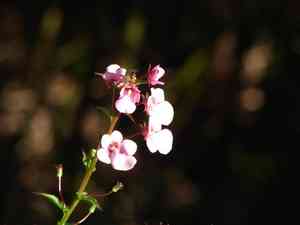
Bride's saddle (Diascia rigescens)
Also known as: Twinspur
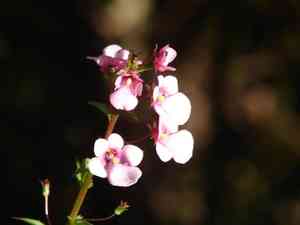
Bride's saddle (Diascia rigescens) is also called Stiff twinspur or Bride’s saddle. It is a sprawling plant that will grow from 20 to 25 cm tall and 25 to 30 cm wide, forming a mat of heart-shaped leaves. It blooms from summer to fall with pink flowers. It thrives in full sun and prefers fertile, moist, well-drained soil. Makes a nice ground cover.
In This Article
Attributes of Bride's saddle
Lifespan
Perennial, Annual, Biennial
Plant Type
Herb
Plant Height
30 cm to 60 cm
Spread
25 cm to 30 cm
Leaf Color
Green
Flower Color
Pink Purple Orange
Images of Bride's saddle
Scientific Classification of Bride's saddle
Phylum
Vascular plants
Class
Dicotyledons
Family
Figwort
Genus
Diascia
Species
Bride's saddle
Planting and Growing of Bride's saddle
Care Difficulty
Easy
Watering Schedule
Every 12 days
Sunlight Requirements
Full sun
Sunshine Duration
4-6 hours
Ideal Temperature
60-75℉
Soil Type
Potting Mix, Peat Mix
Soil pH
6.5-7.5
Fertilizer Type
Balanced
Pruning Season
Spring, Summer
Pruning Area
Branches, Leaves
Pruning Frequency
2 times a year
Repotting Season
Spring
Pot Type
Plastic, Ceramic
 How to Water Bride's saddle?
For Diascia rigescens, water until the soil is evenly moist but not waterlogged. The aim is to keep the soil moisture consistent but well-drained. When watering, ensure you provide about 500ml to avoid water pooling at the base, promoting healthy root growth.
What are the symptoms of an underwatered Bride's saddle?
›
What should I do if my Bride's saddle is not getting enough water?
›
What are the symptoms of an overwatered Bride's saddle?
›
How to save an overwatered Bride's saddle?
›
 What Are the Sunlight Requirements for Bride's saddle?
Full to partial sun is the ideal light condition for Diascia rigescens. This balance ensures that the plant receives sufficient light for photosynthesis while not overwhelming it. The exposure supports healthy growth, vivid colors, and robust blooms.
More About Sunlight Requirements Techniques→
What is the ideal lighting condition for Diascia rigescens?
›
Solutions for achieving ideal lighting conditions
›
Benefits of ideal lighting conditions
›
 What Is the Ideal Temperature Range for Bride's saddle?
Diascia rigescens thrives best in mild temperatures ranging from 60°F to 75°F. This range provides the ideal balance for photosynthesis and respiration, ensuring the plant maintains vibrant growth and blooms profusely throughout its growing season.
 What Soil is Best for Bride's saddle?
Diascia rigescens thrives in well-drained soil, which prevents root rot by ensuring excess water does not linger around the roots. This condition is crucial as it allows the plant's roots to breathe and absorb nutrients efficiently. The plant prefers soil with moderate fertility, ensuring it gets enough nutrients to support its vibrant blooms while avoiding excessive competition from weeds, making maintenance easier. Although well-drained, the soil should still have moisture-retentive properties, which help the plant remain hydrated through drought periods, supporting steady growth and blooming cycles.
 How to Fertilize Bride's saddle?
Diascia rigescens thrives on a balanced nutrient intake. Using diluted liquid fertilizer, apply a solution mixed to half the recommended strength. For solid fertilizers, 1 tablespoon per 3 square feet should suffice, avoiding contact with the plant stems to prevent burning.
 How to Prune Bride's saddle?
Start by removing any dead, damaged, or unhealthy stems to maintain plant health. Use sharp, sterilized scissors to cut back these areas, ensuring you snip just above healthy, outward-facing buds. This promotes outward growth and better air circulation. For shaping, trim the top third of the plant to maintain a bushy look. Ensure cuts are clean to avoid infection.
More About Pruning Techniques→
 How to Propagate Bride's saddle plant?
1
Start by filling a seed tray with a well-draining seed mix. Lightly press diascia seeds into the soil surface without covering them, as they require light for germination. Keep the soil moist but not wet.
2
To propagate by cuttings, select healthy, non-flowering stems of about 10 cm in length. Make a clean cut below a node. Remove the lower leaves and dip the cut end in rooting hormone.
3
For division propagation, dig up a mature diascia plant and carefully separate the root clumps. Each division should have healthy roots and multiple stems, which can be planted directly into well-drained soil.
 How to Repot Bride's saddle plant?
1
Diascia rigescens should be repotted when you notice the roots crowding at the base of the pot or showing through drainage holes. This indicates that the plant needs more space to grow and breathe, ensuring robust blooms. It's best to repot when the plant is in active growth to minimize stress.
2
Select a pot that is just one size larger than the current one, with ample drainage holes at the bottom. The new pot should allow extra space for root expansion without excess that may cause waterlogging. A terracotta or breathable material can be beneficial because it helps to prevent over-watering.
3
Opt for a well-draining compost mix enriched with organic matter. This type of soil mix will provide aeration and prevent the roots from sitting in water, which is crucial for preventing rot. Adequate drainage and nutrients allow Diascia rigescens to thrive and reward you with its charming blooms.
Learn More About Bride's saddle Diseases
Anthracnose
Bacterial Leaf Spot
Bacterial Soft Rot
Bacterial Wilt
Black Spot
Chemical Injury
Crown Gall
Cyst Nematode
Damping-off
Downy Mildew
Drought Stress
Fusarium Wilt
Gray Mold
Leaf Curl
Leaf Spot
Mosaic
Nutrient Deficiency
Nutrient Toxicity
Powdery Mildew
Root Rot
Root-knot Nematode
Rusts
Sooty Mold
Spider Mites
Temperature Stress
Thrips Damage
White Mold



