How to Propagate Siam tulip?
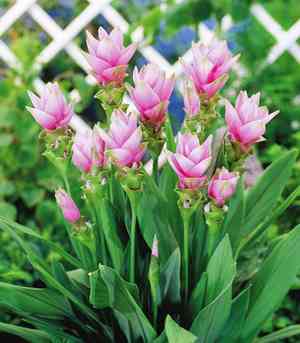
Reproducing siam tulip entails separating and cultivating its underground stems in the springtime. This procedure is quite straightforward, with the emergence of robust roots and sprouts signaling appropriate development. Verify that the tubers are sound and devoid of decay or injury.
What Is the Best Time To Propagate Siam Tulip?
Propagation Type
Utilize The Tubers
Propagation Season
Spring
What Tools Are Used in Siam Tulip Propagation?
Sharp Knife or Scalpel
A keen blade or surgical knife is employed to divide the tubers of siam tulip. It must be sanitized prior to use to avert disease transmission. This instrument enables precise cuts, ensuring minimal harm to the tubers and fostering superior healing and development post-division.
Gloves
Wearing hand protection safeguards the hands during the propagation process and guarantees that the tubers of siam tulip are not tainted by oils or grime from the skin, which can impact the plant's growth.
Potting Medium
A well-draining growing mix or a blend specifically formulated for tropical plants is crucial for the successful establishment of siam tulip's divided tubers. The potting medium supplies the necessary nutrients and environment for the new plants to flourish.
Pots or Containers
Appropriate pots or receptacles with drainage holes are essential for planting the divided tubers. They should be sized suitably to permit growth without overcrowding, aiding the newly propagated siam tulip in developing a robust root system.
Watering Can or Misting Bottle
A watering can with a fine spout or a spray bottle is utilized to gently hydrate the tubers after planting, ensuring the soil is moist but not saturated, which is vital for the initial growth phase of siam tulip.
Rooting Hormone
Rooting hormone powder or liquid can be applied to the cut ends of the tubers to stimulate root development. This enhances the propagation success rate for siam tulip by encouraging quicker and healthier root formation.
Labels and Marker
Labels and a waterproof marker are employed to identify the newly potted tubers of siam tulip. Proper labeling guarantees that the specific care requirements for each propagated plant are followed and also assists in monitoring growth progress.
Heating Mat (Optional)
For cultivators in colder climates, a heating mat can be used to maintain a consistent and optimal temperature around the root zone of siam tulip's tubers, boosting root development and growth in the early stages.
How to Propagate Siam Tulip?
Propagation Type
Utilize The Tubers
Difficulty Level
Simple
How to Care for Your Newly Propagated Siam Tulip?
How to Care for Your Newly Propagated Siam Tulip?
Following propagation, continue to nurture siam tulip by providing bright yet indirect illumination, keeping the soil consistently damp but not waterlogged, and maintaining a warm environment. Fertilize monthly with a general-purpose, water-soluble fertilizer diluted to half strength during the active growth period. Reduce irrigation in late autumn to allow the foliage to naturally recede as siam tulip enters dormancy. Overwinter the tubers in pots indoors in cooler regions. Trim away dead foliage and repot or divide the tubers in the spring to stimulate new growth for the subsequent season.
Common Mistakes to Avoid When Propagating Siam Tulip
Overwatering
Excessive irrigation can lead to root decay for siam tulip, as they require well-draining soil and moderate moisture. When the roots are compromised, it impedes the plant's ability to absorb nutrients and can ultimately kill the plant.
Using old or diseased rhizomes
Propagating with aged or unhealthy rhizomes can result in poor development or spread illness to the new plants. It's essential to begin with robust and vigorous rhizomes to ensure strong growth for siam tulip.
Planting too deeply
Burying rhizomes of siam tulip too far down can hinder their growth. Rhizomes should be planted shallowly enough to allow for the proper emergence of shoots.
Neglecting to separate rhizomes correctly
Improper separation of the rhizomes can damage them, making them vulnerable to disease or death. Careful handling and accurate division are crucial for successful propagation of siam tulip.
Ignoring pest control
Failing to manage pests can quickly lead to a compromised plant. Siam tulip may attract certain pests which, if not controlled, can significantly interfere with growth and propagation.
Tips For Propagating Siam Tulip
Soil preparation
Employ a well-draining potting mix for siam tulip, enhanced with perlite or sand to ensure proper drainage and prevent waterlogging.
Rhizome health
Choose healthy, disease-free rhizomes for propagation. They should be firm to the touch and exhibit visible growth buds.
Planting depth
Plant rhizomes of siam tulip superficially, with the top of the rhizome just beneath the soil surface to enable proper sprouting.
Gentle separation
When dividing rhizomes, use a sharp, clean knife and make precise cuts to minimize damage. Ensure each piece possesses at least one growth bud.
Pest management
Monitor for pests and address them promptly using suitable methods, such as insecticidal soaps or neem oil, to safeguard the health of siam tulip.



