How to Propagate Golden rat tail?
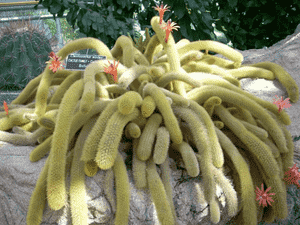
Golden rat tail, a visually captivating cactus, features trailing stems adorned with thick, golden spines. To successfully propagate this plant, acquire a robust cutting that possesses at least one areole. Permit the severed end to dry and form a callus over several days to deter decay, then embed it in a porous cactus substrate. Irrigate sparingly and offer diffused illumination; root development typically occurs within a few weeks. Perseverance is crucial, as the nascent plant might require time to exhibit robust development.
Optimal Period for Golden Rat Tail Propagation
Propagation Method
Cutting
Propagation Period
Spring,Summer
Tools Required for Golden Rat Tail Propagation
Sharp Pruning Shears
These shears are vital for making clean cuts on stems or branches of golden rat tail. A precise cut is essential to prevent harm and infections, boosting the likelihood of successful rooting. The sharpness of the shears ensures that the vascular tissues of golden rat tail are not crushed, preserving the plantâs capacity to transport nutrients and water effectively during the rooting process.
Rooting Hormone Powder
This powder stimulates root development from golden rat tail cuttings. By applying rooting hormone to the severed end of a cutting, you encourage faster root growth, which is crucial for establishing new plants. The hormone guarantees a higher success rate by enhancing the plant's natural rooting process, especially important for cacti like golden rat tail that might otherwise root slowly.
Sterile Potting Mix
A sterile potting mix is essential for supporting the growth of golden rat tail cuttings while inhibiting fungal and bacterial proliferation. The mix should be well-draining and porous, which helps to prevent waterloggingâa common problem that can lead to root rot in cactus cuttings.
Small Pots or Trays
Small pots or propagation trays are utilized to plant the freshly cut sections of golden rat tail. These containers should offer ample drainage and be appropriately sized for the cuttings, not too large to avoid excessive moisture around the roots, which could cause decay.
Plastic Wrap or Propagation Dome
A plastic wrap or a propagation dome can establish a greenhouse-like environment to maintain elevated humidity around golden rat tail cuttings. This is particularly advantageous for retaining sufficient moisture in the air and soil, fostering successful rooting and initial growth without allowing the cutting to dry out.
Method for Propagating Golden Rat Tail
Propagation Difficulty
Easy
Post-Propagation Care for Golden Rat Tail
Post-Propagation Care for Golden Rat Tail
Following propagation, ensure golden rat tail receives bright, indirect light and is watered sparingly, only when the soil is completely dry. Maintain a consistent temperature and avoid high humidity. Fertilize during the active growth period with a cactus-specific fertilizer. As golden rat tail matures, repot as needed to accommodate its size, and provide a support structure if required due to its trailing habit.
Common Errors to Avoid When Propagating Golden Rat Tail
Excessive watering of cuttings
Overwatering golden rat tail cuttings can lead to decay, especially since they require well-draining soil and less moisture during root establishment.
Using blunt tools
Employing dull or unsterilized tools for cutting can harm the tissues of golden rat tail and introduce pathogens, impeding healthy root development.
Disregarding light requirements
Golden rat tail needs ample light for propagation, but excessive direct sunlight can scorch young plantlets or cuttings.
Planting too deeply
Planting golden rat tail cuttings too deep may cause them to rot before they can establish roots due to inadequate air circulation.
Failing to remove flowers
Neglecting to remove flowers and buds from golden rat tail when taking cuttings can divert energy from root formation to flower production.
Advice for Propagating Golden Rat Tail
Cutting selection
Choose a healthy, mature stem of golden rat tail for cuttings, ensuring it is free from pests and diseases.
Soil preparation
Prepare a well-draining soil mixture for golden rat tail, as it thrives in gritty, sandy substrates that mimic its natural habitat.
Rooting hormone
Applying rooting hormone to the cut end of golden rat tail can encourage faster and more reliable root development.
Appropriate moisture
Keep the soil of golden rat tail barely moist but not wet to prevent rot and promote root growth.
Indirect light
Place golden rat tail cuttings in bright, indirect light to prevent scorching and promote steady growth.



