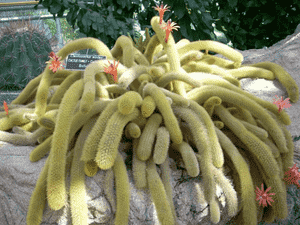
Golden rat tail (Cleistocactus winteri)
Also known as: Rat tail cactus
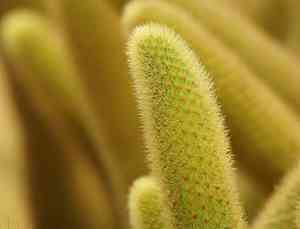
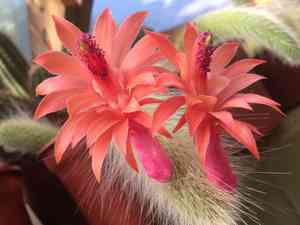
The golden rat tail (Cleistocactus winteri) has a beautiful barrel covered in luscious, delicate spines, lending an appearance more similar to a spiky zucchini than a cactus. A well-cared-for specimen can grow as long as 1.8 m and display 8 cm wide pink flowers when pampered.
In This Article
Attributes of Golden rat tail
Lifespan
Perennial
Plant Type
Succulent
Plant Height
90 cm
Spread
45 cm
Leaf Color
None (has spines instead of leaves)
Flower Size
5 cm
Flower Color
Red Pink White Yellow Orange Mauve
Images of Golden rat tail
Quickly Identify Golden rat tail
1
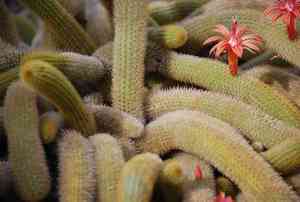
Identifiable by its long, trailing stems covered in golden-yellow spines and bright orange-red tubular flowers.
Scientific Classification of Golden rat tail
Phylum
Vascular plants
Class
Dicotyledons
Order
Caryophyllales
Family
Cactuses
Genus
Cleistocactus
Species
Golden rat tail
Planting and Growing of Golden rat tail
Care Difficulty
Easy
Watering Schedule
Every 2 days
Sunlight Requirements
Full sun
Sunshine Duration
4-6 hours
Ideal Temperature
68-77℉
Soil Type
Potting Mix, Peat Mix
Soil pH
6.5-7.5
Fertilizer Type
Balanced
Pruning Season
Spring, Summer
Pruning Area
Branches, Leaves
Pruning Frequency
2 times a year
Repotting Season
Spring
Pot Type
Ceramic, Plastic
 How to Water Golden rat tail?
Cleistocactus winteri requires a careful balance when it comes to watering. Ideally, water until the soil is moist but not soggy, allowing any excess to drain away. This helps in mimicking its natural arid environment, preventing root rot.
What are the symptoms of an underwatered Golden rat tail?
›
What should I do if my Golden rat tail is not getting enough water?
›
What are the symptoms of an overwatered Golden rat tail?
›
How to save an overwatered Golden rat tail?
›
 What Are the Sunlight Requirements for Golden rat tail?
Cleistocactus winteri thrives with full to partial sunlight, benefiting from about 6 to 10 hours daily. This range ensures vigorous growth and abundant blooms.
More About Sunlight Requirements Techniques→
What is the ideal lighting for Cleistocactus winteri?
›
Solutions to achieve ideal lighting?
›
What are the benefits of ideal lighting?
›
 What Is the Ideal Temperature Range for Golden rat tail?
The ideal temperature range for Cleistocactus winteri is between 68 and 77°F. This range ensures optimal growth and flowering, as it replicates the plant’s natural habitat conditions. Maintaining these temperatures facilitates proper metabolic activities within the plant, leading to healthy growth.
 What Soil is Best for Golden rat tail?
Cleistocactus winteri thrives in well-drained soil. It prevents root rot by ensuring water doesn't accumulate. This requirement is crucial for the plant's survival and encourages robust stem growth and vibrant flowering. The slightly acidic to neutral pH range of 6.5 to 7.5 helps Cleistocactus winteri access essential nutrients efficiently. A balanced pH protects the plant from potential nutrient deficiencies and promotes healthy development. Cleistocactus winteri benefits from nutrient-poor soil conditions. Excess nutrients can lead to overgrowth or less vibrant blooms. By maintaining minimal soil nutrition, you stimulate strong flowering and healthier plant structure.
 How to Fertilize Golden rat tail?
For Cleistocactus winteri, a light application of fertilizer is recommended. Use a balanced, water-soluble fertilizer diluted to half its strength, about 1/2 teaspoon per gallon of water. This ensures the plant receives essential nutrients without the risk of burning its roots.
 How to Prune Golden rat tail?
Begin by assessing your Cleistocactus winteri to determine which sections need trimming. Look for dead, damaged, or diseased stems that are discolored or shriveled, making them the primary targets for pruning. Use a sterilized, sharp pair of scissors or pruning shears. Hold the healthy part of the cactus and make a clean cut at the base of the stem you need to remove. A clean cut prevents unnecessary damage and facilitates quicker healing. While pruning is beneficial, be cautious not to over-prune. Removing too much of the plant at once can stress the cactus. Focus on the most necessary cuts and gradually shape the plant in subsequent sessions. Collect all the cuttings and dispose of them properly. Leaving pruned materials around the plant can attract pests and spread diseases back to the cactus. Compost them if healthy, or discard any diseased parts.
 How to Propagate Golden rat tail plant?
1
Begin by sterilizing your pruning shears, then carefully select and cut a healthy stem segment from Cleistocactus winteri. Allow the cut end to callus over for a few days to prevent rot before planting.
2
Place the callused cutting into a well-draining cactus soil mix, ensuring it is inserted at the right depth to provide support and facilitate the root development process.
3
If propagating by seeds, sow them lightly on the surface of a cactus potting mix. Cover them with a thin layer of grit or sand and keep them moist until germination occurs.
 How to Repot Golden rat tail plant?
1
Cleistocactus winteri should be repotted when you notice roots coming out of the pot's drainage holes or if growth has significantly slowed. Repotting is best done in spring or early summer when the plant is actively growing. These signs indicate that the current pot may be too small or that the soil has become compacted and the plant would benefit from fresh, nutrient-rich soil.
2
Choose a pot that is slightly larger than the current one, with sufficient drainage holes. A clay pot is ideal as it allows excess moisture to evaporate, preventing root rot. The ability of the pot to allow for proper drainage and airflow will help maintain the health of the root system and support the plant's continued growth.
3
Opt for a well-draining cactus mix, which usually includes materials like sand, perlite, and a little organic matter. This type of soil prevents water from lingering around the plant's roots, thereby reducing the risk of rot. The mix provides the cactus with a stable environment that mimics its natural habitat, ensuring proper nutrition and aeration.
Learn More About Golden rat tail Diseases
Anthracnose
Bacterial Leaf Spot
Bacterial Soft Rot
Chemical Injury
Crown Gall
Cyst Nematode
Damping-off
Drought Stress
Fusarium Wilt
Gray Mold
Leaf Spot
Mosaic
Nutrient Deficiency
Nutrient Toxicity
Powdery Mildew
Root Rot
Root-knot Nematode
Sooty Mold
Spider Mites
Temperature Stress
Thrips Damage
White Mold



