How to Propagate Rough century plant?
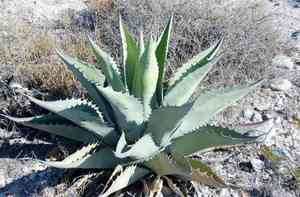
The rough century plant excels at propagation via division, a technique where cultivators detach young plants from the main specimen. Gently removing and promptly re-establishing these plantlets significantly boosts their survival rate. Ensuring adequate soil hydration and warmth aids in root formation, with a gritty, free-draining substrate being ideal. Following division, infrequent but regular watering is essential until the rough century plant exhibits fresh development, signaling successful root integration.
Optimal Period for Propagating Rough Century Plant?
Propagation Method
Separation
Propagation Period
Spring,Autumn
Tools Required for Rough Century Plant Propagation?
Sharp Knife or Pruning Shears
A keen knife or pruning shears are vital for making clean cuts through rough century plant's dense roots and leaves, aiding in division. A precise cut helps minimize plant tissue damage, which is key for immediate recovery and successful regeneration of rough century plant. Enhanced accuracy assists in carefully splitting the root ball or removing offshoots without excessive harm, thus preserving the parent plant's health and boosting the survival chances of new divisions.
Spade or Garden Fork
These implements are used to dig around rough century plant to gently lift it from the ground without unduly disturbing the surrounding soil and root system. This step is necessary for accessing the plant's lower sections and roots, making division easier and safer. A spade or garden fork with a sharp edge is particularly useful for penetrating tough soils often found around established rough century plant, while providing the leverage needed to lift heavy root balls.
Rooting Hormone
Though not a tool in the conventional sense, rooting hormone powder or gel boosts root growth in new rough century plant divisions. Applying a rooting hormone to the cut root sections can significantly improve root development rates, supporting faster establishment and reducing transplant shock. This encourages healthier and more vigorous growth post-propagation.
Watering Can with a Fine Rose
Following division, gentle watering is essential to help rough century plant divisions settle into their new environment with minimal stress. A watering can with a fine rose attachment is perfect for delivering a soft, even water flow that avoids disturbing freshly planted divisions or exposing delicate, newly cut root areas. This tool helps maintain sufficient moisture around the root zones, crucial for the initial stages of root development in the new location.
How to Propagate Rough Century Plant?
Propagation Type
Simple
How to Care for Your Newly Propagated Rough Century Plant?
How to Care for Your Newly Propagated Rough Century Plant?
After propagation, position the potted rough century plant in an area receiving partial to full sunlight. Water sparingly, allowing the soil to completely dry between waterings. Rough century plant is drought-tolerant, so avoid excessive moisture to prevent root rot. Fertilize annually with a balanced, slow-release fertilizer formulated for succulents to encourage healthy growth.
Common Mistakes to Avoid When Propagating Rough Century Plant
Overwatering
Excessive watering of rough century plant can lead to root rot, diminishing the plant's capacity to absorb nutrients and water effectively. This frequent error might cause the plant's roots to suffocate and decay due to too much soil moisture, especially since rough century plant is adapted to arid conditions.
Using non-draining soil
Employing soil that lacks proper drainage can trap water around rough century plant's roots, similar to overwatering. This condition can foster fungal growth and root disease, jeopardizing the plant's health and propagation success.
Deep planting of offsets
Planting rough century plant offsets too deeply can impede their ability to establish and grow. Deep planting may bury the base too far beneath the soil, restricting airflow and potentially leading to rot at the stem base.
Neglecting offset development
Failing to allow rough century plant offsets to callus before planting can make them susceptible to infections. Immediate planting without callusing can expose open wounds to pathogens, undermining propagation efforts.
Tips For Propagating Rough Century Plant
Use well-draining soil
Utilizing a well-draining soil mix can prevent waterlogging and reduce the risk of root diseases for rough century plant. A porous soil mix allows excess water to escape quickly, thereby supporting the drought-tolerant nature of rough century plant.
Allow offsets to callus
Permitting rough century plant offsets to callus for a few days before planting helps form a protective barrier over the cut surface. This process minimizes infection risk and promotes healthier root development.
Proper depth for planting offsets
Planting rough century plant offsets at the correct depth is vital for successful propagation. Ensuring the offset's base is slightly above the soil line can promote proper air circulation and reduce the risk of stem rot.
Moderate watering after planting
After planting rough century plant offsets, water moderately to encourage rooting without causing waterlogging. Adequate moisture supports root development, but excessive watering should be avoided to align with rough century plant's natural dry habitat requirements.



