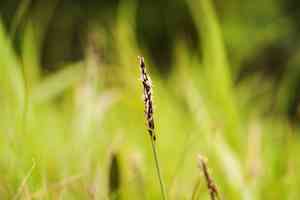
Japanese lawngrass (Zoysia japonica)
Also known as: Japanese lawngrass
For high-traffic areas requiring a lush, durable lawn, Zoysia japonica, commonly known as Japanese lawngrass, is an excellent option. This grass variety is often utilized for sports fields, golf courses, and commercial lawns due to its thick and resilient nature. While it is typically established using sod, certain varieties can also be grown from seed. Japanese lawngrass benefits from being mowed short and allowing the soil to dry between waterings to promote a drought-resistant root system.
In This Article
Attributes of Japanese lawngrass
Lifespan
Perennial
Plant Type
Grass
Plant Height
15 cm to 20 cm
Spread
Varies typically spans the area it is allowed to cover
Leaf Color
Green
Flower Size
3 mm to 5 mm
Flower Color
Green Brown
Images of Japanese lawngrass

Quickly Identify Japanese lawngrass
1
Zoysia japonica can be identified by its medium-coarse leaf texture, thick growth, and ability to form a dense turf. The leaves are typically green and turn brown in colder months. It has a rhizomatous growth habit, meaning it spreads via underground stems.
Scientific Classification of Japanese lawngrass
Phylum
Vascular plants
Class
Monocotyledons
Order
Grasses, sedges and allies
Family
Grass
Genus
Zoysia
Species
Japanese lawngrass
Planting and Growing of Japanese lawngrass
Care Difficulty
Easy
Watering Schedule
Every 4 days
Sunlight Requirements
Full sun
Sunshine Duration
4-8 hours
Ideal Temperature
75-85℉
Soil Type
Potting Mix, Peat Mix
Soil pH
6-7.5
Fertilizer Type
Balanced
Pruning Season
Spring, Summer
Pruning Area
Branches, Leaves
Pruning Frequency
2 times a year
Repotting Season
Spring
Pot Type
Plastic, Terracotta
 How to Water Japanese lawngrass?
Zoysia japonica, commonly known as Japanese lawn grass, requires a balanced watering approach. Ensure you water enough for the moisture to reach the root zone—approximately 500ml per application. The soil should be moist but not waterlogged, as this grass thrives best when the moisture consistently reaches the roots without drowning them.
What are the symptoms of an underwatered Japanese lawngrass?
›
What should I do if my Japanese lawngrass is not getting enough water?
›
What are the symptoms of an overwatered Japanese lawngrass?
›
How to save an overwatered Japanese lawngrass?
›
 What Are the Sunlight Requirements for Japanese lawngrass?
Zoysia japonica thrives in full to partial sun environments, which encourages thick, vibrant growth and helps maintain its natural green hue throughout the growing season.
More About Sunlight Requirements Techniques→
What is the ideal lighting for Zoysia japonica?
›
Why does Zoysia japonica prefer full sun?
›
How can I ensure my Zoysia japonica gets full sun?
›
 What Is the Ideal Temperature Range for Japanese lawngrass?
The ideal temperature range for Zoysia japonica, a warm-season grass, is between 75°F and 85°F. This temperature range promotes optimal growth and health for the grass, ensuring its vibrant green appearance and resilience.
 What Soil is Best for Japanese lawngrass?
Zoysia japonica thrives in well-draining soils, preventing waterlogging and root rot. Adequate drainage supports healthy root growth, enabling the grass to absorb necessary nutrients efficiently. This grass prefers nutrient-rich soils, offering ample organic matter. A fertile base enhances the grass’s growth rate, sheen, and disease resistance, contributing to a lush, green lawn. Moderate moisture retention is beneficial, ensuring that Zoysia japonica remains hydrated during dry spells while preventing dehydration. This balances water needs without saturating the roots.
More About Soil→
 How to Fertilize Japanese lawngrass?
Zoysia japonica requires careful fertilizing to thrive. For liquid fertilizers, apply a solution that provides approximately 0.5 pounds of nitrogen per 1,000 square feet each month during the growing season. For slow-release fertilizers, the recommendation is generally to apply 1 to 2 pounds of slow-release nitrogen per 1,000 square feet per application, dispersed evenly across the soil.
More About Fertilizing Techniques→
 How to Prune Japanese lawngrass?
Begin by mowing your Zoysia grass to a height of about 1 to 2 inches. Regular mowing helps in removing dead grass blades and stimulates new growth. Use a sharp mower blade to ensure clean cuts, which reduce the risk of disease and promote quick recovery. Additionally, alternating the mowing direction each time helps the grass grow upright and evenly.
More About Pruning Techniques→
 How to Propagate Japanese lawngrass plant?
1
Collect seeds from mature Zoysia japonica plants and sow them either directly on the ground or you can prepare seed trays filled with a seed-starting mix. Water them lightly to keep the soil moist but not soggy.
2
Select healthy shoots and use pruning shears to cut them into 4-6 inch sections. Remove the lower leaves and dip the cut end in rooting hormone before planting them in a mix of sand and peat.
3
Gently dig out the clump of Zoysia japonica, then use a knife or your hands to divide it into smaller portions, ensuring each section retains roots. Replant in the desired location, spacing them adequately.
 How to Repot Japanese lawngrass plant?
1
Consider repotting Zoysia japonica when you notice that the roots are growing out of the drainage holes or the plant shows stunted growth. Optimal repotting should ideally occur during the active growing season in spring, which facilitates easier recovery and root development.
2
Select a pot that is just slightly larger than the current one to prevent excessive water retention, which could cause root rot. A pot with ample drainage holes is essential, ensuring excess water can escape and air can circulate around the roots to promote a healthy root system.
3
A well-draining loamy mix is best for Zoysia japonica. The soil should retain enough moisture to keep the plant hydrated, yet drain effectively to avoid waterlogging. Adding organic matter ensures nutritional content is suitable for sustained growth and vitality.



