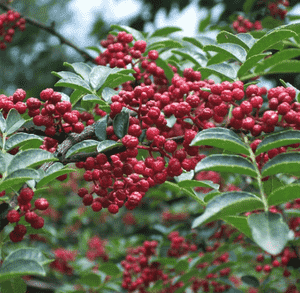
Chinese prickly ash (Zanthoxylum bungeanum)
Also known as: Chinese pepper tree, Chinese-pepper
Goji berry (Lycium barbarum) is a plant naturally found from the Himalayas to China. In Chinese culture, it has been a significant component in traditional cuisine and medicine for more than 2,000 years. This plant is characterized by its dark red berries.
In This Article
Attributes of Chinese prickly ash
Lifespan
Perennial
Plant Type
Shrub
Plant Height
3 m to 7 m
Spread
1-3 meters
Leaf Color
Green
Flower Size
Small, 1-2 mm
Flower Color
Yellow Green
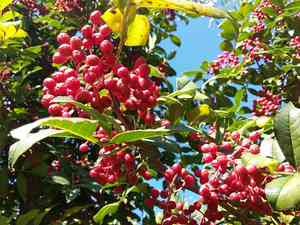
Images of Chinese prickly ash
Quickly Identify Chinese prickly ash
1
Look for compound leaves with 7-9 leaflets, thorny branches, and clusters of tiny red fruits. The leaves have a characteristic aromatic smell when crushed.
Scientific Classification of Chinese prickly ash
Phylum
Vascular plants
Class
Dicotyledons
Order
Maples, mangos, mahogany, citrus, and allies
Family
Rue
Genus
Prickly ash
Species
Chinese prickly ash
Planting and Growing of Chinese prickly ash
Care Difficulty
Easy
Watering Schedule
Every 4 days
Sunlight Requirements
Full sun
Sunshine Duration
6-10 hours
Ideal Temperature
68-77℉
Soil Type
Potting Mix, Peat Mix
Soil pH
6-7.5
Fertilizer Type
Balanced
Pruning Season
Spring, Summer
Pruning Area
Branches, Leaves
Pruning Frequency
2 times a year
Repotting Season
Spring
Pot Type
Plastic, Terracotta
 How to Water Chinese prickly ash?
For Zanthoxylum bungeanum, the watering should ensure the soil remains consistently moist but never waterlogged. Approximately 500 ml of water per session works perfectly, soaking the soil thoroughly without causing stagnation. Aim to water until slight drainage occurs from the pot, which indicates the roots are adequately hydrated.
What are the symptoms of an underwatered Chinese prickly ash?
›
What should I do if my Chinese prickly ash is not getting enough water?
›
What are the symptoms of an overwatered Chinese prickly ash?
›
How to save an overwatered Chinese prickly ash?
›
 What Are the Sunlight Requirements for Chinese prickly ash?
Prefers full sun with occasional partial shading; satisfactory light conditions result in enhanced vigor and leaf color intensity, ensuring a thriving and aesthetically pleasing plant.
More About Sunlight Requirements Techniques→
Understanding Ideal Light
›
Achieving Ideal Light
›
Benefits of Ideal Light
›
 What Is the Ideal Temperature Range for Chinese prickly ash?
The ideal temperature range for growing Zanthoxylum bungeanum, also known as Sichuan pepper, is between 68°F and 77°F. This temperature range provides optimal conditions for proper growth and nutrient absorption. Zanthoxylum bungeanum thrives in these conditions as it mirrors its native habitat where temperatures are moderate, promoting healthy foliage and fruit development.
 What Soil is Best for Chinese prickly ash?
Zanthoxylum bungeanum thrives in nutrient-rich soil, which provides the essential minerals and nutrients for vigorous growth. A fertile soil increases the yield of its aromatic seeds, making it highly productive. The plant requires well-draining soil to prevent root rot and other water-related issues. Proper drainage ensures that the roots receive enough oxygen while avoiding the pooling of excess water. Soil with moderate moisture retention helps maintain a steady supply of water, critical for the plant during dry spells. This balance prevents stress from either drought or water-logging.
 How to Fertilize Chinese prickly ash?
Zanthoxylum bungeanum, commonly known as Sichuan pepper, generally requires moderate amounts of fertilizer to thrive. It's best to apply about 100 grams of balanced granular fertilizer per plant monthly, ensuring nutrients reach the root zone effectively for optimal growth and fruit production.
 How to Prune Chinese prickly ash?
Begin pruning in early spring when new growth starts. Aim to cut just above a node or bud, reducing branches by about one-third. Always angle your cuts slightly to guide water away from buds, preventing water damage or rot. Maintain an open vase shape by cutting back to the main stems and removing side branches that hamper symmetry. This shape maximizes sunlight exposure, critical for photosynthesis and fruit production. Avoid cutting back more than one-third of the plant in a single season. Over-pruning can stress Zanthoxylum bungeanum, leading to reduced growth and diminished health.
More About Pruning Techniques→
 How to Propagate Chinese prickly ash plant?
1
Gather seeds from mature Zanthoxylum bungeanum fruits. Ensure that the seeds are fully ripe, which usually means they are firm and have a dark color.
2
Use a well-draining potting mix to plant the seeds or cuttings. It's important to ensure the mix retains some moisture without becoming waterlogged.
3
Place seeds or stem cuttings in the soil. Water gently to avoid washing away the seeds or displacing the cuttings. Keep the soil consistently moist but not drenched.
 How to Repot Chinese prickly ash plant?
1
Repot Zanthoxylum bungeanum when you notice roots protruding from drainage holes or the plant becomes root-bound. Spring or autumn is ideal to avoid temperature stress and give roots time to establish.
2
Choose a pot slightly larger than the current one with good drainage. The larger pot prevents root rot and allows roots to spread, aiding in robust growth and nutrient uptake.
3
Opt for a well-draining, sandy loam soil, as it mimics the plant's natural habitat, ensuring optimal moisture levels and efficient drainage, preventing root rot and promoting healthy root growth.
Learn More About Chinese prickly ash Diseases
Anthracnose
Bacterial Leaf Spot
Bacterial Wilt
Black Spot
Chemical Injury
Crown Gall
Damping-off
Downy Mildew
Drought Stress
Fusarium Wilt
Gray Mold
Leaf Curl
Leaf Spot
Mosaic
Nutrient Deficiency
Nutrient Toxicity
Powdery Mildew
Root Rot
Root-knot Nematode
Rusts
Sooty Mold
Spider Mites
Temperature Stress
Thrips Damage
White Mold



