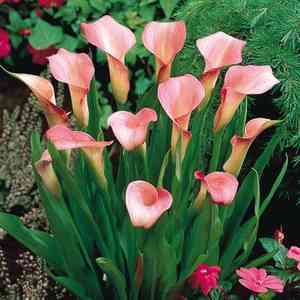
Pink calla lily(Zantedeschia rehmannii)

Pink calla lily (Zantedeschia rehmannii)

Also known as: Red calla lily

Pink calla lily (Zantedeschia rehmannii) is a perennial that produces flowers in various shades of pink, from rose to lavender. It grows from a bulb and can be planted either in garden beds or containers. Since it is sensitive to freezing temperatures, select a planting spot that offers good protection from the cold. Ideal locations include areas with partial to full sunlight, such as garden borders or near ponds, where the soil remains consistently moist. Containers are also a good option, allowing flexibility to move the plant as needed to optimize its growing conditions.

Attributes of Pink calla lily

Lifespan
Perennial, Annual, Biennial
Plant Type
Herb
Plant Height
40 cm
Spread
30 cm
Leaf Color
Green Blue
Flower Size
7 cm
Flower Color
Pink Purple Red

ForwardPlant - Identify plants with a snap

Identify and diagnose plants, get toxicity alerts, and explore safety guides for all types of fungi.

Try for Free

Images of Pink calla lily

Pink calla lily(Zantedeschia rehmannii)

Quickly Identify Pink calla lily

1
Identify Zantedeschia rehmannii by its cylindrical spathes that are pink or reddish, and its lance-shaped, green leaves. The plant has a tuberous root system and typically does not have a prominent stem.

Scientific Classification of Pink calla lily

Phylum
Vascular plants
Class
Monocotyledons
Order
Water plantains and allies
Family
Arum
Genus
Zantedeschia
Species
Pink calla lily

Planting and Growing of Pink calla lily

Care Difficulty
Easy
Watering Schedule
Every 4 days
Sunlight Requirements
Partial sun
Sunshine Duration
6-10 hours
Ideal Temperature
65-75℉
Soil Type
Potting Mix, Peat Mix
Soil pH
6.5-7.5
Fertilizer Type
Balanced
Pruning Season
Spring, Summer
Pruning Area
Branches, Leaves
Pruning Frequency
2 times a year
Repotting Season
Spring
Pot Type
Terracotta, Plastic

water icon How to Water Pink calla lily?

Zantedeschia rehmannii, also known as the pink calla lily, requires careful watering to thrive. The soil should be allowed to dry out slightly between waterings, ensuring the top inch feels dry before providing approximately 250 ml of water. This amount ensures the roots receive adequate moisture without becoming waterlogged, which is vital for its health.
What are the symptoms of an underwatered Pink calla lily?
What should I do if my Pink calla lily is not getting enough water?
What are the symptoms of an overwatered Pink calla lily?
How to save an overwatered Pink calla lily?
More About Watering Techniques

sunlight icon What Are the Sunlight Requirements for Pink calla lily?

Sunlight Requirements: Partial sun
Duration of light: 4 to 6 hours
Zantedeschia rehmannii thrives best in partial sun, where it gets four to six hours of sunlight. Ideal lighting ensures robust growth, lush foliage, and prolific flowering, enhancing its ornamental value.
Question 1: What is the best lighting solution?
Question 2: How do you ensure the plant gets ideal light?
Question 3: What are the benefits of ideal lighting?
More About Sunlight Requirements Techniques

temperature icon What Is the Ideal Temperature Range for Pink calla lily?

Ideal Temperature: 65 ~ 75℉
The optimal temperature range for growing Zantedeschia rehmannii is between 65°F and 75°F. Within this range, the plant can photosynthesize efficiently and maintain cellular functions necessary for growth, leading to vibrant foliage and healthy blooms. This warm yet moderate environment mimics the plant's native habitat, promoting its natural lifecycle.

soil icon What Soil is Best for Pink calla lily?

Soil type: Loam, Sandy loam, Peat soil
Soil PH: 6.5 ~ 7.5
Zantedeschia rehmannii thrives in well-drained soil that prevents waterlogging. This type of soil ensures that the plant's roots receive adequate oxygen, reducing the risk of root rot and promoting healthy growth. Incorporating organic matter into the soil improves its texture and nutrient content, benefiting Zantedeschia rehmannii by providing essential nutrients. This enrichment supports robust foliage and vibrant blooms. While the soil must drain well, it should also retain sufficient moisture. This balance is crucial as Zantedeschia rehmannii needs consistent moisture levels to maintain its lush appearance and avoid stress due to drought. More About Soil

fertilize icon How to Fertilize Pink calla lily?

Fertilizer type: Balanced
When fertilizing Zantedeschia rehmannii, it's vital to strike a balance. Use a balanced liquid fertilizer, diluted to half strength, to avoid overwhelming the plant. This ensures it receives essential nutrients without causing harm. More About Fertilizing Techniques

prune icon How to Prune Pink calla lily?

Pruning Time: Spring, Summer
Start by examining your Zantedeschia rehmannii to locate any yellowing or brown leaves. These are indications of dead foliage, which should be removed to encourage new growth. Using sharp, sterilized pruning shears, cut the dead or damaged leaves at their base. Avoid tearing the plant tissue, as clean cuts promote quick healing. Trim back overgrown stems to maintain the desired shape of your plant. This is especially important for potted specimens where space is limited. More About Pruning Techniques

propagate icon How to Propagate Pink calla lily plant?

Propagate Time: Spring, Early spring
1
Harvest seeds from matured Zantedeschia rehmannii plants once the seed pods are dry and have started to crack open. This ensures the seeds are mature enough for successful propagation.
2
For division propagation, carefully dig up the entire plant during early spring and clean the rhizomes. Ensure each section has at least one growth node or bud to enable successful regrowth.
3
Plant the seeds in seed trays filled with a well-draining potting mix. Maintain a warm temperature, ideally around 20°C (68°F), to promote germination, which can take a few weeks.
More About Propagating Techniques

repot icon How to Repot Pink calla lily plant?

Repotting frequency: Every 2-3 years
1
You should consider repotting Zantedeschia rehmannii when you see roots growing out of the drainage holes or the plant seems cramped in its pot. Another indicator is reduced flowering, which suggests it's time for fresh nutrients. Repotting during the growing seasons, like spring or summer, is ideal for the plant's recovery and growth.
2
When selecting a pot, ensure it has ample drainage holes to prevent waterlogging. The new pot should be one size larger than the current one to allow room for growth. The material of the pot should allow good air flow—terracotta is a great choice as it balances moisture levels and provides stability to the plant.
3
Opt for a well-draining potting mix enriched with organic matter. A blend containing peat, pine bark, and perlite will provide aeration and retain necessary moisture without suffocating the roots. This balance helps the plant access nutrients while avoiding the risk of root rot due to excessive water retention.
More About Repotting Techniques

ForwardPlant - Identify plants with a snap

Find the best spots for them to optimize their health, simply using your phone.

Try for Free

Toxicity of Pink calla lily

Is Pink calla lily toxic to humans?

The pink calla lily is known to contain calcium oxalate, a toxin that renders all components of the plant harmful if ingested. The symptoms associated with calcium oxalate poisoning can vary in intensity from mild to severe, encompassing vomiting, diarrhea, swelling of the throat and mouth, and potential impacts on kidney, brain, heart, and liver functions. Although this plant is a favored choice for indoor decor, it is not advisable to keep it in homes with children due to the risk of accidental ingestion.

Is Pink calla lily toxic to cat?

The pink calla lily poses a significant toxin risk to cats. If felines ingest any portion of this plant, they are at risk of poisoning, given that every part of the pink calla lily contains toxic substances. A cat that has consumed even a small part of the pink calla lily may show signs of physical discomfort or illness, potentially reflecting internal distress. Therefore, it is essential for cat owners to obtain immediate veterinary assistance if their pet displays any symptoms of poisoning from the pink calla lily, as timely intervention is vital for their health and safety.

Is Pink calla lily toxic to dog?

The pink calla lily is recognized as toxic to dogs. If a dog consumes any portion of this plant, it could face the risk of poisoning. Dogs might unintentionally ingest parts of the pink calla lily while exploring or playing in areas where this plant grows. The entirety of the plant, including its leaves, stems, and flowers, harbors toxic substances that can result in negative health impacts for dogs. Signs of poisoning in dogs may present as vomiting, diarrhea, excessive drooling, oral irritation, and trouble swallowing. It’s vital for dog owners to stay alert and keep their pets away from the pink calla lily. Should a dog ingest any part of the plant, seeking immediate veterinary assistance is essential to ensure the best possible outcome for the animal's well-being.

Identify toxic plants for your safety

Learn which plants are harmful to you and your pets, and make informed choices for a safer home!

Try for Free
WARNING
The judgment on toxicity and danger is for reference only. We DO NOT GUARANTEE any accuracy of such judgment. Therefore, you SHALL NOT rely on such judgment. It is IMPORTANT TO SEEK PROFESSIONAL ADVICE in advance when necessary.
More About Toxic Techniques