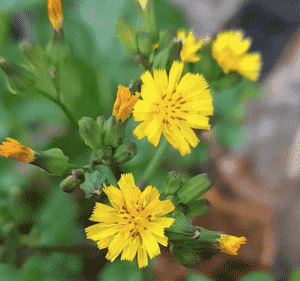
Oriental false hawksbeard (Youngia japonica)
Also known as: Japanese hawkweed
Japanese knotweed (Fallopia japonica) is a plant species originating from eastern Asia. Known for its invasive nature, it has spread across various regions worldwide. This species is particularly successful in colonizing disturbed areas, lawns, and roadsides.
In This Article
Attributes of Oriental false hawksbeard
Lifespan
Annual, Biennial
Plant Type
Herb
Plant Height
10 cm to 1 m
Spread
N/A
Leaf Color
Green Blue
Flower Size
2.5 cm
Flower Color
Yellow Brown Black
Images of Oriental false hawksbeard
Quickly Identify Oriental false hawksbeard
1
Rosette of hairy leaves with milky sap when torn
2
Bright yellow flowers with long ligulate florets
3
Small achene fruits topped with white pappus hairs
4
Linear upper leaves clasping stem, up to 4 inches long
5
Distinctive multi-petal flower head arrangement
Scientific Classification of Oriental false hawksbeard
Phylum
Vascular plants
Class
Dicotyledons
Order
Asters bellflowers fanflowers and allies
Family
Daisy
Genus
Youngia
Species
Oriental false hawksbeard
Planting and Growing of Oriental false hawksbeard
Care Difficulty
Easy
Watering Schedule
Every 4 days
Sunlight Requirements
Partial sun
Sunshine Duration
6-10 hours
Ideal Temperature
68-77℉
Soil Type
Potting Mix, Peat Mix
Soil pH
6.5-7.5
Fertilizer Type
Balanced
Pruning Season
Spring, Summer
Pruning Area
Branches, Leaves
Pruning Frequency
Once a year
Repotting Season
Spring
Pot Type
Plastic, Ceramic
 How to Water Oriental false hawksbeard?
For Youngia japonica, it is important to aim for a watering depth that ensures the soil is moist but not waterlogged. A cup of around 150 ml per watering session is usually adequate. It should deeply reach the roots without leaving puddles on the soil surface, creating a well-balanced moisture level.
What are the symptoms of an underwatered Oriental false hawksbeard?
›
What should I do if my Oriental false hawksbeard is not getting enough water?
›
What are the symptoms of an overwatered Oriental false hawksbeard?
›
How to save an overwatered Oriental false hawksbeard?
›
 What Are the Sunlight Requirements for Oriental false hawksbeard?
Partial sunlight ensures Youngia japonica receives enough energy for photosynthesis and growth, enhancing its foliage and keeping it healthy and vibrant.
How much sun does it need?
›
What are the best locations for planting?
›
How to achieve ideal light conditions indoors?
›
 What Is the Ideal Temperature Range for Oriental false hawksbeard?
Youngia japonica thrives best within a temperature range of 68°F to 77°F. This range ensures optimal growth, allowing the plant to carry out photosynthesis efficiently and maintain robust health. Temperatures beyond this range might lead to stress or impaired development.
 What Soil is Best for Oriental false hawksbeard?
Youngia japonica thrives in well-drained soils as they prevent waterlogging, which can lead to root rot. Such soil conditions ensure aeration, allowing roots to access oxygen easily, promoting healthy growth. Providing nutrient-rich soil is crucial for Youngia japonica, aiding in its lush growth and robust flowering. A soil rich in organic matter helps in maintaining the necessary nutrients for the plant's metabolic activities. This plant requires soil that has moderate moisture retention capabilities, ensuring consistent moisture availability without saturation. This balance helps in sustaining overall plant health and vigor.
 How to Fertilize Oriental false hawksbeard?
For Youngia japonica, the recommended amount of fertilizer is quite moderate. Use a balanced liquid fertilizer diluted to half strength, at approximately 250 ml per application per plant. This approach ensures the plant receives nutrients without risking nutrient burn.
 How to Prune Oriental false hawksbeard?
Begin by identifying any dead or diseased leaves and remove them using sharp, sterilized pruning shears. Cut back any overly long stems to encourage bushier growth. Always make your cuts just above a node, where the leaf meets the stem, to promote healthy regrowth. If the plant is flowering, deadheading spent flowers can encourage more blooms.
 How to Propagate Oriental false hawksbeard plant?
1
Ensure the soil is well-drained and rich in organic matter. Loosen the soil with a garden trowel and remove any weeds or stones that could inhibit seed growth. The soil should have a fine texture to facilitate good seed-to-soil contact.
2
Scatter the Youngia japonica seeds evenly on the prepared soil surface. Gently press the seeds into the soil to ensure good contact, and cover them with a thin layer of soil, approximately twice the seed's diameter.
3
After sowing, gently water the area using a watering can with a fine rose to prevent seed displacement. Maintain consistent moisture without waterlogging, which is critical during the germination phase of Youngia japonica.
 How to Repot Oriental false hawksbeard plant?
1
Look for signs such as roots growing through drainage holes or soil drying out quicker than usual. These are clear indicators that your Youngia japonica needs more space to thrive.
2
Select a pot that is one size larger than the current one, with adequate drainage holes. This new space must provide room for root growth, while also preventing waterlogging that can lead to root rot.
3
Opt for well-draining soil suited for Youngia japonica. This ensures that excess moisture does not accumulate, playing a crucial role in preventing root diseases and promoting healthy growth.


