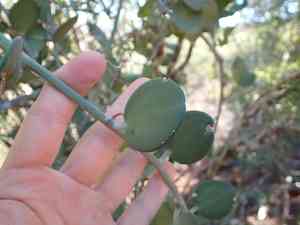
Silver Dollar Plant (Xerosicyos danguyi)
Also known as: Penny Plant
The silver Dollar Plant is a desert plant native to Madagascar. It is a climbing shrub that uses thin tendrils to attach and grow from a support structure. The silver Dollar Plant gets its name from the round leaves that resemble coins (like silver dollars). In spite of the difference in appearance, it is a relative of the cucumber.
In This Article
Attributes of Silver Dollar Plant
Lifespan
Perennial
Plant Type
Succulent, Vine, Herb
Plant Height
3 m to 4.5 m
Spread
1.2 m to 1.8 m
Leaf Color
Green Gray
Flower Size
2.5 cm
Flower Color
Yellow Green
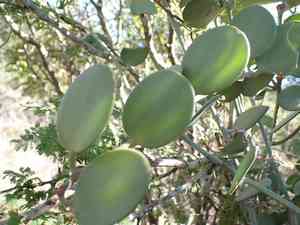
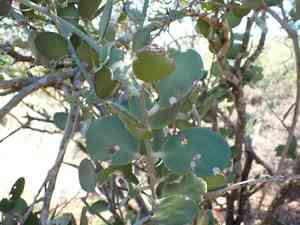
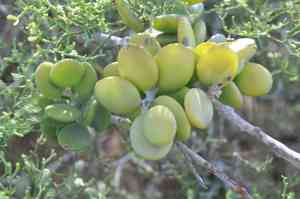
Images of Silver Dollar Plant
Quickly Identify Silver Dollar Plant
1
Climbing succulent vine reaching 10-15 feet (3-4.5 meters) with forked tendrils.
2
Round leaves up to 1 inch (2.5 cm) wide, changing color from pea green to gray-green.
3
Cylindrical gray stems branching from the base.
4
Small chartreuse dioecious flowers appearing in late winter to early spring.
5
Resilient plant with slow initial growth transitioning to moderate pace with minimal watering.
Scientific Classification of Silver Dollar Plant
Phylum
Vascular plants
Class
Dicotyledons
Order
Cucurbitales
Family
Gourd
Genus
Xerosicyos
Species
Silver Dollar Plant
Planting and Growing of Silver Dollar Plant
Care Difficulty
Easy
Watering Schedule
Every 2 days
Sunlight Requirements
Partial sun
Sunshine Duration
6-12 hours
Ideal Temperature
65-75℉
Soil Type
Potting Mix, Peat Mix
Soil pH
6.5-7.5
Fertilizer Type
Balanced
Pruning Season
Spring, Summer
Pruning Area
Branches, Leaves
Pruning Frequency
2 times a year
Repotting Season
Spring
Pot Type
Plastic, Terracotta
 How to Water Silver Dollar Plant?
For Xerosicyos danguyi, the amount of water should be enough to thoroughly moisten the soil without making it soggy, usually around 250 ml each time. It’s crucial to ensure proper drainage, as the plant prefers drier conditions with well-draining soil. Always allow the top inch of soil to dry out completely between waterings to avoid overwatering.
More About Watering Techniques→
What are the symptoms of an underwatered Silver Dollar Plant?
›
What should I do if my Silver Dollar Plant is not getting enough water?
›
What are the symptoms of an overwatered Silver Dollar Plant?
›
How to save an overwatered Silver Dollar Plant?
›
 What Are the Sunlight Requirements for Silver Dollar Plant?
The ideal light range is partial sun, where Xerosicyos danguyi benefits from a few hours of sunlight daily, fostering robust growth, healthy foliage, and overall vitality.
More About Sunlight Requirements Techniques→
Solution for Ideal Lighting
›
How to Achieve Ideal Lighting
›
Benefits of Ideal Lighting
›
 What Is the Ideal Temperature Range for Silver Dollar Plant?
The ideal temperature range for Xerosicyos danguyi, also known as the silver dollar vine, is between 65°F and 75°F. This range allows for optimal growth and development of the plant, which thrives in warm and consistent environments. It's important to maintain this range to ensure photosynthesis processes occur efficiently, and the plant remains healthy and vibrant.
 What Soil is Best for Silver Dollar Plant?
Xerosicyos danguyi thrives in well-drained soil, which allows excess water to escape quickly, reducing the risk of root rot. Proper drainage ensures that the roots receive adequate oxygen, promoting healthy growth and vitality. While hardy, Xerosicyos danguyi benefits from soil enriched with organic matter. This nutrient support fosters lush growth and enhances the plant’s ability to withstand environmental stresses and pests. An aerated soil texture provides space for root expansion and access to nutrients and moisture. This characteristic is crucial for the plant’s development, ensuring robust and vigorous growth over time.
More About Soil→
 How to Fertilize Silver Dollar Plant?
When it comes to fertilizing Xerosicyos danguyi, less is more. Use a balanced, all-purpose liquid fertilizer diluted to half strength to avoid overwhelming the plant. A dose of approximately 1/4 teaspoon per gallon of water should suffice. This ensures the plant receives nutrients such as nitrogen, phosphorus, and potassium without the risk of fertilizer burn.
 How to Prune Silver Dollar Plant?
Remove any brown, dead, or visibly damaged leaves and stems to encourage healthy new growth. This not only improves the plant’s appearance but also reduces the risk of pests and disease. Clip back overgrown vines to maintain a balanced look and prevent tangling. Target the longest branches, cutting just above a leaf node to encourage fuller, lateral growth. Regularly prune to control the plant's dimensions, especially if it's becoming invasive. Focus on maintaining air circulation and light penetration through the structure for optimal growth.
 How to Propagate Silver Dollar Plant plant?
1
Choose healthy and mature stems for cuttings. Ensure the stem is disease-free and has no signs of damage or stress, as these factors can impact the rooting success rate.
2
Use clean, sharp pruning shears to cut the stem just below a node. This node is where roots are most likely to emerge. Ensure your cuts are precise to prevent crushing the stem tissue.
3
Dip the cut end of the stem immediately into rooting hormone to promote root development. Shake off any excess powder before planting to avoid hormone concentration issues.
 How to Repot Silver Dollar Plant plant?
1
Xerosicyos danguyi usually signals the need for repotting when its roots start growing out of the drainage holes, or you notice a significant slowdown in growth. Spring and summer are ideal seasons because the plant is actively growing, which helps it recover from the stress of repotting.
2
Choose a pot that is slightly larger than the current one, ensuring it has drainage holes. A terracotta pot is preferable because it allows excess moisture to evaporate, preventing root rot. A well-sized pot supports healthy growth without overwhelming the roots with too much space.
3
Use a well-draining cactus mix to prevent waterlogging, which this plant is sensitive to. This type of soil provides the ideal balance of moisture retention and drainage, promoting strong root development and reducing the risk of root rot.
Learn More About Silver Dollar Plant Diseases
Anthracnose
Bacterial Leaf Spot
Bacterial Soft Rot
Bacterial Wilt
Black Spot
Chemical Injury
Crown Gall
Cyst Nematode
Damping-off
Downy Mildew
Drought Stress
Fusarium Wilt
Gray Mold
Leaf Curl
Leaf Spot
Mosaic
Nutrient Deficiency
Nutrient Toxicity
Powdery Mildew
Root Rot
Root-knot Nematode
Rusts
Sooty Mold
Spider Mites
Temperature Stress
Thrips Damage
White Mold



