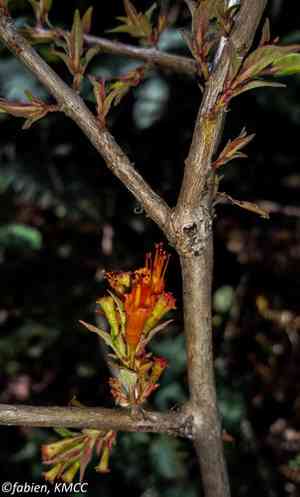
Shiranji-tea (Woodfordia fruticosa)
Also known as: Fire Flame Bush, Red Bell Bush
The shiranji-tea is a spreading, sun-loving, tropical, evergreen that grows on open ground, including fields, dry hillsides and disturbed soils. Besides being planted ornamentally, its wood is used locally for firewood, and its flowers can be used to make dye.
In This Article
Attributes of Shiranji-tea
Lifespan
Perennial
Plant Type
Shrub
Plant Height
3 m to 5 m
Spread
1 to 2 meters
Leaf Color
Dark green
Flower Size
3 cm
Flower Color
Red Orange
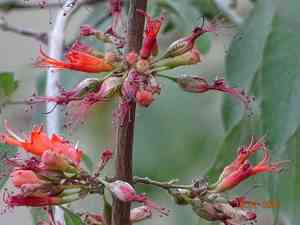
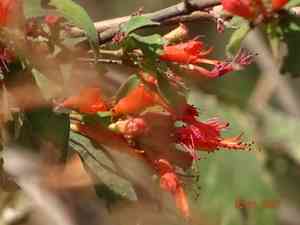
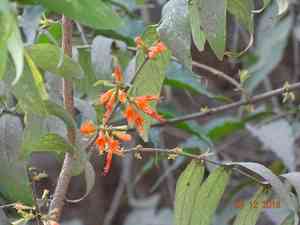
Images of Shiranji-tea
Quickly Identify Shiranji-tea
1
Look for a multi-branched shrub with ovate-lanceolate leaves and bright orange-red bell-shaped flowers, blooming primarily in the spring and summer.
Scientific Classification of Shiranji-tea
Phylum
Vascular plants
Class
Dicotyledons
Order
Myrtales
Family
Loosestrife
Genus
Woodfordia
Species
Shiranji-tea
Planting and Growing of Shiranji-tea
Care Difficulty
Easy
Watering Schedule
Every 2 days
Sunlight Requirements
Full sun
Sunshine Duration
4-8 hours
Ideal Temperature
60-86℉
Soil Type
Potting Mix, Peat Mix
Soil pH
6.5-7.5
Fertilizer Type
Balanced
Pruning Season
Spring, Summer
Pruning Area
Branches, Leaves
Pruning Frequency
2 times a year
Repotting Season
Spring
Pot Type
Plastic, Ceramic
 How to Water Shiranji-tea?
Woodfordia fruticosa prefers moderate watering, meaning it needs about 500 milliliters of water per session. Make sure the topsoil is dry before the next watering to prevent overwatering. The key is to moisten the soil evenly without leaving it waterlogged. This ensures that the roots are hydrated but not submerged.
What are the symptoms of an underwatered Shiranji-tea?
›
What should I do if my Shiranji-tea is not getting enough water?
›
What are the symptoms of an overwatered Shiranji-tea?
›
How to save an overwatered Shiranji-tea?
›
 What Are the Sunlight Requirements for Shiranji-tea?
Woodfordia fruticosa thrives in partial to full sun. Ideal light enhances flowering and general health, making it more vibrant and flourishing, while supporting stronger structural growth.
More About Sunlight Requirements Techniques→
What is the ideal location for Woodfordia fruticosa?
›
How to manage light intensity for Woodfordia fruticosa?
›
What are the benefits of providing ideal lighting conditions?
›
 What Is the Ideal Temperature Range for Shiranji-tea?
Woodfordia fruticosa thrives best within a temperature range of 60°F to 86°F. This range ensures optimal growth conditions, encouraging effective photosynthesis and healthy blooming. Maintaining this range helps the plant avoid stress and supports vibrant foliage and flowers.
 What Soil is Best for Shiranji-tea?
Woodfordia fruticosa thrives in well-drained soil that prevents standing water around the roots, ensuring proper aeration. This condition minimizes the risk of root rot and contributes to healthy, vigorous growth. A nutrient-rich soil that contains ample organic matter ensures the plant has access to a steady supply of nutrients. This promotes lush foliage, vibrant blooming, and overall robust plant health. While Woodfordia fruticosa enjoys occasional watering, it prefers soil with light to moderate moisture levels. This balance prevents over-saturation and helps maintain the plant's natural resilience to varying environmental conditions.
 How to Fertilize Shiranji-tea?
The fertilization amount for Woodfordia fruticosa should be moderate, as excessive fertilization can lead to root burn and plant stress. Use approximately 5-10 grams of balanced all-purpose fertilizer for every square foot of soil area. Always follow the manufacturer's instructions for liquid fertilizers to avoid nutrient overload.
 How to Prune Shiranji-tea?
Woodfordia fruticosa thrives with proper care, ensuring vibrant blooms. Pruning bi-monthly in favorable seasons aids in maintaining its charm while promoting healthy growth. Start by cleaning your pruning tools to prevent infections. Use rubbing alcohol or a diluted bleach solution to disinfect the tools before making any cuts. Focus on removing dead, damaged, or diseased branches. Identify nodes where new growth can spur, ensuring that cuts are made at a slight angle to promote water runoff. Trim overgrown branches to retain a bushy shape. Regular shaping by removing errant branches encourages a fuller appearance and allows for increased sunlight penetration. Pruning during the flowering season can enhance blooms. Ensure to remove spent flowers and thin out crowded areas to alleviate stress on the plant, enabling better energy distribution.
More About Pruning Techniques→
 How to Propagate Shiranji-tea plant?
1
Collect seeds from mature Woodfordia fruticosa plants. Clean them thoroughly and soak in water overnight to enhance germination. This step is critical to break seed dormancy and enable successful propagation.
2
Choose healthy, non-flowering stems for cuttings. Cut about 6-8 inches of the stem using clean pruning shears. Remove leaves from the bottom half to prevent decay when planting.
3
For seeds, sprinkle them on seedling trays filled with potting mix. For cuttings, plant them in moist soil or a container. Keep in a warm, humid environment, watering sparingly to encourage root growth.
 How to Repot Shiranji-tea plant?
1
Watch for signs like roots growing through drainage holes or water pooling on the surface. Time to repot if growth seems stunted. These signs generally indicate that the plant requires more space to develop a healthy root system.
2
Select a pot 2 inches larger in diameter with good drainage holes. A slightly larger pot helps accommodate root growth while preventing waterlogging, which can lead to root rot and ultimately hinder the plant's overall health.
3
Opt for a well-draining soil rich in organic matter. This type of soil promotes root aeration and allows excess moisture to escape, ensuring that the plant's roots stay healthy and well-nourished.
Learn More About Shiranji-tea Diseases
Anthracnose
Bacterial Leaf Spot
Bacterial Wilt
Chemical Injury
Crown Gall
Cyst Nematode
Damping-off
Downy Mildew
Drought Stress
Fusarium Wilt
Gray Mold
Leaf Curl
Leaf Spot
Mosaic
Nutrient Deficiency
Nutrient Toxicity
Powdery Mildew
Root Rot
Root-knot Nematode
Rusts
Sooty Mold
Spider Mites
Temperature Stress
Thrips Damage
White Mold



