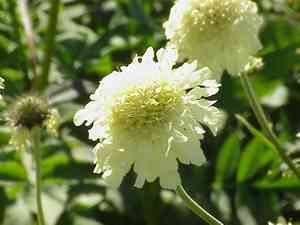
Korean weigela (Weigela coraeensis)
Also known as: Korean Weigela, Korean Beauty Bush
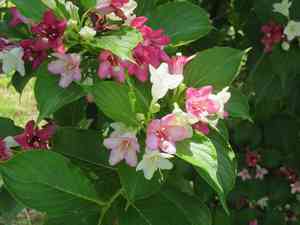
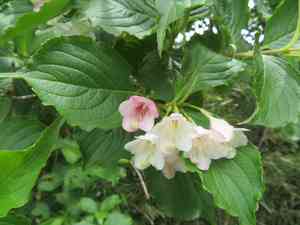
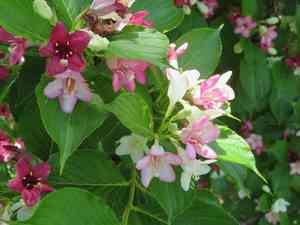
The Korean weigela (Weigela coraeensis) is a hardy deciduous shrub that typically reaches heights of 8 to 12 feet. It has a moderate to fast growth rate, developing into a multi-stemmed, arching bush. Blooming occurs in late spring to early summer, featuring tubular flowers that start as white and gradually transition to pink and then red, creating a striking, multicolored display.
This shrub thrives best in well-drained soil and can adapt to both full sun and partial shade conditions. Regular pruning after the blooming season can help maintain its shape and encourage more prolific flowering in the next season.
In This Article
Attributes of Korean weigela
Lifespan
Perennial
Plant Type
Shrub
Plant Height
5 m
Spread
3 m
Leaf Color
Green
Flower Size
2 cm to 3 cm
Flower Color
White Pink
Images of Korean weigela
Quickly Identify Korean weigela
1
Identify Weigela coraeensis by its funnel-shaped flowers, which are typically pink or red, and its opposite, ovate leaves. The shrub has a rounded growth habit and can reach a height of up to 3 meters.
Scientific Classification of Korean weigela
Phylum
Vascular plants
Class
Dicotyledons
Order
Honeysuckles, moschatels and allies
Family
Honeysuckle
Genus
Weigela
Species
Korean weigela
Planting and Growing of Korean weigela
Care Difficulty
Easy
Watering Schedule
Every 8 days
Sunlight Requirements
Full sun
Sunshine Duration
6-12 hours
Ideal Temperature
60-75℉
Soil Type
Potting Mix, Peat Mix
Soil pH
6.5-7.5
Fertilizer Type
Balanced
Pruning Season
Spring, Summer
Pruning Area
Branches, Leaves
Pruning Frequency
2 times a year
Repotting Season
Spring
Pot Type
Plastic, Ceramic
 How to Water Korean weigela?
When watering Weigela coraeensis, it is crucial to ensure that the soil is consistently moist but not waterlogged. The general rule of thumb is to water deeply enough so that the soil is moist to a depth of about 1 inch, which typically requires about 500 ml per session. This supports the plant's root system without causing root rot.
What are the symptoms of an underwatered Korean weigela?
›
What should I do if my Korean weigela is not getting enough water?
›
What are the symptoms of an overwatered Korean weigela?
›
How to save an overwatered Korean weigela?
›
 What Are the Sunlight Requirements for Korean weigela?
Weigela coraeensis thrives best in full to partial sun, ideally receiving about 4-6 hours of sunlight. This range supports healthy growth, vibrant flowers, and robust structural development.
More About Sunlight Requirements Techniques→
What is the best time to provide sunlight?
›
How can you ensure the plant gets enough sun indoors?
›
Why is it important to monitor light conditions?
›
 What Is the Ideal Temperature Range for Korean weigela?
The ideal temperature range for Weigela coraeensis is crucial for its optimal growth and health. These temperatures should ideally be between 60°F to 75°F. This range provides a suitable environment that promotes healthy foliage growth and seasonal blooming, allowing the plant to develop its characteristic flowers and lush green leaves. Consistent temperatures within this range contribute to robust health and vivid floral displays.
 What Soil is Best for Korean weigela?
Weigela coraeensis thrives best in well-drained soil conditions. Ensuring that the soil doesn't retain excessive moisture is crucial as it prevents root rot and promotes healthy root growth. This requirement supports robust plant health and excellent flower production. The plant prefers soil with moderate fertility levels. Adequate nutrient availability fuels the vibrant growth of leaves and abundant flowering. It's essential to avoid overly rich soils, which may lead to excessive foliage at the expense of blooms. Incorporating organic matter such as compost improves soil structure and promotes moisture retention while enhancing nutrient supply. This supports sustained plant growth and flowering while reducing the need for frequent fertilization.
 How to Fertilize Korean weigela?
For Weigela coraeensis, it is important to follow the recommended dosage on the fertilizer packaging. Typically, aim for about 1/4 cup of slow-release granular fertilizer per plant in spring, ensuring it's well mixed into the soil around the base. For liquid fertilizers, use a diluted solution of no more than 50% of the recommended strength to avoid harming the plant.
 How to Prune Korean weigela?
Always use clean, sharp pruning tools to make precise cuts and avoid tearing the branches. Dull blades can harm the plant by leaving ragged cuts that invite pests and diseases. It's essential to sanitize your tools between cuts, especially after removing diseased branches. Use a solution of one part bleach to nine parts water, or appropriate sanitizers to avoid disease spread. While it's tempting to significantly trim back the plant, overpruning can stress Weigela coraeensis and reduce its vigor. Aim to remove no more than one-third of the plant's total growth in a single pruning session.
More About Pruning Techniques→
 How to Propagate Korean weigela plant?
1
Choose a healthy, non-flowering stem of about 4-6 inches in length. Ensure that it is disease-free and taken from the current year's growth, as these are more likely to root effectively.
2
Remove the leaves from the lower half of the cutting, and dip the cut end in rooting hormone. This stimulates root formation and helps prevent infections during the rooting process.
3
Place the prepared cutting in a pot filled with a well-draining growing medium. Firmly press the media around the stem to hold it upright, and water the soil lightly to settle it around the cutting.
 How to Repot Korean weigela plant?
1
The perfect time to repot Weigela coraeensis is when you notice roots circling the pot's perimeter or see them growing through the drainage holes. These signs indicate that the plant's roots need more space to grow and thrive. Spring is ideal because the plant is entering its growth phase, allowing it to recover from the slight shock of repotting efficiently.
2
Select a pot that is one size larger than the current one to provide enough room for root growth. Ensure it has multiple drainage holes to prevent waterlogged soil, which can lead to root rot. A pot made of breathable materials like terracotta is advantageous as it allows excess moisture to evaporate, keeping the roots healthy.
3
Weigela coraeensis thrives in a well-draining loamy soil mix. This type of soil ensures proper drainage while retaining enough moisture for the roots. A mix enriched with organic matter, like compost, provides nutrients that promote healthy growth. The right soil helps prevent issues like waterlogging, which can lead to root rot.



