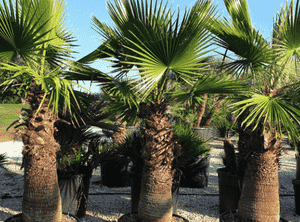
Mexican fan palm (Washingtonia robusta)
Also known as: Washington Palm, Mexican Washington Palm, Cotton Palm, Thread palm, Southern washingtonia
The Mexican Fan Palm (Washingtonia robusta) originates from the western and southwestern United States. It's one of the most commonly planted palm species and is particularly prominent in Los Angeles. Known for its impressive height, it stands out as one of the tallest palm trees globally.
In This Article
Attributes of Mexican fan palm
Lifespan
Perennial
Plant Type
Palm
Plant Height
25 m to 30 m
Spread
2 m to 3 m
Leaf Color
Green
Flower Size
1 cm
Flower Color
White Yellow
Images of Mexican fan palm
Quickly Identify Mexican fan palm
1
Columnar trunk reaching 100 feet (30 meters) with a skirt of old, brown fronds.
2
Dense crown of fan-shaped, green fronds measuring 3-5 feet (91-152 cm) in length.
3
Cream-colored flowers in large clusters up to 3 feet (90 cm) long, with subtle fragrance.
4
Black, pea-sized berries clustered like grapes, each about 0.3 inches (7-8 mm) in diameter.
5
Thick stem with orange, saw-tooth spines, reaching lengths up to 3 feet (91 cm).
Scientific Classification of Mexican fan palm
Phylum
Vascular plants
Class
Monocotyledons
Order
Palms, bullanocks, and allies
Family
Palm
Genus
Washingtonia
Species
Mexican fan palm
Planting and Growing of Mexican fan palm
Care Difficulty
Easy
Watering Schedule
Every 2 days
Sunlight Requirements
Full sun
Sunshine Duration
6-10 hours
Ideal Temperature
77-86℉
Soil Type
Potting Mix, Peat Mix
Soil pH
6.5-7.5
Fertilizer Type
Balanced
Pruning Season
Spring, Summer
Pruning Area
Branches, Leaves
Pruning Frequency
2 times a year
Repotting Season
Spring
Pot Type
Plastic, Ceramic
 How to Water Mexican fan palm?
For Washingtonia robusta, it is crucial to water it deeply but infrequently. Each watering session should provide about 1000 ml of water to ensure moisture reaches the root zone. This encourages the plant to develop a deep root system, enhancing its drought tolerance.
More About Watering Techniques→
What are the symptoms of an underwatered Mexican fan palm?
›
What should I do if my Mexican fan palm is not getting enough water?
›
What are the symptoms of an overwatered Mexican fan palm?
›
How to save an overwatered Mexican fan palm?
›
 What Are the Sunlight Requirements for Mexican fan palm?
Washingtonia robusta benefits from full sun exposure. This ensures healthy growth, vibrant frond coloration, and the plant's natural stature. Optimal lighting also boosts the plant's resistance to diseases and environmental stress.
More About Sunlight Requirements Techniques→
What are ideal lighting conditions for Washingtonia robusta?
›
How can I ensure Washingtonia robusta gets enough sunlight?
›
What are the benefits of optimal lighting for Washingtonia robusta?
›
 What Is the Ideal Temperature Range for Mexican fan palm?
The ideal temperature range for Washingtonia robusta is between 77°F and 86°F. This range supports optimal physiological processes, including photosynthesis and nutrient uptake, promoting robust growth and development.
 What Soil is Best for Mexican fan palm?
Washingtonia robusta requires well-drained soil to prevent root rot and encourage healthy growth. Appropriate drainage is crucial as it allows oxygen to reach the roots, promoting robust root development and healthier foliage. This palm prefers soils that are rich in organic matter, which enhances nutrient uptake and strengthens plant health. Nutrient-rich soil supports lush leaf growth and overall vitality for the tree. While Washingtonia robusta favors well-drained soils, some moisture retention is beneficial to sustain the plant during dry periods. The ability to retain moisture keeps the palm hydrated and lessens watering frequency.
More About Soil→
 How to Fertilize Mexican fan palm?
For Washingtonia robusta, it is recommended to apply a balanced palm-specific fertilizer. When using liquid fertilizer, dilute it at a concentration of 1/2 of the recommended strength to avoid fertilizer burn. For granular fertilizers, apply no more than one cup per plant for each application.
More About Fertilizing Techniques→
 How to Prune Mexican fan palm?
Begin by gathering sharp pruning shears or a saw. Ensure that your tools are clean and sanitized to prevent disease spread. Having a stable ladder will help if you're reaching higher fronds. Safety gear, like gloves and goggles, is vital to protect from sharp edges and falling frond debris. Inspect the Washingtonia robusta for any brown, dead, or broken fronds. These fronds typically hang down and should be the primary target during pruning. Removing them will not only improve appearance but also promote healthier growth. When cutting fronds, make clean cuts close to the trunk without damaging the trunk itself. A smooth cut will heal faster and prevent pests from infesting the palm. Avoid tearing fronds away as this can harm the plant and take longer to heal.
More About Pruning Techniques→
 How to Propagate Mexican fan palm plant?
1
Collect seeds from mature Washingtonia robusta palm fruits. Clean the seeds thoroughly to remove any fruit pulp, and soak them in warm water for 24-48 hours to improve germination rates.
2
Fill a seed tray with sterilized potting soil. Plant the seeds about 1 inch deep, spaced evenly. Cover lightly with soil and water gently, ensuring not to over-saturate the soil.
3
Place the seed tray in a warm, sunny location. Keep the soil consistently moist but not waterlogged. Germination can take several weeks, so patience is essential during this stage.
 How to Repot Mexican fan palm plant?
1
Washingtonia robusta needs repotting when its root system becomes tightly bound or starts growing out of the drainage holes. Another sign is slowed growth or when the plant begins to tilt. It's best to repot during active growth seasons like spring or summer to minimize stress.
2
Select a pot that is one size larger than the current one. Ensure it has adequate drainage holes to prevent waterlogging. A slightly heavier pot can help stabilize the tall structure of the palm, preventing it from toppling over easily.
3
Use a well-draining loamy mix to replicate the palm's natural habitat. This allows for proper aeration and moisture retention, crucial for robust growth and preventing root rot. The mix should facilitate easy root penetration and support the palm's nutritional needs.



