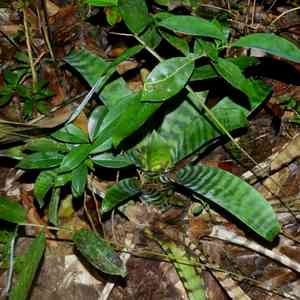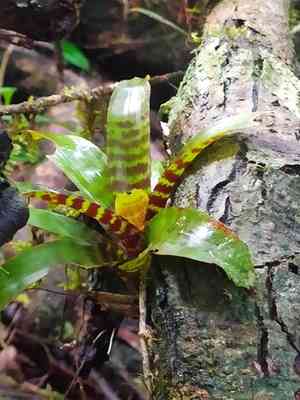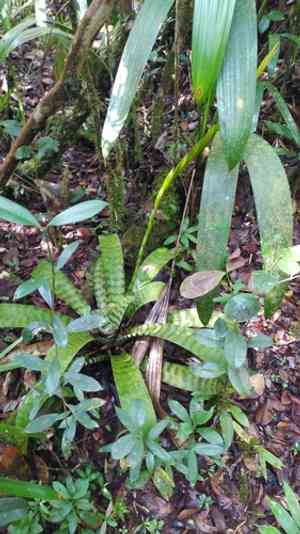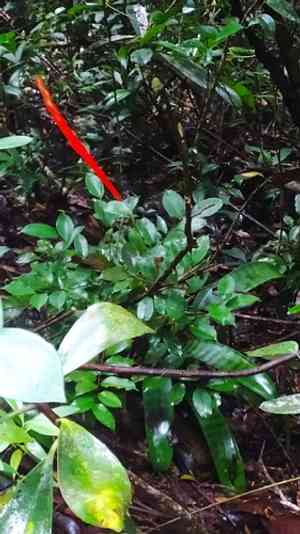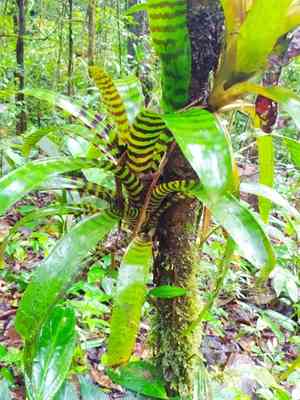
Vriesea splendens(Vriesea splendens)

Vriesea splendens (Vriesea splendens)

Also known as: Flaming sword

The Vriesea splendens, also known as the flaming sword, is a flowering plant that falls under the Bromeliaceae family and the Tillandsioideae subfamily. Its origin can be traced back to Trinidad, eastern Venezuela and the Guianas, but it was only introduced to Europe in 1840. The plant is known for its smooth foliage that has brown bands and takes on a rosette shape. Its distinguishing feature, however, is the vibrant red inflorescence it produces in a flattened spike. The flaming sword has received the Award of Garden Merit from the Royal Horticultural Society. Although it is occasionally referred to as the Lutheria splendens, there are multiple cultivars of V. splendens recorded in the Bromeliad Cultivar Register.

Attributes of Vriesea splendens

Lifespan
Vriesea splendens, also known as Flaming sword plant, is a perennial plant that can live for many years if properly cared for.
Plant Height
60 cm
Spread
45 cm
Leaf Color
Green with brownish spots
Flower Size
2-3 cm
Flower Color
Yellow

ForwardPlant - Identify plants with a snap

Identify and diagnose plants, get toxicity alerts, and explore safety guides for all types of fungi.

Try for Free

Images of Vriesea splendens

Vriesea splendens(Vriesea splendens)

Quickly Identify Vriesea splendens

1
The plant features stiff patterned leaves that grow in a rosette, from the center of which the red 'flaming sword' emerges.

Scientific Classification of Vriesea splendens

Phylum
Angiosperms
Class
Monocots
Order
Poales
Family
Bromeliaceae
Genus
Vriesea
Species
V. splendens

Planting and Growing of Vriesea splendens

Watering Schedule
Every 4 days
Sunlight Requirements
Partial sun
Sunshine Duration
6-10 hours
Ideal Temperature
70-80℉
Soil Type
Potting Mix, Peat Mix
Soil pH
6-7.5
Fertilizer Type
Balanced
Pruning Season
Spring, Summer
Pruning Area
Branches, Leaves
Pruning Frequency
2 times a year
Repotting Season
Spring
Pot Type
Plastic, Ceramic

water icon How to Water Vriesea splendens?

For Vriesea splendens, you should aim to keep the soil evenly moist but not soggy. Water thoroughly until excess water begins to drain out of the bottom of the pot, ensuring approximately 250 ml each time. This should provide sufficient moisture for optimal growth.
What are the symptoms of an underwatered Vriesea splendens?
What should I do if my Vriesea splendens is not getting enough water?
What are the symptoms of an overwatered Vriesea splendens?
How to save an overwatered Vriesea splendens?

sunlight icon What Are the Sunlight Requirements for Vriesea splendens?

Sunlight Requirements: Partial sun
Duration of light: 4 to 6 hours
Vriesea splendens ideally benefits from partial sunlight, mimicking the dappled light of its native rainforest habitat, which helps in maintaining vibrant foliage and healthy growth.
What is the ideal kind of sunlight for Vriesea splendens?
How can I achieve the ideal lighting for my Vriesea splendens?
What are the benefits of ideal lighting for Vriesea splendens?

temperature icon What Is the Ideal Temperature Range for Vriesea splendens?

Ideal Temperature: 70 ~ 80℉
The ideal temperature range for growing Vriesea splendens is between 70°F and 80°F. This range provides optimal conditions for the plant's metabolic processes, ensuring vibrant foliage and healthy growth. Vriesea splendens thrives in warm environments that mimic its natural habitat in the tropical regions.

soil icon What Soil is Best for Vriesea splendens?

Soil type: Loam, Sandy loam
Soil PH: 6 ~ 7.5
Vriesea splendens thrives in well-draining soil, which prevents waterlogging that can cause root rot. This feature is crucial for the plant's health, providing it with the right balance of moisture and air. Although the soil should drain well, it also needs to retain some moisture, ensuring the roots remain hydrated. This is particularly beneficial for the plant's lush, green appearance and vibrant colors. Rich in organic matter, the soil should supply essential nutrients that Vriesea splendens requires for growth and flowering. This is vital for healthy foliage and prolonged blooms.

fertilize icon How to Fertilize Vriesea splendens?

Fertilizer type: Balanced
When fertilizing Vriesea splendens, it is crucial to use a balanced fertilizer diluted to half strength. For liquid fertilizers, 1/4 teaspoon per gallon is generally adequate. Using too much can cause nutrient burn, damaging the plant's leaves and roots. Consistent, light feeding promotes vibrant foliage and healthy growth.

prune icon How to Prune Vriesea splendens?

Pruning Time: Spring, Summer, Autumn
It's crucial not to cut the central rosette of Vriesea splendens as it is the plant's main growth area. Damaging the rosette can hinder the plant's ability to develop and may even stop it from flowering. Focus on trimming side leaves instead. While pruning, maintain the natural form of Vriesea splendens. This bromeliad naturally grows in a rosette shape, and trimming should enhance this pattern. Over-pruning or reshaping can stress the plant, so it’s important to prune conservatively and thoughtfully.

propagate icon How to Propagate Vriesea splendens plant?

Propagate Time: Spring, Early spring
1
Ensure that you start with high-quality Vriesea splendens seeds. Purchase from reputable suppliers or collect seeds from a healthy, mature plant. Check for viability to increase germination success rates.
2
Prepare a growth medium that consists of a well-draining mix, such as a blend of perlite and peat moss. This will provide the right balance of moisture retention and aeration needed for seedling development.
3
Sow the seeds evenly on the surface of the growth medium without covering them, as they require light to germinate. Mist the seeds gently with water to maintain humidity and place the tray in a warm, bright location.

repot icon How to Repot Vriesea splendens plant?

Repotting frequency: Every 2-3 years
1
Repotting Vriesea splendens is necessary when roots overflow the pot or growth slows. Early spring or summer is prime for invigorated growth. Healthy, firm roots mean it's time for a new home.
2
Choose a pot slightly larger than the current one, with good drainage holes. This prevents waterlogging, ensuring roots stay healthy and vibrant. Terracotta pots are ideal, offering breathability and stability.
3
Opt for a well-draining bromeliad mix, allowing air circulation and proper moisture retention. This mix fosters root health and prevents root rot, ensuring optimal growth and vibrant foliage.

ForwardPlant - Identify plants with a snap

Find the best spots for them to optimize their health, simply using your phone.

Try for Free