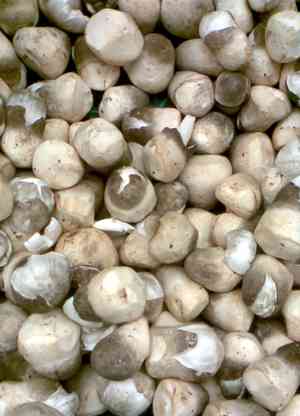
Paddy straw mushroom (Volvariella volvacea)
Also known as: Paddy Straw Mushroom, Straw Mushroom
The straw mushroom, typically grown on rice straw in East and Southeast Asia, is the third most-consumed mushroom globally. Known for its nutritional value, it is often found in canned form and plays a significant role in various Asian dishes, especially in Thai cuisine.
In This Article
Attributes of Paddy straw mushroom
Lifespan
Annual
Plant Height
6-12 cm
Spread
5-12 cm
Leaf Color
Not applicable
Flower Size
Not applicable
Flower Color
Not applicable
Images of Paddy straw mushroom
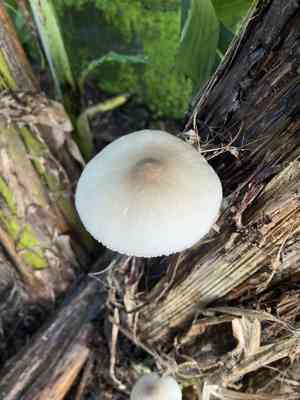
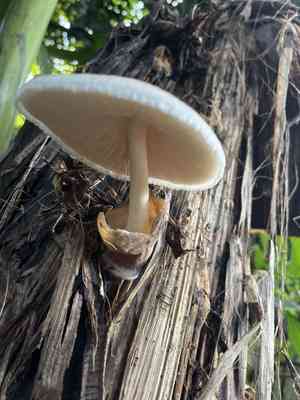
Quickly Identify Paddy straw mushroom
1
Volvariella volvacea can be identified by its pale to dark brown cap, which is bell-shaped or conical when young and flattens with age. It has a characteristic volva at the base. The gills are free and start white, turning pink as they mature, while the spore print is salmon pink.
Scientific Classification of Paddy straw mushroom
Phylum
Club fungi
Class
Mushroom-forming fungi
Order
Gilled fungi
Family
Pluteaceae mushrooms
Genus
Rosegills
Species
Paddy straw mushroom
Planting and Growing of Paddy straw mushroom
Care Difficulty
Easy
Watering Schedule
Every 8 days
Sunlight Requirements
Partial sun
Sunshine Duration
6-10 hours
Ideal Temperature
86-95℉
Soil Type
Potting Mix, Peat Mix
Soil pH
6.5-7.5
Fertilizer Type
Balanced
Pruning Season
Spring, Summer
Pruning Area
Branches, Leaves
Pruning Frequency
Once a year
Repotting Season
Spring
Pot Type
Plastic, Ceramic
 How to Water Paddy straw mushroom?
For Volvariella volvacea, water with approximately 200 ml per session. Ensure the soil is moist but not waterlogged. The key is to keep the substrate consistently damp, mimicking its native humid environments. Overly dry or too soggy conditions should be avoided to prevent stress on the plant.
What are the symptoms of an underwatered Paddy straw mushroom?
›
What should I do if my Paddy straw mushroom is not getting enough water?
›
What are the symptoms of an overwatered Paddy straw mushroom?
›
How to save an overwatered Paddy straw mushroom?
›
 What Are the Sunlight Requirements for Paddy straw mushroom?
Partial sun, with 4 to 6 hours of filtered light daily, ensures that Volvariella volvacea receives enough energy for optimal growth, enabling healthy mycelial development and robust fruiting, which improves size and viability.
How much light does Volvariella volvacea need?
›
What are the solutions for optimizing light conditions for Volvariella volvacea?
›
What are the benefits of providing ideal lighting conditions for Volvariella volvacea?
›
 What Is the Ideal Temperature Range for Paddy straw mushroom?
Volvariella volvacea thrives best in a warm environment with temperatures ranging between 86 to 95°F. This temperature range facilitates optimal enzymatic activity and cellular processes, ensuring vigorous growth and development of this mushroom species.
 What Soil is Best for Paddy straw mushroom?
Volvariella volvacea thrives in well-draining soil to prevent waterlogging. Such conditions facilitate optimal root development, enhancing nutrient absorption and promoting robust growth of the mushroom. This mushroom benefits from a substrate rich in organic matter. Nutrient-dense soil ensures lush and prolific fruiting, providing ample resources for sustained development. A soil that can retain adequate moisture without becoming soggy supports consistent hydration. This balance prevents dehydration during critical growth stages while averting the risk of rot.
 How to Fertilize Paddy straw mushroom?
For Volvariella volvacea, a balanced approach to fertilization is essential. Use approximately 1-2 teaspoons of liquid fertilizer per gallon of water. This mushroom thrives with a light yet regular feeding regime, ensuring nutrients are available without overwhelming the growth substrate. Solid fertilizers can be used in moderation, with a focus on providing essential trace elements.
 How to Prune Paddy straw mushroom?
Excessive pruning can stress the plant and inhibit its ability to grow effectively. Always aim to trim minimally, maintaining enough of the mushroom's structure to support new growth. After pruning, ensure that moisture levels are ideal to support new growth. This species thrives in humid conditions, so take care to provide adequate watering without oversaturating.
 How to Propagate Paddy straw mushroom plant?
1
Begin by preparing a culture medium that is rich in nutrients and suitable for Volvariella volvacea. This should be sterilized to eliminate any contaminants and prepared under sterile conditions to ensure the tissue could thrive without risk of infection.
2
Select healthy tissue pieces from the parent Volvariella volvacea. Carefully cut them using a sterile scalpel and sterilize the explants using a mild disinfectant to prevent microbial growth, which is vital for successful propagation.
3
Place the sterilized explants onto the prepared culture medium inside sterile culture vessels. Seal the vessels and place them in a controlled environment with monitored temperature and light, ensuring the conditions are optimal for growth.
 How to Repot Paddy straw mushroom plant?
1
Volvariella volvacea should be repotted when you notice the substrate has depleted nutrients or become compacted. It's also time to repot if the mycelium appears too crowded or you see stunted growth. Repotting gives the mushrooms a fresh start to flourish.
2
Select a pot that allows ample space for growth, slightly larger than the current one. A pot with good drainage holes is ideal to prevent waterlogging, which can lead to root rot or fungal issues in the substrate. The right pot ensures healthier and more abundant mushroom growth.
3
Opt for a rich, well-draining organic medium that mimics the natural habitat of these mushrooms. A mix containing straw, compost, and a touch of perlite can work wonders. This combination ensures adequate aeration and nutrient supply, fostering robust mycelial development.

