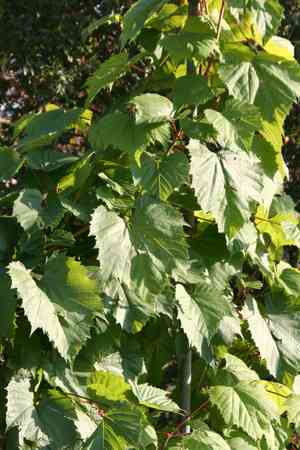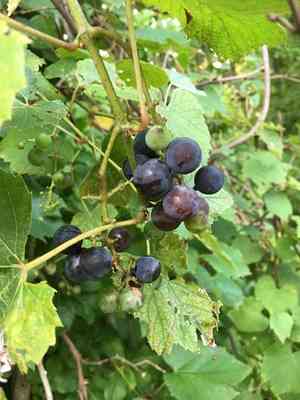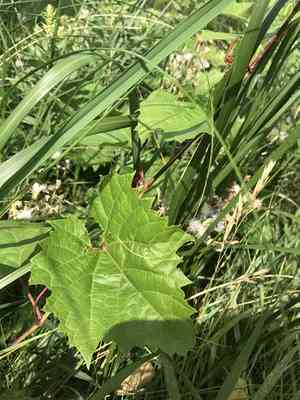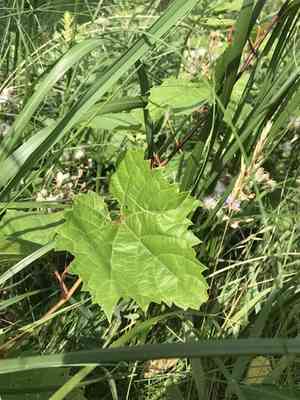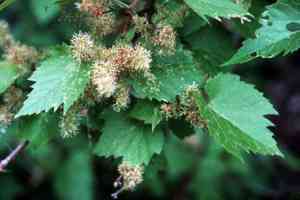
Riverbank grape(Vitis riparia)

Riverbank grape (Vitis riparia)

Also known as: Frost grape

The Virginia creeper is a robust woody vine that can reach lengths of up to 15 meters. It climbs effectively using tendrils to grip onto trees, shrubs, and fences. This vine is indigenous to North America and is widespread across Canada and the Northcentral and Northeastern regions of the United States.

Attributes of Riverbank grape

Lifespan
Perennial
Plant Type
Vine
Plant Height
15 m
Spread
1 m
Leaf Color
Green Yellow Gold
Flower Size
0.3-0.5 centimeters
Flower Color
Green White Yellow Gold

ForwardPlant - Identify plants with a snap

Identify and diagnose plants, get toxicity alerts, and explore safety guides for all types of fungi.

Try for Free

Images of Riverbank grape

Riverbank grape(Vitis riparia)

Quickly Identify Riverbank grape

1
Heart-shaped, 3-lobed leaves with red petioles.
2
Distinct male and female flowers on 3-8 inch panicles.
3
Clusters of bluish-black fruits with white bloom.
4
Woody stems with climbing tendrils and reddish-brown bark.
5
Robust trunk shedding bark in narrow strips.

Scientific Classification of Riverbank grape

Phylum
Vascular plants
Class
Dicotyledons
Order
Vitales
Family
Grape
Genus
Grapevines
Species
Riverbank grape

Planting and Growing of Riverbank grape

Care Difficulty
Easy
Watering Schedule
Every 8 days
Sunlight Requirements
Full sun
Sunshine Duration
6-10 hours
Ideal Temperature
65-86℉
Soil Type
Potting Mix, Peat Mix
Soil pH
5.5-7.5
Fertilizer Type
Balanced
Pruning Season
Spring, Summer
Pruning Area
Branches, Leaves
Pruning Frequency
2 times a year
Repotting Season
Spring
Pot Type
Plastic, Ceramic

water icon How to Water Riverbank grape?

For Vitis riparia, it's essential to ensure that the soil is consistently moist but not waterlogged. The plant thrives best when watered with approximately 500 milliliters each time, allowing the water to seep deeply into the soil. This replicates the natural environment where the plant generally finds itself along riverbanks. The key is to water thoroughly and let the excess drain away.
What are the symptoms of an underwatered Riverbank grape?
What should I do if my Riverbank grape is not getting enough water?
What are the symptoms of an overwatered Riverbank grape?
How to save an overwatered Riverbank grape?
More About Watering Techniques

sunlight icon What Are the Sunlight Requirements for Riverbank grape?

Sunlight Requirements: Full sun, Partial sun
Duration of light: 6 to 8 hours
Vitis riparia performs optimally with full sun to partial sun exposure, benefiting from at least 6 to 8 hours of light daily. This enhances photosynthesis, improves fruit yield, and maintains robust growth.
What is the ideal sunlight exposure for Vitis riparia?
How can I ensure Vitis riparia gets its ideal sunlight?
What benefits does Vitis riparia gain from optimal sunlight?
More About Sunlight Requirements Techniques

temperature icon What Is the Ideal Temperature Range for Riverbank grape?

Ideal Temperature: 65 ~ 86℉
The ideal temperature range for Vitis riparia, commonly known as riverbank grape, is between 65°F and 86°F. These conditions help ensure optimal photosynthesis and vigor, fostering growth and grape production. Maintaining temperatures within this range supports the plant's health and productivity.

soil icon What Soil is Best for Riverbank grape?

Soil type: Loam, Sandy loam, Clay soil
Soil PH: 5.5 ~ 7.5
Vitis riparia thrives in soil that offers good drainage, preventing waterlogging which can lead to root rot. Well-drained soil helps maintain a healthy oxygen level for root development, which is crucial for the plant’s growth and fruit production. This plant benefits from soil rich in organic matter, which provides essential nutrients for vigorous vine growth and abundant grape production. The addition of compost or well-rotted manure can significantly enhance soil fertility. While drainage is important, the ability to retain some moisture is also beneficial for Vitis riparia, especially during dry periods. Sandy loam provides a balanced moisture retention capability, ensuring the plant remains hydrated. More About Soil

fertilize icon How to Fertilize Riverbank grape?

Fertilizer type: Balanced
For Vitis riparia, the ideal amount of fertilizer should be cautious to avoid over-fertilization. Use about 1 to 2 ounces per plant base of liquid fertilizer each month, and for solid slow-release, about 3 pounds per 100 square feet annually is suitable. Always read the fertilizer package instructions for specific concentration details. More About Fertilizing Techniques

prune icon How to Prune Riverbank grape?

Pruning Time: Spring, Summer
Begin by identifying the main structure of the vine. Focus on the primary canes and spurs, which are essential for supporting future growth and fruiting. Cut away any dead, diseased, or damaged canes. This will not only improve the plant's appearance but also prevent the spread of any potential infections. To encourage air circulation, thin out overcrowded sections. Selectively prune back excessive lateral growth so sunlight can penetrate the foliage, reducing the risk of fungal diseases. Look for the healthy canes that will bear fruit. Trim back last season's growth to about four to six buds to ensure the best yield and quality grapes.

propagate icon How to Propagate Riverbank grape plant?

Propagate Time: Spring,Late spring,Early summer
1
Choose a robust and disease-free parent plant to take cuttings from. This ensures that the offspring will have a higher chance of survival and vitality.
2
Use pruning shears to cut sections of the plant approximately 6-8 inches long. Ensure each cutting has several nodes, as the new roots will emerge near these points.
3
Dip the cut end in rooting hormone and plant the cutting in a pot with well-draining soil. Ensure the nodes are covered with soil for successful rooting.
More About Propagating Techniques

repot icon How to Repot Riverbank grape plant?

Repotting frequency: Every 2-3 years
1
Repot Vitis riparia when you notice roots emerging from drainage holes or its growth has slowed. This indicates that the plant has outgrown its current container and needs more space to thrive.
2
Select a pot that is slightly larger than the current one and has good drainage holes. This allows for better root development and prevents waterlogging, which can cause root rot. Ceramic or terracotta pots are ideal for breathability.
3
Opt for a well-draining potting soil with a mix of loam, sand, and organic matter. This will provide necessary nutrients and prevent water accumulation around the roots, ensuring healthy growth.

ForwardPlant - Identify plants with a snap

Find the best spots for them to optimize their health, simply using your phone.

Try for Free

Toxicity of Riverbank grape

Is Riverbank grape toxic to cat?

The riverbank grape is recognized to possess a moderate degree of toxicity to felines. Cats may experience poisoning after consuming the fruits of the riverbank grape. In cases of poisoning, affected cats can show symptoms indicative of physical discomfort, disease, or pain. Therefore, it is essential for cat owners to observe their pets closely for any signs of distress and to seek prompt veterinary care if they believe their cat has ingested any portion of the riverbank grape. This swift action is vital in effectively managing the repercussions of the plant's toxicity.

Is Riverbank grape toxic to dog?

The Riverbank grape presents a moderate toxicity concern for dogs, particularly when they ingest its fruits. Consumption of these plant components can result in poisoning, manifesting in various symptoms associated with toxicity. Dog owners must remain alert for indications such as gastrointestinal distress, fatigue, or more severe reactions contingent on the quantity consumed. It is vital for dog owners to carefully supervise their pets and restrict their access to riverbank grape, particularly during the fruiting period. Should a dog consume any part of the riverbank grape, seeking immediate veterinary attention is crucial to guarantee swift treatment and reduce the risk of health complications.

Identify toxic plants for your safety

Learn which plants are harmful to you and your pets, and make informed choices for a safer home!

Try for Free
WARNING
The judgment on toxicity and danger is for reference only. We DO NOT GUARANTEE any accuracy of such judgment. Therefore, you SHALL NOT rely on such judgment. It is IMPORTANT TO SEEK PROFESSIONAL ADVICE in advance when necessary.
More About Toxic Techniques