
Grapevines (Vitis) (Vitis)
Also known as: Grapevine
Grapevines are ancient plants that have been around for millions of years and have been cultivated by humans for thousands. For successful cultivation, grapevines need to be supported by sturdy structures like trellises, arbors, or pergolas. These supports help the vines get adequate sunlight and air circulation, which are essential for healthy growth and easy harvesting. Interestingly, different grape varieties are often used for winemaking compared to those consumed as fresh fruit.
In This Article
Attributes of Grapevines (Vitis)
Lifespan
Perennial
Plant Height
10 m
Spread
1 m
Leaf Color
Green
Flower Size
Small, typically 1-3 mm
Flower Color
Yellow Green
Images of Grapevines (Vitis)

Quickly Identify Grapevines (Vitis)
1
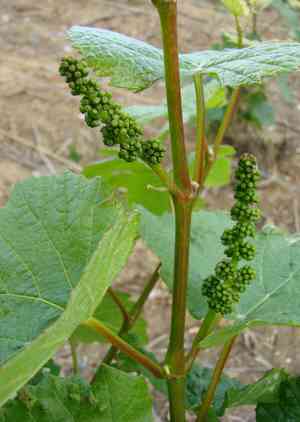
Vitis plants can be identified by their woody, climbing vines, large lobed leaves, and tendrils opposite each leaf. The grapes, which are small and round, often grow in clusters.
Scientific Classification of Grapevines (Vitis)
Phylum
Magnoliophyta
Class
Magnoliopsida
Order
Vitales
Family
Vitaceae
Genus
Vitis
Planting and Growing of Grapevines (Vitis)
Care Difficulty
Moderate
Watering Schedule
Every 8 days
Sunlight Requirements
Full sun
Sunshine Duration
6-8 hours
Ideal Temperature
68-77℉
Soil Type
Potting Mix, Peat Mix
Soil pH
5.5-7.5
Fertilizer Type
Balanced
Pruning Season
Spring, Summer
Pruning Area
Branches, Leaves
Pruning Frequency
2 times a year
Repotting Season
Spring
Pot Type
Plastic, Ceramic
 How to Water Grapevines (Vitis)?
Vines like Vitis require about 500 ml of water per session to ensure that their roots have ample moisture. Water deeply enough to reach the root zone, allowing excess water to drain out. This mimics rain and helps maintain optimal soil moisture without waterlogging the roots. It's important to balance between too dry and too soggy.
What are the symptoms of an underwatered Grapevines (Vitis)?
›
What should I do if my Grapevines (Vitis) is not getting enough water?
›
What are the symptoms of an overwatered Grapevines (Vitis)?
›
How to save an overwatered Grapevines (Vitis)?
›
 What Are the Sunlight Requirements for Grapevines (Vitis)?
Vitis benefits most from full sun to partial sun. Adequate light enhances fruit production and vigor, fostering a healthy, robust plant.
Optimal Light Duration
›
Solutions for Ideal Sunlight
›
Benefits of Ideal Lighting
›
 What Is the Ideal Temperature Range for Grapevines (Vitis)?
For optimal growth, Vitis plants thrive in a temperature range between 68°F and 77°F. In this range, the plants can efficiently photosynthesize, which is vital for their growth, flowering, and fruit production. This temperature range also helps in minimizing stress, thus promoting robust health and reducing susceptibility to diseases and pests.
 What Soil is Best for Grapevines (Vitis)?
Vitis thrives in nutrient-dense soils loaded with organic matter, which ensures robust grapevine growth and enhances fruit quality. The organic material acts as a reservoir for nutrients, promoting healthy root systems and better resistance to diseases. Good drainage is critical for Vitis as it prevents waterlogging and root rot. Ensuring proper drainage channels and soil mixtures facilitates optimal moisture levels, promoting vigorous vine development and fruit production. While Vitis needs well-draining soil, it also requires a substrate that can retain some moisture. The balance prevents drought stress, maintaining turgor pressure in the vines, which is vital for metabolic processes and fruit setting.
 How to Fertilize Grapevines (Vitis)?
When fertilizing Vitis, it is crucial to apply balanced nutrients that fulfill the vine's growth needs. Approximately 50 grams of slow-release fertilizer per plant is adequate for the season. Be cautious to not exceed this amount, as over-application could harm the growth.
 How to Prune Grapevines (Vitis)?
Begin by assessing the vine's structure, focusing on removing dead or diseased wood. Cut back lateral shoots to improve air circulation. Retain a few canes with healthy buds to encourage strong fruit-bearing growth. Consider using clean, sharp tools to make swift, smooth cuts, ensuring the plant's health is preserved. Training is crucial in shaping the grapevine for better access to sunlight and easier maintenance. Use a trellis or support system, guiding young shoots as they grow. Focus on fostering a balanced and open canopy structure, which helps reduce the risk of fungal infections and optimizes fruit quality.
 How to Propagate Grapevines (Vitis) plant?
1
Choose healthy vine segments free from disease or damage. Ideal cuttings should have two to three nodes and be approximately 6-12 inches long for optimal rooting.
2
Remove all leaves from the lower half of the cutting to prevent rot when placed in the soil. Dip the cut end into rooting hormone powder or gel to encourage faster rooting.
3
Insert the treated cuttings into a well-draining growing medium. Ensure that at least one node is buried beneath the surface to facilitate root formation.
 How to Repot Grapevines (Vitis) plant?
1
You will know it's time to repot your Vitis when you notice roots escaping through the drainage holes or if the growth becomes stunted. The best time to repot is during the dormant phase in early spring or autumn, when the plant isn't actively focusing its energy on new growth.
2
Select a pot that is 1-2 inches larger in diameter than the current one and make sure it has adequate drainage holes. A wider and slightly deeper pot encourages root expansion, giving your Vitis plant a stable foundation for vigorous growth, while preventing root rot.
3
Opt for a well-draining potting mix, enriched with organic matter like compost. This type of soil mixture retains enough moisture to nourish the plant but also drains excess water to prevent waterlogging, mimicking the Vitis plant’s natural habitat.

