
Common mistletoe (Viscum album)
Also known as: Mistletoe
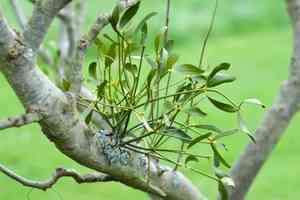
Common mistletoe (Viscum album) is a parasitic shrub that typically grows on the branches of trees. It is native to Europe, parts of western and southern Asia, and northern Africa. Though its primary range is in these regions, it has also been introduced to North America. The plant extracts water and nutrients from its host trees. Notably, all parts of common mistletoe are toxic and can be deadly if consumed in large quantities.
Attributes of Common mistletoe
Images of Common mistletoe


Quickly Identify Common mistletoe
Scientific Classification of Common mistletoe
Planting and Growing of Common mistletoe
 How to Water Common mistletoe?
 What Are the Sunlight Requirements for Common mistletoe?
 What Is the Ideal Temperature Range for Common mistletoe?
 What Soil is Best for Common mistletoe?
 How to Fertilize Common mistletoe?
 How to Prune Common mistletoe?
 How to Propagate Common mistletoe plant?
 How to Repot Common mistletoe plant?
Toxicity of Common mistletoe
Is Common mistletoe toxic to humans?
The common mistletoe presents a significant toxicity hazard to humans if ingested. Every component of this plant, including its leaves, stems, and berries, is poisonous. The high toxicity is attributed to the presence of alkaloids, viscotoxins, and lectins. Upon ingestion, these compounds can lead to a variety of symptoms, ranging from gastrointestinal issues such as vomiting and diarrhea to more critical effects, including a decrease in blood pressure, respiratory difficulties, and even potentially fatal heart-related complications. Given the seriousness of these effects, it is essential to prevent any accidental ingestion of any part of the common mistletoe.
Is Common mistletoe toxic to cat?
Common mistletoe poses a significant threat of toxicity to felines. Should a cat inadvertently consume any portion of this plant, there is a substantial risk of poisoning involved. Every part of the common mistletoe is poisonous, harboring toxic compounds including alkaloids, viscotoxins, and lectins. Ingesting this plant can incite various symptoms that reflect physical distress, potentially severe due to its high toxicity level. If a cat happens to eat common mistletoe, it is essential for the owner to promptly obtain professional assistance at a veterinary clinic.
Is Common mistletoe toxic to dog?
Common mistletoe presents a significant toxicity hazard to dogs. Canines may unintentionally consume portions of common mistletoe, which can lead to serious poisoning. The entire plant is hazardous, indicating that the ingestion of any leaves, stems, or berries can trigger severe reactions. Following the ingestion of common mistletoe, dogs may display symptoms such as gastrointestinal distress, breathing difficulties, a lowered heart rate, and even seizures. It is vital for dog owners to remain alert and keep their pets away from common mistletoe. Should ingestion be suspected, prompt veterinary intervention is critical to address the consequences of the poisoning.



