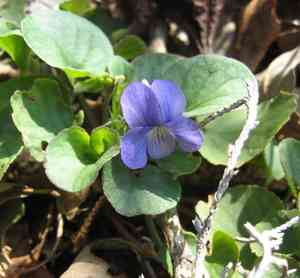
Prostrate blue violet (Viola walteri)
Also known as: Prostrate Blue Violet
The prostrate blue violet (Viola walteri) originates from the Appalachian regions of North America. As a perennial member of the violet family, it thrives in moist deciduous forests and propagates through runners. Its flowers, while appealing, have a delicate appearance.
In This Article
Attributes of Prostrate blue violet
Lifespan
Perennial
Plant Type
Herb
Plant Height
2.5 cm to 30 cm
Spread
2.5 cm to 30 cm
Leaf Color
Green
Flower Size
2.5 cm to 8 cm
Flower Color
Purple Blue Lavender
Images of Prostrate blue violet

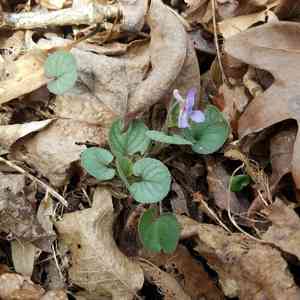
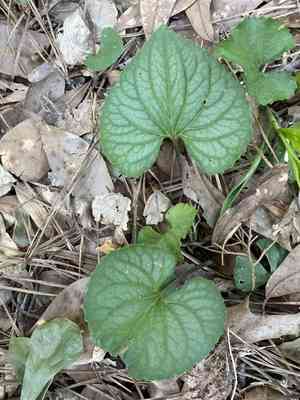
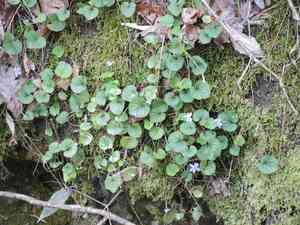
Quickly Identify Prostrate blue violet
1
Solitary, vibrant purple flowers with erect upper petals and bearded lateral petals.
2
Simple, light green leaves mottled with colorful spots, ovate to heart-shaped, and prominent reticulate veins.
Scientific Classification of Prostrate blue violet
Phylum
Vascular plants
Class
Dicotyledons
Order
Nances, spurges, willows and allies
Family
Violet
Genus
Violets
Species
Prostrate blue violet
Planting and Growing of Prostrate blue violet
Care Difficulty
Easy
Watering Schedule
Every 4 days
Sunlight Requirements
Partial sun
Sunshine Duration
6-10 hours
Ideal Temperature
60-75℉
Soil Type
Potting Mix, Peat Mix
Soil pH
6.5-7.5
Fertilizer Type
Balanced
Pruning Season
Spring, Summer
Pruning Area
Branches, Leaves
Pruning Frequency
2 times a year
Repotting Season
Spring
Pot Type
Plastic, Ceramic
 How to Water Prostrate blue violet?
For Viola walteri, it's important to provide a balanced amount of moisture. The soil should be kept consistently moist but should not be soggy. Water deeply until the soil feels damp to the touch down to about 5 cm from the surface, adjusting based on temperature and humidity levels.
What are the symptoms of an underwatered Prostrate blue violet?
›
What should I do if my Prostrate blue violet is not getting enough water?
›
What are the symptoms of an overwatered Prostrate blue violet?
›
How to save an overwatered Prostrate blue violet?
›
 What Are the Sunlight Requirements for Prostrate blue violet?
Partial sun or full shade mimics Viola walteri's natural forest floor setting. Balanced light supports lush foliage and vivid flowers, reducing stress and enhancing aesthetic charm.
More About Sunlight Requirements Techniques→
What is the best lighting condition for Viola walteri?
›
How do I achieve this ideal lighting?
›
What are the benefits of ideal lighting?
›
 What Is the Ideal Temperature Range for Prostrate blue violet?
Viola walteri thrives best in temperatures ranging from 60°F to 75°F. This temperature range provides the optimal growth environment, ensuring proper physiological processes and healthy flowering. By maintaining this range, the plant can increase its metabolic activities and absorb nutrients efficiently.
 What Soil is Best for Prostrate blue violet?
Viola walteri thrives in well-drained soil that prevents waterlogging. Such conditions are beneficial as they keep the roots aerated, thus promoting healthy growth and preventing root diseases. This plant prefers moderately fertile soil, which provides essential nutrients for robust foliage and flowering without being overly rich, which can lead to stunted growth or pest issues. Maintaining consistent soil moisture helps in sustaining the plant's growth while avoiding stress due to drought, promoting lush greenery and consistent blooming cycles.
 How to Fertilize Prostrate blue violet?
Viola walteri requires balanced fertilization, favoring a formulation like a 10-10-10 NPK. For liquid fertilizers, a diluted solution is recommended to avoid excesses, using about 1-2 teaspoons per gallon of water depending on the concentration.
 How to Prune Prostrate blue violet?
Begin by examining Viola walteri for any dead or damaged leaves and stems; remove these to prevent disease proliferation. Use sharp, clean scissors or pruners to make clean cuts just above a leaf node. This technique stimulates the plant to produce more lush and vigorous growth. Regular trimming of faded flowers, known as deadheading, encourages continuous blooming and diverts energy from seed production to overall growth.
More About Pruning Techniques→
 How to Propagate Prostrate blue violet plant?
1
Fill seed trays with a light, well-draining propagation mix. Moisten the soil lightly, making sure it is damp but not waterlogged. This sets a suitable environment for seed germination.
2
Select healthy, non-flowering stems and use sterilized pruners to cut 4-6 inch lengths. Remove lower leaves carefully to reduce water loss and enhance rooting potential in the propagation mix.
3
For division, gently remove the plant from its pot and separate it into smaller sections, ensuring each section has a healthy root system. Replant divisions promptly into prepared soil.
 How to Repot Prostrate blue violet plant?
1
Viola walteri needs repotting when you see roots emerging from the pot's drainage holes or notice a slowdown in growth despite adequate care. This indicates the plant has outgrown its current space. Ideally, these signs are best observed in the spring or autumn, when the plant's energy is directed towards growth rather than survival.
2
Select a pot that is one to two sizes larger than the current one, with sufficient drainage holes. A pot that is too large can lead to excessive soil moisture, which may cause root rot. Terra cotta pots are advantageous as they allow for better aeration of the roots, keeping them healthy and promoting quicker drying of over-watered soil.
3
Opt for a well-draining loamy soil mix to provide the right balance of water retention and aeration. This type of soil is ideal for Viola walteri, as it prevents root rot while still holding enough moisture for the plant's needs. Incorporating organic matter like peat or compost can enrich the nutrient content.
Learn More About Prostrate blue violet Diseases
Anthracnose
Bacterial Leaf Spot
Black Spot
Chemical Injury
Crown Gall
Damping-off
Downy Mildew
Drought Stress
Fusarium Wilt
Gray Mold
Leaf Curl
Leaf Spot
Mosaic
Nutrient Deficiency
Nutrient Toxicity
Powdery Mildew
Root Rot
Root-knot Nematode
Rusts
Sooty Mold
Spider Mites
Temperature Stress
Thrips Damage
White Mold



