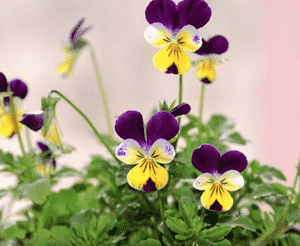
Johnny jump up (Viola tricolor)
Also known as: Heartsease, Tickle-my-fancy
The johnny jump up is similar in appearance to a small pansy. These edible flowers can be added to salads, beverages, or used as a garnish, although they should be consumed sparingly. According to ancient Greek mythology, the goddess Aphrodite turned the originally white flowers purple to diminish her son Eros's attraction to them.
In This Article
Attributes of Johnny jump up
Lifespan
Annual, Perennial, Biennial
Plant Type
Herb
Plant Height
10 cm to 40 cm
Spread
10 cm to 30 cm
Leaf Color
Green
Flower Size
1.5 cm to 6 cm
Flower Color
Yellow Purple White Cream Blue Lavender
Images of Johnny jump up
Quickly Identify Johnny jump up
1
Tricolored flowers with purple stripes
2
Explosive 3-valved capsules for fruit dispersal
3
Glabrous, heart-shaped leaves with clear vein patterns
4
Slender, hairless stem branching from base
5
Variable stature ranging 3-10 inches (7.5-25 cm) in height
Scientific Classification of Johnny jump up
Phylum
Vascular plants
Class
Dicotyledons
Order
Nances, spurges, willows and allies
Family
Violet
Genus
Violets
Species
Johnny jump up
Planting and Growing of Johnny jump up
Care Difficulty
Easy
Watering Schedule
Every 6 days
Sunlight Requirements
Partial sun
Sunshine Duration
4-8 hours
Ideal Temperature
60-70℉
Soil Type
Potting Mix, Peat Mix
Soil pH
6.5-7.5
Fertilizer Type
Balanced
Pruning Season
Spring, Summer
Pruning Area
Branches, Leaves
Pruning Frequency
2 times a year
Repotting Season
Spring
Pot Type
Plastic, Ceramic
 How to Water Johnny jump up?
When watering your Viola tricolor, aim for approximately 150 milliliters per session. The soil should be moist but not soggy. Ensure the top layer of soil, about 2-3 centimeters, is dry before the next watering to prevent root rot. The goal is to keep the soil slightly damp, replicating the plant's natural environment.
More About Watering Techniques→
What are the symptoms of an underwatered Johnny jump up?
›
What should I do if my Johnny jump up is not getting enough water?
›
What are the symptoms of an overwatered Johnny jump up?
›
How to save an overwatered Johnny jump up?
›
 What Are the Sunlight Requirements for Johnny jump up?
Viola tricolor thrives best under partial sun to partial shade, with morning sunlight boosting photosynthesis and afternoon shade protecting against excess heat, ensuring vibrant flowers and healthy growth.
More About Sunlight Requirements Techniques→
Does Viola tricolor need direct sunlight?
›
What are the ideal lighting situations for this plant?
›
How can you provide optimal lighting for this plant?
›
 What Is the Ideal Temperature Range for Johnny jump up?
The ideal temperature range for growing Viola tricolor is between 60°F and 70°F. This range allows the plant to thrive and produce vibrant blooms. Below 60°F, growth may slow down, and above 70°F, the plant may show signs of heat stress.
 What Soil is Best for Johnny jump up?
Viola tricolor thrives in nutrient-rich soil, as it encourages vibrant growth and bountiful blooms. A well-fed plant is more resilient to diseases and pests, providing a healthier, longer-lasting display in your garden. Proper drainage is crucial to prevent root rot, which can severely impact the health of Viola tricolor. Ensuring efficient water runoff will keep the roots healthy and prevent dampness-related diseases. Maintaining soil with moderate moisture levels is vital for Viola tricolor, helping avoid drought stress while supporting consistent growth and flowering. Striking the right balance ensures the plant doesn't suffer from dehydration or waterlogging.
More About Soil→
 How to Fertilize Johnny jump up?
For Viola tricolor, it is best to keep fertilization light and infrequent. Overloading with nutrients can cause more harm than good for these delicate plants. A diluted liquid fertilizer that is high in phosphorous and potassium is recommended, ideally with a half-strength concentration once a month.
More About Fertilizing Techniques→
 How to Prune Johnny jump up?
Begin by removing any spent flowers to encourage further blooming. Cut back leggy stems to maintain a compact shape. Trim the plant down by slightly less than a third, focusing on removing only what is necessary to avoid over-pruning. After pruning, ensure your Viola tricolor receives adequate water and nutrients. Keep an eye on new growth to assess the plant's recovery and make additional minor adjustments if needed.
More About Pruning Techniques→
 How to Propagate Johnny jump up plant?
1
Choose a healthy plant free from disease and pests for propagation. A vigorous parent plant will result in more successful propagation.
2
Use a well-draining potting mix for planting seeds or cuttings. The soil should be light and rich in organic matter to ensure optimal growth.
3
For seed propagation, evenly sow the seeds on the surface and lightly cover them with soil; ensure they remain moist but not waterlogged.
 How to Repot Johnny jump up plant?
1
Viola tricolor needs repotting when you notice roots growing out of the drainage holes or if the plant looks stunted. If water seems to drain instantly or doesn't hold in the soil, it's high time you gave it more space to grow.
2
Select a pot that is about 1 to 2 inches larger in diameter than the current one. A pot that's too large can retain excess moisture, leading to root rot. Make sure it has proper drainage holes to allow excess water to escape, keeping the roots healthy.
3
Opt for a well-draining potting mix; a light blend with some perlite or sand is ideal. This soil structure supports healthy root growth and prevents waterlogging, which is crucial for the plant's longevity.
Learn More About Johnny jump up Diseases
Anthracnose
Bacterial Leaf Spot
Bacterial Soft Rot
Damping-off
Downy Mildew
Drought Stress
Fusarium Wilt
Gray Mold
Leaf Spot
Mosaic
Nutrient Deficiency
Nutrient Toxicity
Powdery Mildew
Root Rot
Root-knot Nematode
Rusts
Sooty Mold
Spider Mites
Temperature Stress
Thrips Damage
White Mold
Chemical Injury



