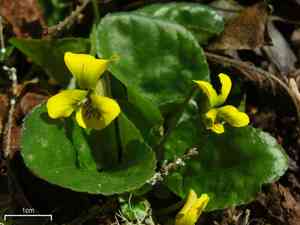
Roundleaf yellow violet (Viola rotundifolia)
Also known as: Round-leaved violet
The common blue violet (Viola sororia) is a member of the violet family, prevalent in southern Canada and the eastern United States. This plant can self-seed readily, sometimes being regarded as a weed. It is known for attracting butterflies and acts as the larval host for the great spangled fritillary butterfly.
In This Article
Attributes of Roundleaf yellow violet
Lifespan
Perennial
Plant Type
Herb
Plant Height
7 cm to 15 cm
Spread
N/A
Leaf Color
Green Blue
Flower Size
2.5 cm
Flower Color
Yellow Brown
Images of Roundleaf yellow violet

Quickly Identify Roundleaf yellow violet
1
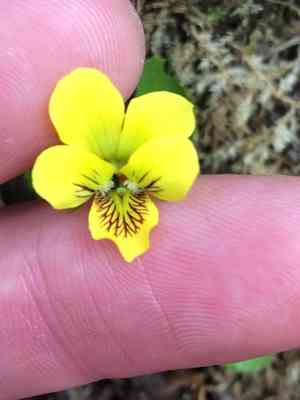
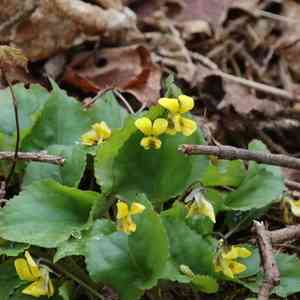
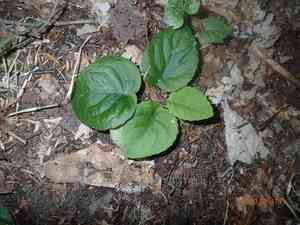
To identify Viola rotundifolia, look for its distinctive round, heart-shaped leaves which are usually basal and have scalloped edges. The flowers are small, yellow, and have five petals. The plant typically grows in damp, shaded woodland environments.
Scientific Classification of Roundleaf yellow violet
Phylum
Vascular plants
Class
Dicotyledons
Order
Malpighiales
Family
Violet
Genus
Violets
Species
Roundleaf yellow violet
Planting and Growing of Roundleaf yellow violet
Care Difficulty
Easy
Watering Schedule
Every 3 days
Sunlight Requirements
Partial sun
Sunshine Duration
6-10 hours
Ideal Temperature
60-75℉
Soil Type
Potting Mix, Peat Mix
Soil pH
6.5-7.5
Fertilizer Type
Balanced
Pruning Season
Spring, Summer
Pruning Area
Branches, Leaves
Pruning Frequency
2 times a year
Repotting Season
Spring
Pot Type
Plastic, Terracotta
 How to Water Roundleaf yellow violet?
When watering Viola rotundifolia, aim for about 250 ml each time. The soil should be moist but not soggy, and the excess water should drain out. Make sure the top layer of soil dries out slightly between waterings to ensure the roots are not sitting in water, which can lead to root rot.
What are the symptoms of an underwatered Roundleaf yellow violet?
›
What should I do if my Roundleaf yellow violet is not getting enough water?
›
What are the symptoms of an overwatered Roundleaf yellow violet?
›
How to save an overwatered Roundleaf yellow violet?
›
 What Are the Sunlight Requirements for Roundleaf yellow violet?
Partial sun exposure is ideal, offering Viola rotundifolia the chance to bask in soft light akin to its native woodland floors, promoting steady growth and vibrant foliage without the risk of burning.
More About Sunlight Requirements Techniques→
Optimal Light Conditions
›
Solution for Ideal Light
›
Benefits of Ideal Light
›
 What Is the Ideal Temperature Range for Roundleaf yellow violet?
The ideal temperature range for Viola rotundifolia lies between 60°F and 75°F. Keeping the plant within this range ensures optimal growth and health by providing the right balance of temperatures needed for photosynthesis, respiration, and overall metabolic processes.
 What Soil is Best for Roundleaf yellow violet?
Viola rotundifolia thrives in soil with good moisture retention. A blend of loam and sandy loam is particularly beneficial as it ensures the soil remains hydrated without becoming waterlogged. This balance supports the plant's health and lush foliage. This plant requires soil rich in organic matter and nutrients. Loamy soil, with its inherent fertility, provides an ideal environment for nutrient uptake, promoting vigorous growth and vibrant blooms. While some moisture is needed, good drainage is essential to prevent root rot. Sandy loam offers an excellent structure for water to pass through easily, keeping the root system healthy and oxygenated.
 How to Fertilize Roundleaf yellow violet?
For Viola rotundifolia, it's important to balance the amount of fertilizer applied. Use liquid fertilizer at half the recommended strength for flowering plants every two weeks during the growing season. Slow-release granules should be sprinkled sparingly around the base without overloading the plant’s root zone. This ensures the plant gets adequate nutrition without causing chemical buildup that could harm the roots.
 How to Prune Roundleaf yellow violet?
Regularly inspect Viola rotundifolia for any dead or damaged leaves. Carefully snip these off at the base using sharp, sterilized scissors. Removing these can enhance the plant's vitality and appearance. To maintain the aesthetic appeal of Viola rotundifolia, gently shape the plant by cutting back overgrown stems. This encourages a bushier growth pattern, ensuring the plant remains compact and visually pleasing. Following a pruning session, ensure that Viola rotundifolia is adequately watered and placed in a location with sufficient light. This aids in the recovery from pruning and promotes healthy new growth.
More About Pruning Techniques→
 How to Propagate Roundleaf yellow violet plant?
1
For seed propagation, use a well-draining potting mix. It should be light and moist to provide optimal conditions for germination. For division, prepare a nutrient-rich soil mix to encourage new root growth.
2
Sprinkle the seeds over the seed tray’s surface. Lightly cover them with a thin layer of soil and mist with water. Ensure the seed tray is in a warm, well-lit area to facilitate germination.
3
To divide the plant, carefully remove it from its pot and shake off excess soil. Use a sharp knife to separate the plant into smaller sections, each with adequate roots and shoots.
 How to Repot Roundleaf yellow violet plant?
1
Look for roots growing out of drainage holes or if the soil remains soggy after watering. These are signs it's time to repot. The best period is during active growth phases in spring or early summer when the plant can quickly recover from the stress of repotting.
2
Opt for a pot that's one size larger than the current one with ample drainage holes. Clay pots are ideal as they allow for better air circulation and moisture evaporation, reducing the risk of root rot, which is crucial for maintaining plant health.
3
Select a well-draining potting mix rich in organic matter. A combination of peat moss, perlite, and pine bark would work well, providing ample nutrients while ensuring drainage. This helps prevent waterlogging, which can harm root health.



