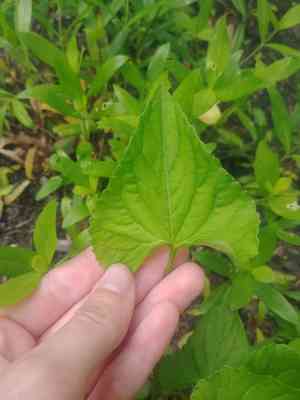
Missouri violet (Viola missouriensis)
Also known as: Banded violet
The Missouri violet is often celebrated as a harbinger of spring due to its prevalence in its native range. It is frequently mistaken for the common blue violet (V. sororia) because of their many similarities.
In This Article
Attributes of Missouri violet
Lifespan
Annual, Perennial
Plant Type
Herb
Plant Height
15 cm
Spread
10 cm to 15 cm
Leaf Color
Green
Flower Size
1.3 cm to 1.9 cm
Flower Color
White Purple Blue
Images of Missouri violet




Quickly Identify Missouri violet
1
To identify Viola missouriensis, look for a perennial herb with heart-shaped, serrated leaves. The flowers are typically light violet to purple, each with five petals. The lower petal is often marked with dark veins. Leaves and flowers rise directly from a basal rosette.
Scientific Classification of Missouri violet
Phylum
Vascular plants
Class
Dicotyledons
Order
Malpighiales
Family
Violet
Genus
Violets
Species
Missouri violet
Planting and Growing of Missouri violet
Care Difficulty
Easy
Watering Schedule
Every 4 days
Sunlight Requirements
Partial sun
Sunshine Duration
6-10 hours
Ideal Temperature
60-75℉
Soil Type
Potting Mix, Peat Mix
Soil pH
5.5-7.5
Fertilizer Type
Balanced
Pruning Season
Spring, Summer
Pruning Area
Branches, Leaves
Pruning Frequency
2 times a year
Repotting Season
Spring
Pot Type
Plastic, Ceramic
 How to Water Missouri violet?
For Viola missouriensis, ensure you water enough to moisten the soil thoroughly without waterlogging. A good rule is around 250 ml per session, which typically saturates the upper soil layers, reaching the roots comfortably. This amount ensures that the plant receives adequate hydration while preventing over-saturation.
What are the symptoms of an underwatered Missouri violet?
›
What should I do if my Missouri violet is not getting enough water?
›
What are the symptoms of an overwatered Missouri violet?
›
How to save an overwatered Missouri violet?
›
 What Are the Sunlight Requirements for Missouri violet?
Viola missouriensis flourishes best with partial to full shade light conditions, replicating natural environments with filtered sunlight. This light regimen ensures robust foliage, maintains flower health, and prevents environmental stress injuries.
More About Sunlight Requirements Techniques→
What is the best lighting condition for Viola missouriensis?
›
How can I provide optimal light for Viola missouriensis indoors?
›
What are the benefits of providing Violet missouriensis with its ideal light conditions?
›
 What Is the Ideal Temperature Range for Missouri violet?
The ideal temperature range for the growth of Viola missouriensis is between 60 and 75 degrees Fahrenheit. This range ensures optimal growth and flowering by providing the right conditions for physiological processes. The moderate warmth supports photosynthesis and nutrient uptake efficiently, ensuring the plant remains healthy and vigorous.
 What Soil is Best for Missouri violet?
Viola missouriensis thrives in well-draining soil. Proper drainage prevents root rot by ensuring water doesn't accumulate around the roots, which is crucial for maintaining a healthy plant. Even though well-draining, the soil should also retain adequate moisture. This balance supports consistent hydration for the plant without the risk of overwatering. Rich in organic matter, the soil should provide essential nutrients. Such richness promotes vigorous growth and enhances flowering by supplying the necessary nutrients.
 How to Fertilize Missouri violet?
For Viola missouriensis, a balanced approach is key. Use a diluted liquid fertilizer at 1/4 strength every two weeks during active growth periods. Avoid over-fertilization to prevent root damage.
 How to Prune Missouri violet?
Avoid cutting back more than one-third of the plant at any time. Overpruning can stress the plant and inhibit its ability to photosynthesize effectively. It's crucial to leave enough foliage for the plant to recover and thrive after pruning. For the best results, prune Viola missouriensis during its active growing seasons in spring and summer. This timing allows for quick recovery and regrowth, maximizing the plant's flowering potential and resilience.
More About Pruning Techniques→
 How to Propagate Missouri violet plant?
1
Collect seeds from mature Viola missouriensis plants and sow them in a seed tray filled with well-draining soil mix. Gently press the seeds into the soil surface without covering them completely, as they need light to germinate.
2
During early spring, choose healthy, mature plants for division. Carefully dig around the plant using a garden fork to minimize root damage. Shake off excess soil to expose the root system for division.
3
Separate the plant into smaller sections, ensuring each division has roots and shoots. Each section should have at least one growing point. Replant the divisions into prepared soil, spacing them adequately to allow for growth.
 How to Repot Missouri violet plant?
1
Viola missouriensis, commonly known as the Missouri violet, shows signs of needing a new pot when the roots begin to circle the surface of the soil or grow through the drainage holes. Spring and autumn are ideal times for this process, ensuring the plant is in a less stressful growth phase.
2
Select a pot that's only slightly larger than the current one. A pot that's too large can lead to over-watering issues, as excess soil holds more moisture than the plant can use, causing root rot. Terra cotta pots are great as they allow for better air movement.
3
Choose a well-draining loamy mix, rich in organic matter, to ensure good aeration and prevent waterlogging. This type of soil encourages healthy root development and helps maintain optimum moisture levels.
Learn More About Missouri violet Diseases
Anthracnose
Bacterial Leaf Spot
Black Spot
Chemical Injury
Damping-off
Downy Mildew
Drought Stress
Fusarium Wilt
Gray Mold
Leaf Curl
Leaf Spot
Mosaic
Nutrient Deficiency
Nutrient Toxicity
Powdery Mildew
Root Rot
Root-knot Nematode
Rusts
Sooty Mold
Spider Mites
Temperature Stress
Thrips Damage
White Mold



