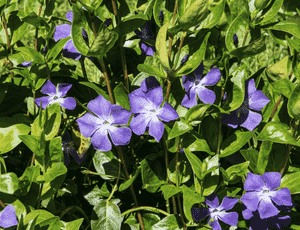
Greater periwinkle(Vinca major)

Greater periwinkle (Vinca major)

Also known as: Blue periwinkle, Big periwinkle

Greater periwinkle (Vinca major) is an evergreen ground cover known for its attractive lavender flowers and glossy, deep green leaves. To prevent it from overtaking your garden while still enjoying its beauty, consider the following methods:

1. **Container Gardening**: Grow Vinca major in hanging baskets or window boxes to keep it contained and manageable.
2. **Use Barriers**: Install root barriers if planting in the ground to limit its spread.
3. **Regular Pruning**: Trim the plant frequently to control its growth and prevent it from spreading too aggressively.
4. **Thick Mulching**: Apply a substantial layer of mulch to suppress its tendency to spread.
5. **Strategic Location**: Plant it in controlled areas like along pathways or patios where you can easily monitor and manage its growth.

These strategies will allow you to enjoy the ornamental appeal of Vinca major without it becoming invasive in your garden.

Attributes of Greater periwinkle

Lifespan
Perennial
Plant Type
Vine, Herb
Plant Height
25 cm to 1 m
Spread
1 m
Leaf Color
Green Yellow
Flower Size
3 cm to 5 cm
Flower Color
Blue Purple White Green Violet

PlantJoy - Identify plants with a snap

Identify and diagnose plants, get toxicity alerts, and explore safety guides for all types of fungi.

Try for Free

Images of Greater periwinkle

Greater periwinkle(Vinca major)

Quickly Identify Greater periwinkle

1
Vivid blue-to-violet blossoms, 1-2 inches (2.5-5 cm) wide, with five petal-like lobes.
2
Opposite, evergreen leaves, 2-3 inches (5-7.5 cm) long, with prominent veins and ciliolate margins.
3
Smooth-textured stem, erect yet arching, with milky latex and light green to greenish-brown color.
4
Solitary, violet-hued flowers, 1-2 inches (2.5-5 cm) wide, radially symmetrical with five lobes.
5
Cylindrical fruit, up to 2 inches (5 cm) long, splitting upon drying to disperse seeds.

Scientific Classification of Greater periwinkle

Phylum
Vascular plants
Class
Dicotyledons
Order
Gentians, dogbanes, madders, and allies
Family
Dogbane
Genus
Periwinkles
Species
Greater periwinkle

Planting and Growing of Greater periwinkle

Care Difficulty
Easy
Watering Schedule
Every 3 days
Sunlight Requirements
Full sun
Sunshine Duration
6-12 hours
Ideal Temperature
65-75℉
Soil Type
Potting Mix, Peat Mix
Soil pH
6.5-7.5
Fertilizer Type
Balanced
Pruning Season
Spring, Summer
Pruning Area
Branches, Leaves
Pruning Frequency
Once a year
Repotting Season
Spring
Pot Type
Plastic, Ceramic

water icon How to Water Greater periwinkle?

For Vinca major, it's essential to provide just enough water to moisten the soil without it becoming too soggy. Aim to water with about 250 milliliters until you see a slight trickle from the drainage holes to ensure the roots are adequately hydrated.
What are the symptoms of an underwatered Greater periwinkle?
What should I do if my Greater periwinkle is not getting enough water?
What are the symptoms of an overwatered Greater periwinkle?
How to save an overwatered Greater periwinkle?
More About Watering Techniques

sunlight icon What Are the Sunlight Requirements for Greater periwinkle?

Sunlight Requirements: Full sun, Partial sun
Duration of light: 4 to 8 hours
Vinca major's ideal light range involves receiving full to partial sun, typically 4-8 hours a day, promoting optimal photosynthesis and flowering. This range allows for robust growth and vibrant displays of its blooms.
What is the best lighting condition for Vinca major?
How to provide ideal lighting for Vinca major indoors?
What are the benefits of proper lighting for Vinca major?
More About Sunlight Requirements Techniques

temperature icon What Is the Ideal Temperature Range for Greater periwinkle?

Ideal Temperature: 65 ~ 75℉
The ideal temperature range for cultivating Vinca major is between 65 and 75 degrees Fahrenheit. This range ensures optimal growth and development, as the plant thrives in moderately warm conditions. Maintaining this temperature range helps ensure that the plant's metabolic processes function efficiently, providing the best environment for photosynthesis and nutrient uptake.

soil icon What Soil is Best for Greater periwinkle?

Soil type: Loam, Sandy loam
Soil PH: 6.5 ~ 7.5
Vinca major thrives in nutrient-rich soil that provides essential minerals for optimal growth. A well-balanced blend of organic matter enhances soil fertility, promoting lush foliage and vibrant blooms. To prevent root rot, Vinca major requires well-draining soil. This ensures excess water is efficiently removed, protecting roots from waterlogging and enabling healthy plant development. While well-draining soil is essential, retaining some moisture is also crucial. Vinca major benefits from soil that maintains adequate humidity, ensuring consistent hydration without becoming overly soggy. More About Soil

fertilize icon How to Fertilize Greater periwinkle?

Fertilizer type: Balanced
For Vinca major, use a liquid fertilizer with an N-P-K ratio of 10-10-10 at half strength. Apply this diluted solution to ensure the plant receives essential nutrients without the risk of over-fertilization damage. Employ approximately 500 ml of the diluted mixture for each application, adjusting based on plant size and soil conditions. More About Fertilizing Techniques

prune icon How to Prune Greater periwinkle?

Pruning Time: Spring, Summer, Autumn, Winter
Begin by assessing the plant's shape and identifying any overgrown or unruly stems. Cut back these sections to just above a leaf node to encourage bushier growth. For older or thicker stems, trim back one-third of the length to promote new growth. Remove any dead or damaged stems entirely to improve air circulation and light penetration. After pruning, water the plant thoroughly to help it recover and assimilate nutrients more effectively. A layer of mulch can assist with moisture retention and temperature regulation in the soil. Monitor for signs of stress such as wilting or discoloration, and adjust care practices accordingly. More About Pruning Techniques

propagate icon How to Propagate Greater periwinkle plant?

Propagate Time: Spring, Early summer, Late summer
1
Choose healthy and mature stems from the parent plant. Ideally, select non-flowering shoots. Cut the stem just below a node using sharp pruning shears, and remove the leaves from the lower half.
2
Dip the cut end of the stem into the rooting hormone powder. Be sure to tap off any excess powder. This process stimulates root cell formation and increases the chances of successful propagation.
3
Insert the cuttings into a pot filled with a moist, well-draining potting mix. Ensure the nodes are covered in the potting mix to encourage rooting. Water the cuttings lightly and place them in a warm, bright area away from direct sunlight.
More About Propagating Techniques

repot icon How to Repot Greater periwinkle plant?

Repotting frequency: Every 2-3 years
1
Repotting Vinca major should be considered when you see roots protruding from the drainage holes or if the growth slows down despite adequate care. Early spring, before new growth begins, or early autumn, after the heat of summer, are ideal times for repotting.
2
Select a pot that's 1-2 inches wider than the current one to allow for growth. Opt for pots with good drainage to prevent waterlogging, which can lead to root rot. The pot's material can vary, but ensure it provides stability and supports healthy aeration and moisture regulation.
3
Well-draining potting mix is crucial for Vinca major. Soil should retain enough moisture to nourish the plant but drain excess to prevent root rot. Adding perlite or sand can improve drainage while maintaining essential moisture levels, promoting root health and vitality.
More About Repotting Techniques

PlantJoy - Identify plants with a snap

Find the best spots for them to optimize their health, simply using your phone.

Try for Free

Toxicity of Greater periwinkle

Is Greater periwinkle toxic to cat?

The greater periwinkle plant is highly toxic to cats and may cause poisoning if ingested accidentally. Any part of the greater periwinkle is dangerous for felines, as all components of this plant contain toxic elements. After being exposed, a cat may display signs of physical discomfort, sickness, or pain, which can be alarming for pet owners to witness. Prompt medical attention is critically important; hence, if there's any suspicion of exposure, it is vital to take the cat to a veterinary clinic without delay. To prevent possible poisoning, it is wise to keep greater periwinkle out of reach or to remove it entirely from areas frequented by cats.

Is Greater periwinkle toxic to dog?

Greater periwinkle is identified as a toxic species for dogs. If dogs consume any part of this plant, whether by accident or out of curiosity, they can be poisoned. The whole plant, which comprises leaves, stems, and flowers, contains toxic compounds that endanger canine health. Symptoms of poisoning may encompass gastrointestinal disturbances, such as vomiting and diarrhea; in more severe instances, tremors or seizures might manifest. It is essential for dog owners to vigilantly supervise their pets and restrict their access to greater periwinkle. Should there be a suspicion of a dog ingesting any part of greater periwinkle, seeking immediate veterinary care is vital for the animal's health.

Identify toxic plants for your safety

Learn which plants are harmful to you and your pets, and make informed choices for a safer home!

Try for Free
WARNING
The judgment on toxicity and danger is for reference only. We DO NOT GUARANTEE any accuracy of such judgment. Therefore, you SHALL NOT rely on such judgment. It is IMPORTANT TO SEEK PROFESSIONAL ADVICE in advance when necessary.
More About Toxic Techniques

