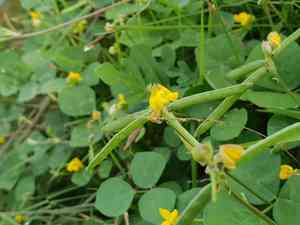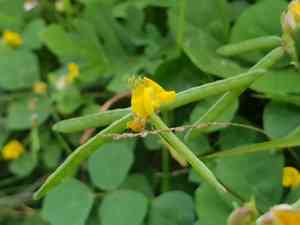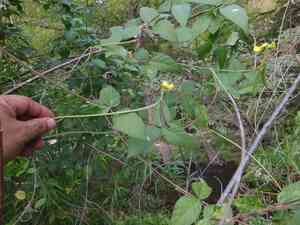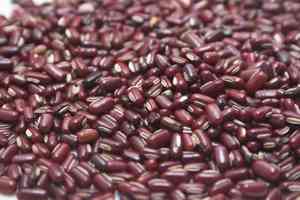
Ricebean(Vigna umbellata)

Ricebean (Vigna umbellata)

Also known as: Rice Bean, Red Bean

Vigna umbellata, commonly known as ricebean, is a warm-season annual legume notable for its yellow flowers and small edible beans. Despite its limited recognition and research, ricebean offers several benefits in agriculture and food production:

1. **Human Food Source**: The protein-rich seeds are edible and can be incorporated into soups, stews, and salads, similar to other legumes.

2. **Animal Fodder**: Both the foliage and seeds serve as nutritious feed for livestock, contributing to animal husbandry.

3. **Soil Fertility**: As a legume, ricebean enhances soil nitrogen levels through natural nitrogen fixation, reducing the dependence on synthetic fertilizers.

4. **Intercropping**: It is frequently grown alongside crops like maize, sorghum, and cowpea to optimize land use and boost overall agricultural yield.

5. **Erosion Control and Green Manure**: The plant's root system helps prevent soil erosion, and its biomass can be used as green manure to further improve soil quality.

6. **Adaptability**: Ricebean is versatile and grows well on various soil types, establishing quickly and providing substantial amounts of nutritious fodder and high-quality grain.

Attributes of Ricebean

Lifespan
Annual
Plant Type
Vine
Plant Height
30 cm to 2 m
Spread
N/A
Leaf Color
Green
Flower Size
1.2 cm
Flower Color
Yellow

ForwardPlant - Identify plants with a snap

Identify and diagnose plants, get toxicity alerts, and explore safety guides for all types of fungi.

Try for Free

Images of Ricebean

Ricebean(Vigna umbellata)

Quickly Identify Ricebean

1
Identify Vigna umbellata by its trifoliate leaves, yellow flowers, and small pods containing 4-10 seeds. The seeds are usually red but can also be brown, black, or mottled.

Scientific Classification of Ricebean

Phylum
Vascular plants
Class
Dicotyledons
Order
Fabales
Family
Legume
Genus
black eye pea
Species
Ricebean

Planting and Growing of Ricebean

Care Difficulty
Easy
Watering Schedule
Every 3 days
Sunlight Requirements
Full sun
Sunshine Duration
8-12 hours
Ideal Temperature
68-86℉
Soil Type
Potting Mix, Peat Mix
Soil pH
6-7.5
Fertilizer Type
Balanced
Pruning Season
Spring, Summer
Pruning Area
Branches, Leaves
Pruning Frequency
2 times a year
Repotting Season
Spring
Pot Type
Plastic, Ceramic

water icon How to Water Ricebean?

The ideal watering amount for Vigna umbellata is about 500 milliliters per session. It should be enough to thoroughly moisten the soil without causing waterlogging. Ensure that water reaches deep into the soil but does not pool at the surface. Monitoring drainage is key to preventing overwatering.
What are the symptoms of an underwatered Ricebean? ›
What should I do if my Ricebean is not getting enough water? ›
What are the symptoms of an overwatered Ricebean? ›
How to save an overwatered Ricebean? ›

sunlight icon What Are the Sunlight Requirements for Ricebean?

Sunlight Requirements: Full sun, Partial sun
Duration of light: 6 to 8 hours
Vigna umbellata flourishes under full sun to partial sun conditions, enhancing its growth. Ideal lighting boosts photosynthesis, essential for strong stems and optimal yield.
How much light does Vigna umbellata need? ›
What can I do to provide the ideal light? ›
What benefits does optimal lighting bring? ›

temperature icon What Is the Ideal Temperature Range for Ricebean?

Ideal Temperature: 68 ~ 86℉
The ideal temperature range for Vigna umbellata, commonly known as rice bean, is between 68°F and 86°F. Within this range, the plant will thrive, ensuring optimal growth and development. Such a temperature range is vital as it supports effective photosynthesis and nutrient uptake, which are crucial for the plant’s health.

soil icon What Soil is Best for Ricebean?

Soil type: Loam, Sandy loam
Soil PH: 6 ~ 7.5
Vigna umbellata thrives in soil that offers excellent drainage. This is crucial because it prevents waterlogging, which can lead to root rot. Well-draining soil helps the plant absorb nutrients efficiently and promotes healthier root development. The plant requires a nutrient-rich soil composition, which supports its growth by providing essential nutrients such as nitrogen and phosphorus. These nutrients are vital for the plant's photosynthesis process and overall vigor. Vigna umbellata needs soil that maintains moderate moisture levels. Consistent moisture aids in robust growth by ensuring that the plant's physiological processes are not hindered by drought stress.

fertilize icon How to Fertilize Ricebean?

Fertilizer type: Balanced
For Vigna umbellata, the amount of fertilizer largely depends on the plant's growth stage and specific needs. During the growing season, a balanced 10-10-10 liquid fertilizer diluted at half strength is ideal. Approximately 1-2 tablespoons per gallon of water for each plant ensures optimal nutrient supply. Solid fertilizers should follow packaging instructions, but usually, a handful per plant is sufficient.

prune icon How to Prune Ricebean?

Pruning Time: Spring, Summer
Look for dead, damaged, or diseased stems first and remove them entirely to prevent any spread of disease. Then, identify any overly long stems, crossing branches, or foliage growing inward towards the plant’s center, aiming for an outward-facing bud. Make your cuts at a 45-degree angle above a node facing outward, which encourages outward growth. Avoid trimming more than one-third of the plant at once to prevent shock and ensure the plant remains balanced and healthy. Water the plant adequately after pruning to help it recover and stimulate new growth. Consider applying a balanced, water-soluble fertilizer to give your Vigna umbellata a nutrition boost and support robust regrowth. More About Pruning Techniques→

propagate icon How to Propagate Ricebean plant?

Propagate Time: Late spring, Early summer
1
Select healthy and mature seeds. It's important to choose seeds that are free from any damage or signs of mold to ensure successful propagation.
2
Prepare a sterile potting mix by combining equal parts of perlite, coco peat, and garden soil. This will provide a balanced medium for the seeds to thrive.
3
Sow seeds at a depth of 1 inch in the seed tray and space them evenly. Cover with a thin layer of soil and gently water to provide moisture for germination.

repot icon How to Repot Ricebean plant?

Repotting frequency: Annually or biannually
1
Repot Vigna umbellata when it shows signs of being root-bound, such as slowed growth, roots poking from drainage holes, or when the soil dries out too quickly. Ideally, repotting should happen during the growing months to minimize stress.
2
Select a pot that is slightly larger than the current one, with good drainage holes to prevent waterlogging. This helps in maintaining a healthy root system and promotes better growth. Material like terracotta or plastic should be chosen based on moisture retention needs.
3
Use a well-draining, fertile soil mix to allow proper aeration and nutrient access. A mix containing sand or perlite, along with organic matter, ensures roots expand easily and reduces the risk of root rot.

ForwardPlant - Identify plants with a snap

Find the best spots for them to optimize their health, simply using your phone.

Try for Free