American Cranberry Bush(Viburnum opulus)

American Cranberry Bush (Viburnum opulus)

Also known as: American Guelder-Rose, Black Haw, Common Guelder-Rose, Common Snowball, Cranberry bush viburnum, European cranberrybush, Cramp bark, Water elder

The guelder-rose (*Viburnum opulus*) is a large deciduous shrub famous for its bushy appearance, snowball-shaped flowers, and clusters of bright red berries. Its fruits are very acidic, so they are usually relegated to jams. Due to the low toxicity of the fruit, large amounts of consumption may cause discomfort. The guelder-rose is one of american Cranberry Bush's national symbols and the main theme of the famous Russian song "Kalinka".

Attributes of American Cranberry Bush

Lifespan
Perennial
Plant Type
Shrub
Plant Height
1.5 m to 4 m
Spread
2.5 m to 4.5 m
Leaf Color
Green Red Yellow
Flower Size
1.3 cm to 2.5 cm
Flower Color
White Yellow

PlantJoy - Identify plants with a snap

Identify and diagnose plants, get toxicity alerts, and explore safety guides for all types of fungi.

Try for Free

Images of American Cranberry Bush

American Cranberry Bush(Viburnum opulus)

Quickly Identify American Cranberry Bush

1
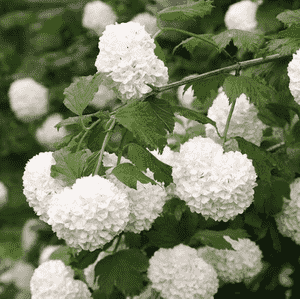
Snowball-like flower clusters transitioning from white to blush pink.
2
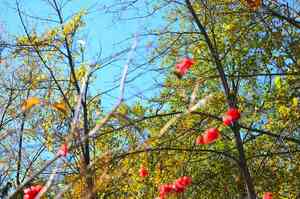
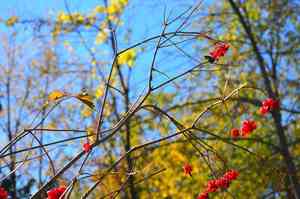
Bright red drupes resembling cranberries but unrelated, persisting post-frost.
3
Glossy dark green, three-lobed leaves with serrated margins and yellow to red-purple autumn color.
4
Brown twigs with white lenticels, 0.1-0.3 inches (2.5-7.5 mm) in diameter.
5
Robust trunk with gray-brown waxy bark that peels, revealing fissures and furrows.

Scientific Classification of American Cranberry Bush

Phylum
Vascular plants
Class
Dicotyledons
Order
Dipsacales
Family
Moschatel
Genus
Viburnum
Species
American Cranberry Bush

Planting and Growing of American Cranberry Bush

Care Difficulty
Easy
Watering Schedule
Every 2 days
Sunlight Requirements
Full sun
Sunshine Duration
4-8 hours
Ideal Temperature
50-75℉
Soil Type
Potting Mix, Peat Mix
Soil pH
5.5-7.5
Fertilizer Type
Balanced
Pruning Season
Spring, Summer
Pruning Area
Branches, Leaves
Pruning Frequency
2 times a year
Repotting Season
Spring
Pot Type
Terracotta, Plastic

water icon How to Water American Cranberry Bush?

The watering amount for Viburnum opulus depends on its size and the condition of the soil. The general rule is to keep the soil consistently moist but not waterlogged. A mature Viburnum opulus generally consumes around 2000 ml of water during each watering session. However, the specific amount may vary. Always be sure to observe the plant and adjust the watering amount accordingly.
What are the symptoms of an underwatered American Cranberry Bush?
What should I do if my American Cranberry Bush is not getting enough water?
What are the symptoms of an overwatered American Cranberry Bush?
How to save an overwatered American Cranberry Bush?
More About Watering Techniques

sunlight icon What Are the Sunlight Requirements for American Cranberry Bush?

Sunlight Requirements: Full sun, Full shade, Partial sun
Duration of light: 6-8 hours daily
Viburnum opulus performs best under 6-8 hours of full to partially shaded sunlight, promoting growth and flowering. More About Sunlight Requirements Techniques

temperature icon What Is the Ideal Temperature Range for American Cranberry Bush?

Ideal Temperature: 50 ~ 75℉
The ideal temperature range for Viburnum opulus, also known as Guelder Rose, lies between 50°F and 75°F. This range ensures optimal growth rate, balanced moisture retention, and sufficient metabolic activity in the plant. In this temperature range, the plant exhibits lush greenery and abundant flowering.

soil icon What Soil is Best for American Cranberry Bush?

Soil type: Sandy soil, Loam, Clay soil
Soil PH: 5.5 ~ 7.5
Viburnum opulus prefers well-drained soil. This ensures that the roots have sufficient oxygen for growth and prevents the buildup of harmful substances that can damage the plant. If the soil is too compact or water-logged, the roots may suffocate and the plant may die. The Viburnum opulus thrives in nutrient rich soil. A soil high in organic matter provides essential nutrients for the plant which are important for its growth and development. Nutrients like Nitrogen promote leaf growth while Phosphorus is important for root and flower development. Viburnum opulus also favors loose soil. This is important as it allows room for the roots to expand and grow. A constricted root space can stunt the plant's growth and restrict its access to water and nutrients. More About Soil

fertilize icon How to Fertilize American Cranberry Bush?

Fertilizer type: Balanced
Viburnum opulus is a resilient plant that thrives in a variety of conditions. It needs moderate levels of nutrients, so a balanced fertilizer is required. Liquid fertilizer: Use about 1 liter of solution per square meter. Slow-release fertilizer: A handful or about 30 grams for each plant. More About Fertilizing Techniques

prune icon How to Prune American Cranberry Bush?

Pruning Time: Spring, Summer, Autumn
Start by removing any dead, damaged, or diseased branches. Use clean and sharp pruning tools to make precise cuts which will heal faster and are less likely to invite disease. Give the Viburnum opulus a round or square shape, depending on your preferences. Make sure you make your cuts at the nodes, this is where new growth will sprout from. Remove about one third of the older branches to the ground. Thinning helps to increase light and air circulation within the plant, promoting healthy growth and reducing the risk of disease. More About Pruning Techniques

propagate icon How to Propagate American Cranberry Bush plant?

Propagate Time: Spring, Early Autumn
1
Cut a healthy stem from the parent Viburnum opulus plant with disinfected pruning shears. The Cutting should contain several leaf nodes. Avoid wilting by immediately placing the cut end in water.
2
Dip the cut end of the stem in a rooting hormone. This step is optional, but it can significantly increase the success rate of your propagation.
3
Plant the cuttings in a suitable growing medium—peat moss, perlite or coir are all good choices. Keep the growing medium humid, but not wet.
More About Propagating Techniques

repot icon How to Repot American Cranberry Bush plant?

Repotting frequency: Once every 2-3 years
1
Viburnum opulus signals that it’s time for a new pot when you notice the roots escaping through the drainage hole. Spring and autumn are the optimal times to repot this plant as it enters a period of growth and before it goes dormant respectively, creating less shock for the plant.
2
A pot with sufficient drainage is vital for Viburnum opulus to avoid waterlogging. The pot's diameter should be bigger than the previous one and deep enough to accommodate the plant's root system. Using lighter colored pots or materials that don't absorb heat can also help in keeping the roots cool during summer.
3
Opt for a loam-based or well-drained potting mix. The soil should hold enough moisture without being waterlogged as Viburnum opulus prefers slightly moist conditions.
More About Repotting Techniques

PlantJoy - Identify plants with a snap

Find the best spots for them to optimize their health, simply using your phone.

Try for Free

Toxicity of American Cranberry Bush

Is American Cranberry Bush toxic to humans?

The American Cranberry bush produces berries that are regarded as mildly toxic, particularly when they are not fully mature. These berries are rich in polyphenols that may irritate the stomach, leading to symptoms such as nausea, excessive salivation, abdominal pain, diarrhea, and vomiting if a significant quantity is consumed. Therefore, it is important to keep them out of reach of children and individuals with cognitive impairments to avoid these negative effects.

Is American Cranberry Bush toxic to cat?

The American Cranberry Bush presents a mild toxicity risk for cats. This plant can become harmful, especially when large amounts of its fruits or leaves are consumed. While the specific toxic compounds are not detailed, cat owners should recognize that if a cat eats substantial portions of the American Cranberry Bush, it may display symptoms of physical discomfort or distress. To protect feline health, it is vital to keep cats away from locations where the American Cranberry Bush grows. If ingestion is suspected, prompt veterinary attention is necessary to ensure the well-being of the affected cat.

Is American Cranberry Bush toxic to dog?

The plant species known as American Cranberry Bush is recognized for its mild toxicity to dogs. Dogs can suffer from poisoning related to this plant primarily when they ingest it in large quantities. The parts of the American Cranberry Bush that present a danger are the fruits and leaves, which, when consumed in excessive amounts, can result in harmful health repercussions. Dog owners should be vigilant, as symptoms of poisoning may manifest as gastrointestinal disturbances, including vomiting and diarrhea, along with possible lethargy or other signs of unease. It is vital for dog owners to closely observe their pets' behavior and prevent them from accessing these parts of the plant. Should a dog ingest American Cranberry Bush and show signs of poisoning, it is essential to seek prompt veterinary assistance to ensure appropriate treatment and management of any toxic effects.

Identify toxic plants for your safety

Learn which plants are harmful to you and your pets, and make informed choices for a safer home!

Try for Free
WARNING
The judgment on toxicity and danger is for reference only. We DO NOT GUARANTEE any accuracy of such judgment. Therefore, you SHALL NOT rely on such judgment. It is IMPORTANT TO SEEK PROFESSIONAL ADVICE in advance when necessary.
More About Toxic Techniques